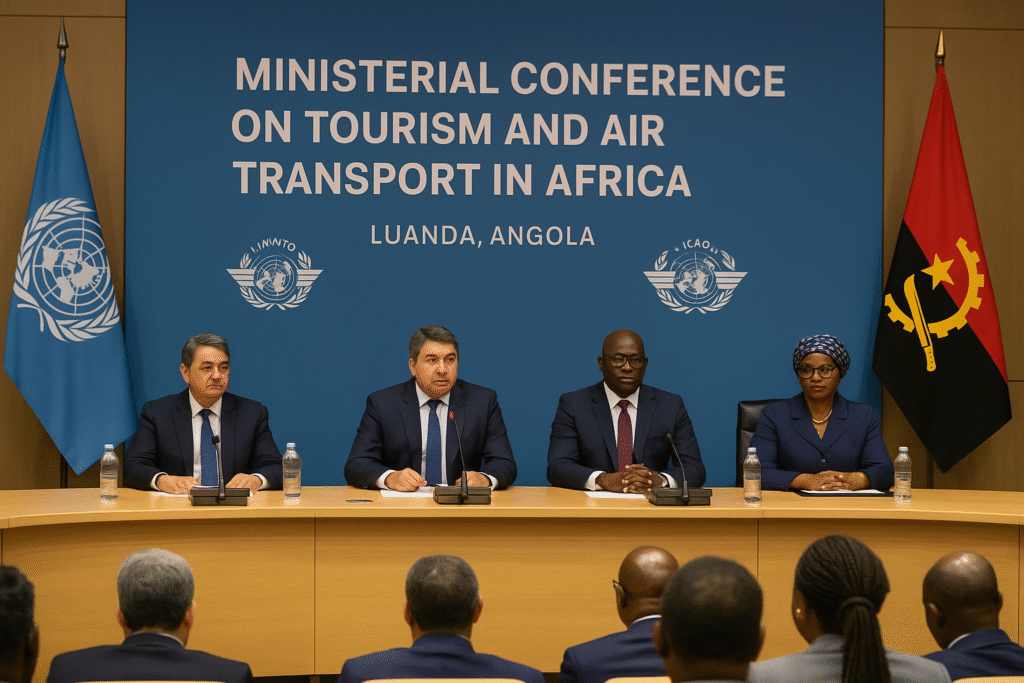
Africa’s journey toward becoming a globally competitive tourism and aviation hub took a monumental leap forward during the Second UN Tourism and International Civil Aviation Organization (ICAO) Ministerial Conference on Tourism and Air Transport in Africa, held in Luanda from August 1–2, 2025. Drawing ministers, policymakers, and global stakeholders from over 50 countries, the event underscored a powerful collective resolve: to foster seamless regional connectivity, inclusive travel systems, and robust aviation and tourism integration.
Convened under the theme “Sustainable and Inclusive Tourism and Air Transport for Africa”, the conference spotlighted strategic alignment between aviation and tourism—two sectors viewed as interdependent engines of economic transformation. The adoption of the Luanda Ministerial Statement set forth a clear, actionable roadmap aimed at modernizing infrastructure, simplifying visa procedures, and boosting intra-African travel.
A Strategic Framework for Progress
The Luanda Ministerial Statement emphasized several core commitments:
- Modernization of infrastructure via public-private partnerships (PPP), with a focus on upgrading airports, smart mobility networks, and visitor-ready tourism facilities.
- Simplified visa regimes, including multi-country e-visas and extended validity, to encourage longer stays and multiple-country itineraries.
- Boosting regional air connectivity through harmonized policies aligned with the Single African Air Transport Market (SAATM).
- Promotion of intra-African tourism, spotlighting the continent’s rich diversity of cultures, heritage, and natural wonders.
- Capacity building through youth and women-focused training programs, promoting entrepreneurship in tourism and aviation.
These actions align closely with the African Union’s Agenda 2063, aiming to create an integrated, prosperous, and peaceful continent driven by its citizens and representing a dynamic force on the global stage.
Emphasis on Equity and Innovation
Over two days of high-level deliberations, delegates advocated for travel systems that transcend income disparities and geographic limitations. Integrating equity into aviation and tourism policy was described as vital for inclusive economic growth. Ministers further called for embedding digital innovation, including artificial intelligence and digital identity systems, to streamline traveler experiences and improve security.
Workshops led by global experts explored sustainable investment models and emerging technologies. These discussions underscored how frameworks such as the African Continental Free Trade Area (AfCFTA) and SAATM offer structural advantages in forging integrated travel corridors.
“Connectivity is not a luxury—it’s a development necessity,” noted Zurab Pololikashvili, UN Tourism Secretary-General. “Africa’s future competitiveness depends on our ability to move people and ideas easily and efficiently across borders.”
Luanda’s Strategic Role
Hosting the landmark event, Luanda has cemented its growing reputation as a central African hub for innovation, diplomacy, and infrastructure development. The Angolan capital showcased its expanding tourism potential through recent upgrades to Quatro de Fevereiro International Airport and the development of tourism clusters along its Atlantic coastline.
Angola’s Minister of Tourism, Márcio Daniel, reiterated the nation’s ambitions to become a key connector in Africa’s north-south and east-west air travel networks, while simultaneously fostering inclusive tourism that creates local employment and preserves cultural heritage.
The Numbers Behind the Momentum
Data presented at the conference showed that Africa welcomed 74 million international arrivals in 2024, a 12% increase from 2023 and 7% above pre-pandemic levels. These figures highlight the continent’s resilience and untapped potential amid global tourism’s recovery.
Despite progress, air travel within Africa remains disproportionately expensive and fragmented. Conference participants highlighted the need for direct regional routes, coordinated slot allocations, and streamlined customs and immigration services to reduce travel time and operational costs.
What It Means for Global Travelers
Though Africa-focused, the conference’s outcomes are set to benefit global tourism flows:
- Multi-nation e-visas could soon become standard across participating African countries.
- More direct intercontinental flights will enhance efficiency for international visitors.
- Joint marketing campaigns will boost Africa’s profile as a year-round destination rich in biodiversity, culture, and adventure.
- Service improvements and international safety compliance will increase investor confidence and raise global travel standards.
Such measures are poised to reshape global perceptions of African travel—from niche to mainstream, from aspirational to accessible.
Looking Ahead: From Vision to Implementation
With clear benchmarks and follow-up mechanisms in place, the Luanda Ministerial Statement represents more than diplomatic rhetoric—it is a policy blueprint with measurable goals. UN Tourism and ICAO have committed to monitoring progress on key indicators, including infrastructure growth, digital adoption, and cross-border coordination.
If effectively implemented, these strategies could mark a paradigm shift in African tourism and air transport, ensuring that prosperity generated by the industry is equitably shared across nations and communities.
Tourism and aviation leaders left Luanda energized, unified, and clear-eyed about the path ahead. As one delegate put it: “The future of African travel is not just about planes and passports—it’s about possibilities.”
For more travel news like this, keep reading Global Travel Wire