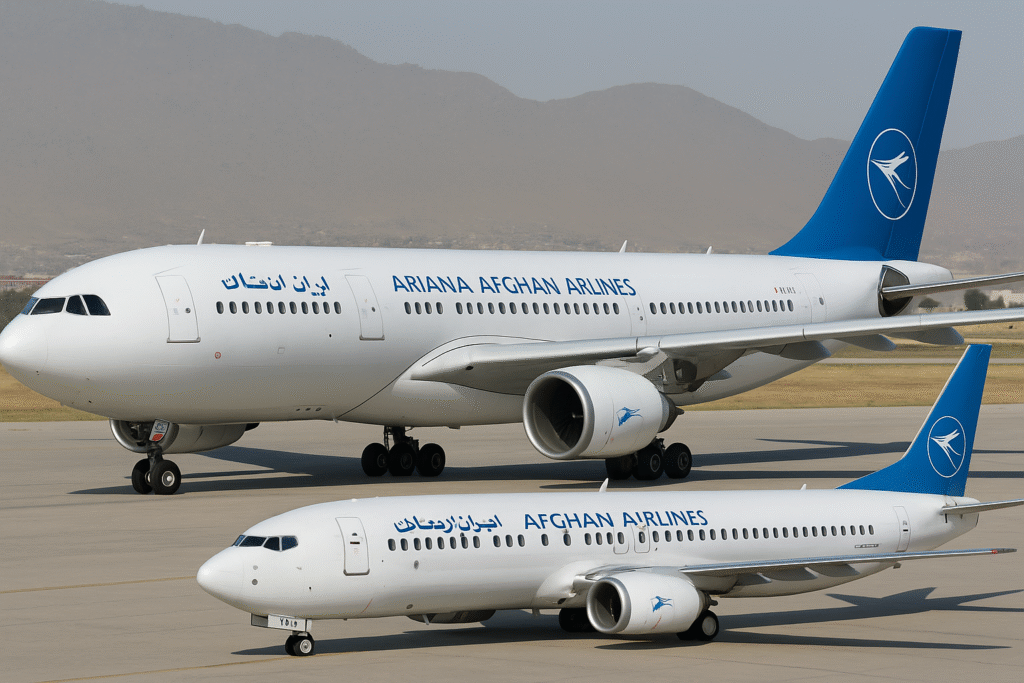
Ariana Afghan Airlines, Afghanistan’s national carrier, has unveiled a major fleet expansion with the arrival of two Airbus A330s and two Boeing 737s. This upgrade signals a new era for Afghan aviation and tourism, creating reliable air access for both international travelers and domestic passengers.
The Airbus A330s will serve long-haul international routes, connecting Afghanistan to hubs across Europe, the Middle East, and Asia. Meanwhile, the Boeing 737s are set to cover regional routes, strengthening ties with neighboring countries including Pakistan, India, Iran, and Central Asia. These upgrades will make journeys smoother, more frequent, and more efficient—critical steps in reviving Afghanistan’s tourism sector.
Tourism Revival: Easier Access to Heritage Sites
Afghanistan is home to some of the world’s most remarkable cultural and natural landmarks. For decades, travelers have been drawn to the Bamiyan Valley, once home to the iconic Buddhas, as well as Herat’s historic minarets, the citadel of Ghazni, and the vibrant old bazaars of Kabul. Nature lovers are captivated by Band-e Amir National Park, a chain of sapphire-blue lakes in Bamiyan Province, and the rugged beauty of the Hindu Kush mountains.
Until now, limited connectivity posed a major challenge for international visitors. The new aircraft will allow easier access to these sites, transforming Afghanistan into a more accessible destination for adventure seekers, cultural tourists, and history enthusiasts.
Boost for Regional Tourism & Trade
The airline’s expansion will not only benefit inbound tourists but also strengthen regional travel networks. Many visitors to Central Asia combine multi-country itineraries, exploring Silk Road heritage in Uzbekistan, Tajikistan, and Turkmenistan. With new flights, Afghanistan can now be seamlessly added to such regional circuits.
Additionally, the upgrade doubles Ariana’s cargo capacity, which will support Afghan exporters in reaching wider markets with products such as saffron, carpets, and dried fruits. This creates a positive cycle where aviation growth strengthens both tourism and trade.
Hospitality Industry Growth
As Afghanistan opens further to travelers, the ripple effects will boost the hospitality and service industries. Local hotels, restaurants, transport providers, and tour operators are expected to benefit from the increased flow of visitors. Government tourism strategies also emphasize sustainable development, ensuring that cultural preservation and community engagement remain central.
Investment in tourism infrastructure, alongside Ariana’s modern fleet, positions Afghanistan as an emerging travel hub in South and Central Asia.
Ariana Afghan Airlines’ Strategic Vision
The fleet expansion is part of Ariana’s long-term vision to become a trusted global carrier. With the Airbus A330s, the airline can target international travelers seeking direct access to Afghanistan, while the Boeing 737s enhance domestic and regional mobility.
Future plans include expanding networks to additional global cities, integrating modern ticketing systems, and strengthening safety and service standards. This strategy aligns with Afghanistan’s tourism development goals, reinforcing its role as a cultural crossroads.
Geo-Tagging: Afghanistan’s Key Travel Destinations
- Kabul (34.5553° N, 69.2075° E): Bustling capital with museums, bazaars, and ancient sites.
- Herat (34.3529° N, 62.2040° E): Known for its minarets, Islamic architecture, and silk road history.
- Bamiyan Valley (34.8211° N, 67.8219° E): UNESCO site with archaeological wonders and access to Band-e Amir.
- Band-e Amir National Park (34.8400° N, 67.2497° E): Afghanistan’s first national park, famous for its turquoise lakes.
- Mazar-i-Sharif (36.7090° N, 67.1109° E): Home to the Blue Mosque, a spiritual and cultural landmark.
Conclusion
The arrival of Ariana Afghan Airlines’ Airbus A330s and Boeing 737s is more than an aviation milestone—it is a catalyst for tourism revival and economic development. By improving international connectivity and regional routes, Afghanistan is taking decisive steps to reposition itself on the global travel map.
From the ancient Silk Road cities to the breathtaking landscapes of Bamiyan and Band-e Amir, Afghanistan’s treasures are now closer than ever for global explorers. With modern infrastructure, growing hospitality services, and expanded flight options, the country is ready to welcome a new wave of visitors eager to discover its rich heritage and natural beauty.
For more travel news like this, keep reading Global Travel Wire