Berlin Brandenburg Airport (BER) is struggling to recover after a large-scale cyberattack that has crippled critical passenger services. The attack, which targeted the check-in and baggage handling systems operated by Collins Aerospace, forced airports across Europe into manual processing. From Berlin to London and Brussels, travelers have experienced mounting delays, cancellations, and hours of uncertainty.
The cyberattack has not only paralyzed technology at airports but also exposed the vulnerabilities of aviation infrastructure. The recovery process is ongoing, but full restoration may take several more days, leaving both airlines and passengers in a state of limbo.
Source of the Cyberattack: Ransomware on Aviation Systems
The European Union Agency for Cybersecurity confirmed that ransomware was responsible for disabling Collins Aerospace’s MUSE software. This system is a vital backbone for check-in and boarding across many international airports. Its shutdown forced airports to fall back on paper-based systems, a process slower and more prone to human error.
Experts warn that this incident highlights a growing risk for the aviation industry, where digital systems underpin nearly every aspect of operations. Airport officials have stressed that cybersecurity resilience is now just as critical as physical safety.
Airports and Travelers Most Affected
Several major airports have reported severe disruptions:
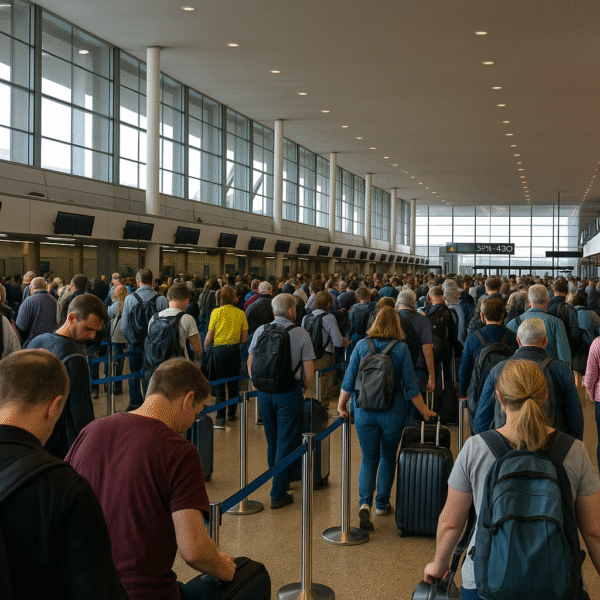
- Berlin Brandenburg Airport (BER): Around 94% of flights have faced delays, averaging more than one hour. Check-in counters remain overcrowded, with long lines stretching through terminals.
- London Heathrow (LHR): Nearly 90% of flights were delayed, though additional ground staff have been deployed to assist passengers and manage crowds.
- Brussels Airport (BRU): Around 88% of flights were delayed, with some cancellations adding to the frustration. Average delays exceeded 40 minutes.
- Dublin Airport (DUB): With around 91% of flights delayed, passengers have faced less severe disruptions but are still advised to check flight status before departure.
The domino effect of delays has left thousands of passengers stranded or forced to rebook, with many missing connections and holiday plans disrupted.
Impact on Passengers
Travelers across Europe have borne the brunt of this crisis. Families heading for holidays, business travelers with tight schedules, and tourists exploring Europe’s cultural hubs have all reported hours-long waiting times at check-in desks and baggage claim areas.
Manual check-ins have not only slowed boarding but also created confusion with seat allocations and luggage tracking. Some passengers have faced missing baggage, while others were left without real-time updates on their flight status. The situation has underscored how dependent modern travel has become on automated systems.
Tourism and Economic Fallout
The timing of the cyberattack has amplified its impact. Europe’s tourism sector, which had been gradually recovering after pandemic-era restrictions, now faces renewed challenges.
- Tourist cancellations: With flights disrupted, many travelers are reconsidering or canceling trips to Berlin, London, and Brussels, leading to reduced hotel bookings and fewer visitors in key city attractions.
- Local businesses hit: Restaurants, shops, and tour operators reliant on airport traffic are experiencing a sudden downturn in customer numbers.
- Economic ripple effect: Tourism contributes significantly to the economies of Germany, Belgium, and the UK. A prolonged disruption could cost millions in lost revenue and slow the tourism rebound.
The incident has therefore become more than a transportation issue—it is also a direct hit to Europe’s tourism-driven economies.
Aviation Industry on Alert
The aviation sector is responding with urgency. Collins Aerospace has been working with airport authorities to restore services, but officials have not provided a clear timeline for when systems will be fully functional. Airlines are meanwhile deploying more staff to assist passengers and urging travelers to check flight information before leaving for the airport.
Industry analysts say this event will likely accelerate investment in stronger cybersecurity frameworks. Protecting aviation systems from digital threats is now seen as a matter of both passenger safety and economic security.
Advice for Passengers
Authorities have issued several recommendations to travelers during this period of uncertainty:
- Arrive early: Passengers are urged to reach airports well in advance, as manual check-ins take considerably longer.
- Check flight status frequently: With schedules changing rapidly, travelers should confirm flight times before heading to the airport.
- Travel light: Carrying less baggage can help avoid delays at luggage counters and reduce the risk of misplaced items.
- Stay informed: Airports are posting updates through official channels and airline apps, though information may be slower than usual.
A Wake-Up Call for European Travel
The cyberattack on Berlin Brandenburg Airport and its ripple effects across Europe have been described as a wake-up call for the aviation industry. As airports depend more heavily on digital systems, the threat of cyberattacks grows more dangerous.
For now, passengers continue to face uncertainty, while airlines and airport authorities scramble to restore normal operations. The incident has cast a shadow over Europe’s travel season, raising urgent questions about preparedness, resilience, and the future of air travel security.
For more travel news like this, keep reading Global Travel Wire