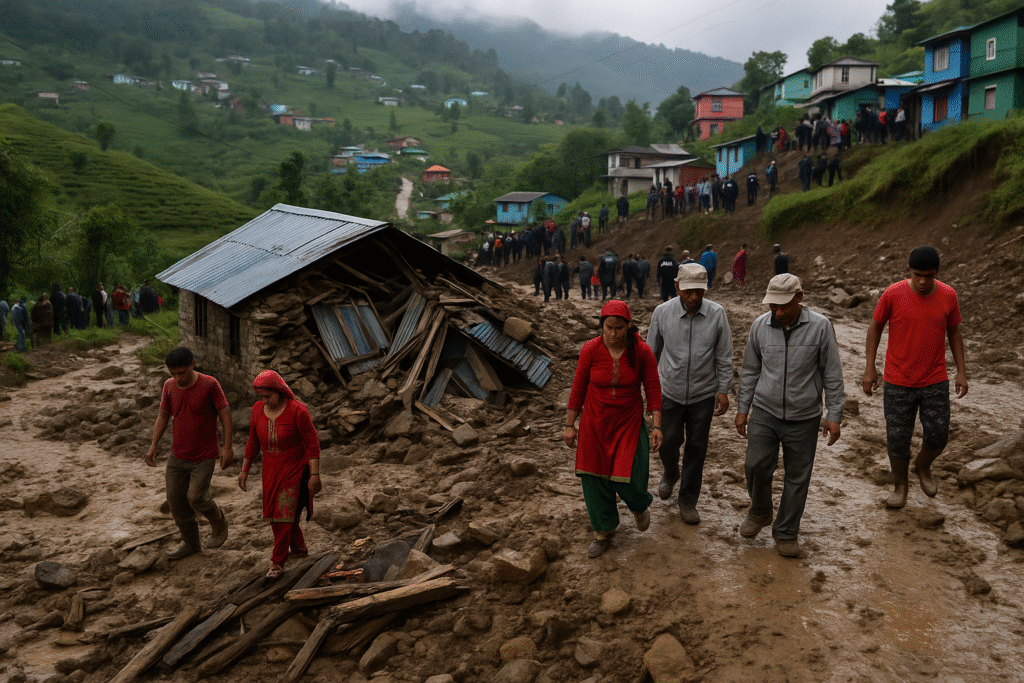
Nepal is facing a humanitarian and economic crisis after relentless monsoon rains triggered widespread landslides and flooding across the country. Within just 24 hours, 43 lives have been lost, with eastern Nepal’s Ilam district enduring the heaviest toll. Once admired for its tea gardens and scenic Himalayan landscapes, Ilam has now turned into one of the most devastated regions, with 37 fatalities caused by powerful landslides.
The rains, which intensified from Friday and escalated into severe storms by Sunday, destabilized steep mountain slopes, sending torrents of mud and rock crashing into homes and farmland. Villages have been buried overnight, while overflowing irrigation canals worsened the situation. The saturated soil of the Himalayan foothills has made many areas especially vulnerable, reminding the world of Nepal’s delicate balance between natural beauty and geographical fragility.
Dashain Festival Under Shadow of Disaster
The disaster’s timing is particularly painful, coinciding with Dashain, Nepal’s most important Hindu festival. Dashain usually draws crowds of devotees and tourists eager to experience cultural rituals, temple ceremonies, and family gatherings. Instead of celebration, this year the festival has been marked by mourning, displacement, and disruptions.
Transportation networks have been crushed, with roads blocked by debris and floodwaters. In the Kathmandu Valley, authorities enforced a three-day ban on vehicular movement to ensure safety and facilitate rescue work. While this was necessary to save lives, it also disrupted the flow of both locals and tourists during what is typically a peak travel season.
Blow to Nepal’s Tourism Industry
Tourism, one of Nepal’s lifelines, has been hit hard. The temporary suspension of domestic flights at Tribhuvan International Airport further highlighted the challenges travelers faced. Although some flights resumed later, the interruptions discouraged visitors and stranded many.
Popular trekking regions, cultural towns, and eco-tourism destinations have all been impacted. Trails, mountain roads, and rural pathways essential for trekkers and pilgrims are now unsafe. For local communities reliant on tourism revenue, this disaster means a steep decline in income, compounding the economic strain left by the pandemic years.
The disaster has once again raised questions about Nepal’s tourism resilience. While the country is celebrated as a haven for adventure seekers and cultural enthusiasts, it also sits in a high-risk zone for floods, earthquakes, and landslides. Safety assurances and reliable infrastructure remain essential for sustaining the confidence of international visitors.
Rescue and Relief Operations
Nepal’s government has mobilized large-scale rescue operations to respond to the calamities. The Nepal Army, police forces, and local volunteers are working tirelessly in 28 affected locations to recover bodies, rescue survivors, and clear blocked roads. Helicopters have been deployed to remote areas cut off by landslides, bringing emergency supplies and evacuating the injured.
These efforts highlight the resilience and coordination of Nepal’s emergency services. Still, the scale of destruction underscores the need for long-term disaster preparedness, stronger infrastructure, and early warning systems.
Looking Ahead: Tourism in the Wake of Crisis
For Nepal’s tourism industry, the recent calamities serve as both a setback and a lesson. The need for climate-resilient infrastructure, sustainable tourism planning, and weather-based travel advisories has never been more urgent. Authorities are expected to focus on rebuilding roads, restoring trekking routes, and rehabilitating affected cultural sites in the coming months.
Travelers considering Nepal are advised to remain flexible, stay updated on local weather conditions, and prioritize safety. While Nepal’s natural wonders—from the Annapurna trails to the Kathmandu temples—remain undiminished in allure, visitors must prepare for possible disruptions during the monsoon season.
Spirit of Resilience
Despite the hardships, Nepal continues to showcase its enduring spirit. Communities are coming together to rebuild homes, restore farms, and support one another. Government agencies and international partners are expected to channel aid into both immediate recovery and long-term resilience-building measures.
The people of Nepal, known for their warmth and hospitality, remain committed to reviving the tourism sector that is integral to their livelihoods. The nation’s breathtaking mountains, sacred temples, and vibrant culture will continue to attract travelers once recovery progresses.
For now, Nepal’s story is one of survival, solidarity, and resilience in the face of nature’s fury. With careful planning and global support, the country aims to emerge stronger and ensure that visitors can once again experience its cultural grandeur and natural beauty without fear.
For more travel news like this, keep reading Global Travel Wire