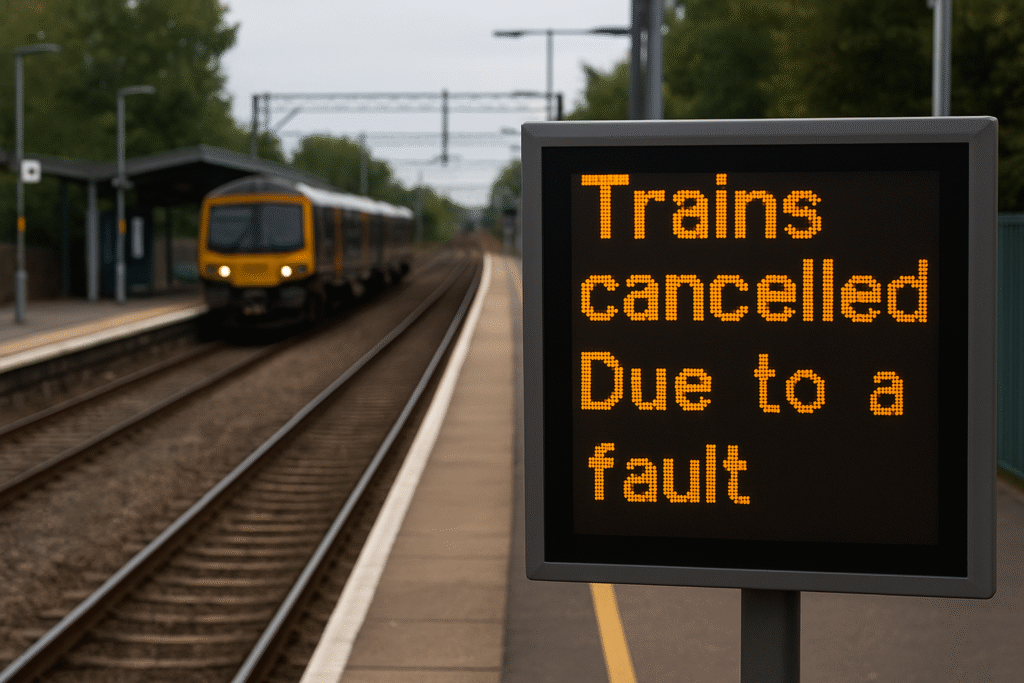
Passengers travelling between Worcestershire, Birmingham, and London have been hit by severe train cancellations and delays following a major signalling fault. The disruption, which began over the weekend, has affected thousands of commuters and leisure travellers, forcing many to rely on replacement bus services or alternative routes.
The fault has particularly impacted services running through Hereford, Ledbury, Colwall, Malvern, Worcester, and surrounding stations, with widespread cancellations stretching from Sunday evening into the early hours of Monday morning. For many passengers, the situation has created confusion, longer travel times, and missed connections at major hubs.
How the Disruption Began
The issue was first reported on Sunday, October 5, when West Midlands Railway confirmed that several evening services would no longer stop at key stations such as Hereford, Ledbury, and Colwall. Among those affected were the 7.56pm, 9.00pm, and 10.42pm trains from Hereford to Birmingham.
To reduce the impact on travellers, rail replacement buses were arranged between Hereford and Great Malvern, where passengers could transfer onto onward train services. However, the knock-on effect quickly spread to multiple routes, creating widespread rail disruption across Worcestershire and Herefordshire.
Which Services Were Hit Hardest?
The signalling fault did not only disrupt West Midlands Railway services; Great Western Railway was also severely affected. Notable changes included:
- London Paddington to Great Malvern services bypassing stops at Malvern Link and Great Malvern.
- Great Malvern to London Paddington services beginning instead at Worcester Foregate Street, leaving Malvern passengers stranded.
- Early Monday cancellations, including the 5.23am Hereford to London Paddington service, which was scheduled to stop at Malvern, Worcester, and Evesham before continuing to London.
These sudden alterations left passengers frustrated and forced to make last-minute changes to their travel plans.
Why Do Signal Faults Cause Such Chaos?
Signal failures are one of the most disruptive problems on the UK rail network. Signalling systems are vital for managing train movements safely, ensuring that services can run on time without collisions or traffic conflicts.
In this case, the failure of critical equipment meant trains could not operate safely on several key stretches of track. The result was immediate cancellations, rerouting of services, and an urgent need for replacement buses to bridge the gaps.
Rail industry experts note that such faults, though relatively rare, highlight the ageing infrastructure of parts of the UK’s railway network. Investment in modern signalling technology is underway in some areas, but until upgrades are completed, similar faults remain a possibility.
How Long Will Delays Last?
West Midlands Railway confirmed that the disruption would extend into Sunday evening and likely impact the early services on Monday, October 6. While engineers were dispatched to fix the fault, the scale of the problem meant delays and cancellations could continue until systems were fully restored.
For passengers, this uncertainty created further challenges, especially for those travelling to work or connecting to long-distance services in Birmingham or London.
Advice for Passengers
Travellers affected by the Worcestershire train disruption are urged to:
- Check real-time updates before setting out, as train schedules may change at short notice.
- Use replacement bus services provided between Hereford and Great Malvern to connect with trains heading to Birmingham and London.
- Allow extra travel time, particularly for morning commutes, as services are likely to be crowded or delayed.
- Explore alternative routes, such as travelling via Gloucester or Cheltenham Spa, which may offer more reliable options.
While the rail companies are working to resolve the fault, passengers are advised to remain flexible and plan for potential delays.
Wider Impact on the Railway Network
The disruption has exposed the vulnerability of the railway system in Worcestershire and its importance as a connecting route between the West Midlands and London. For commuters, students, and tourists alike, the affected services represent vital links for both daily travel and longer journeys.
Local businesses have also expressed concern about the impact on tourism and trade. With popular destinations such as Malvern and Worcester depending heavily on accessible rail connections, prolonged disruptions could discourage visitors and complicate logistics.
Looking Ahead: Improving Rail Reliability
Both West Midlands Railway and Great Western Railway have pledged to restore services as quickly as possible, with engineers continuing repair work into the night. However, this incident adds to growing calls for greater investment in railway infrastructure.
The UK rail industry has faced increasing scrutiny over its reliability, with passengers across the country experiencing similar issues in recent years. Modernising signalling systems, investing in digital upgrades, and improving contingency planning remain priorities to prevent future disruptions of this scale.
For Worcestershire and Herefordshire, ensuring dependable rail access to Birmingham and London is vital for both economic growth and quality of life. Passengers, meanwhile, hope that lessons learned from this weekend’s chaos will result in more resilient services in the future.
Conclusion
The Worcestershire to Birmingham and London rail disruption, caused by a major signalling fault, has highlighted the fragility of the UK’s railway infrastructure. With widespread cancellations, delays, and passenger frustration, the incident underscores the urgent need for modernisation and improved contingency planning.
As engineers continue to resolve the issue, passengers are urged to remain cautious, check live updates, and allow extra time for journeys. While temporary replacement services have been put in place, the impact on travel, business, and tourism in the region is already being felt.
Until full services are restored, the Great Train Chaos serves as a reminder of the challenges facing Britain’s railways—and the pressing need for solutions that keep passengers moving reliably between Worcestershire, Birmingham, and London.
For more travel news like this, keep reading Global Travel Wire