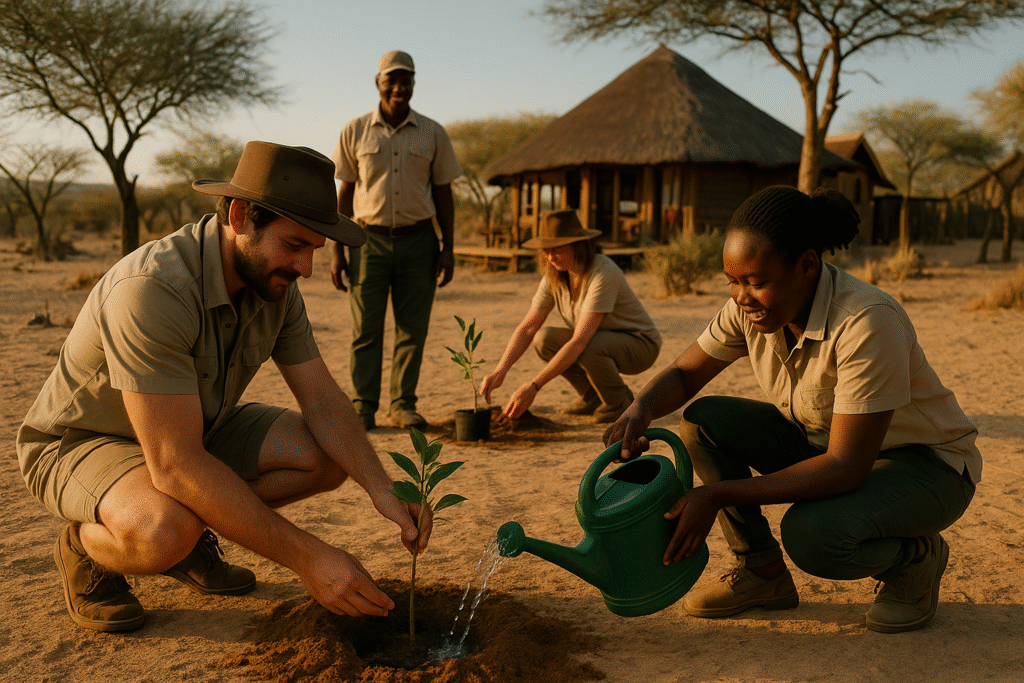
Namibia continues to lead Africa’s eco-tourism drive with a landmark event that blends conservation, tourism, and community involvement. Gondwana Collection Namibia, one of the country’s most respected tourism groups, celebrated Sustainability Month in September 2025 with a major initiative called the Tree-a-Thon. This project resulted in the planting of 195 indigenous trees across several properties, reinforcing the company’s pledge to promote responsible travel while protecting natural landscapes.
The Gondwana Tree-a-Thon goes beyond a simple tree-planting campaign. It highlights the deep link between eco-tourism, conservation, and local development. Through this initiative, Gondwana ensures that tourism growth supports biodiversity, strengthens communities, and creates long-term benefits for Namibia’s environment and people.
Eco-Tourism at the Core of the Initiative
The Tree-a-Thon reflects the very principles of eco-tourism. It connects responsible travel with direct conservation efforts. Eco-tourism thrives on protecting ecosystems, respecting cultural heritage, and ensuring that local people benefit from tourism. By engaging with local communities, conservancies, and artisans, Gondwana Collection has turned tree planting into a powerful symbol of sustainable tourism.
Planting indigenous trees not only restores ecosystems but also improves carbon absorption, prevents soil erosion, and enriches wildlife habitats. For visitors, the initiative transforms their travel experience into something more meaningful, as they become part of conservation efforts that safeguard Namibia’s fragile landscapes.
Strengthening Biodiversity Through Indigenous Species
The selection of trees for the Tree-a-Thon reflects careful ecological planning. Gondwana nurseries provided a range of indigenous species tailored to specific regional conditions. Camelthorn and marula trees were planted in Namibia’s drier zones, while waterberry and bird plum trees were introduced to wetter regions such as Zambezi.
These species are essential for preserving biodiversity. They provide food and shelter for wildlife, improve soil fertility, and help sustain balanced ecosystems. Climate change, overgrazing, and deforestation have threatened many of Namibia’s natural habitats. The Tree-a-Thon tackles these challenges head-on by reintroducing native trees that stabilize and strengthen the environment.
Community Partnerships and Tourism Engagement
At the heart of Gondwana’s approach is collaboration. The Tree-a-Thon would not be possible without the active participation of local conservancies, community groups, and educational foundations. By involving these partners, Gondwana creates opportunities for education, employment, and cultural exchange.
Visitors also play a role. Tourists are encouraged to take part in conservation projects, learning about Namibia’s biodiversity while contributing directly to its preservation. This form of eco-tourism empowers travelers, allowing them to leave a positive footprint instead of a damaging one. At the same time, local communities benefit economically and socially, ensuring that tourism development strengthens rather than strains traditional ways of life.
Namibia’s Eco-Tourism Landscape
Namibia is one of the world’s most celebrated eco-tourism destinations. Its diverse attractions include the sweeping dunes of the Namib Desert, the wildlife-rich Etosha National Park, and the rugged mountains of Damaraland. Sustainable tourism plays a central role in protecting these areas.
Gondwana Collection is aligning its strategy with the global demand for responsible travel. Tourists increasingly seek experiences that connect them with nature while supporting conservation. By investing in eco-tourism practices such as the Tree-a-Thon, Gondwana not only strengthens Namibia’s international reputation but also ensures that tourism development aligns with environmental protection.
Beyond Tree Planting: A Broader Sustainability Plan
The Tree-a-Thon is one element of Gondwana’s larger sustainability vision. Across its properties, the company has invested in solar energy systems, water conservation projects, and eco-friendly architecture. Each initiative is designed to reduce the tourism industry’s ecological footprint.
This holistic approach reflects international eco-tourism standards, including the principles of the Global Sustainable Tourism Council. Gondwana ensures that every part of its operations contributes to environmental protection, cultural preservation, and community well-being.
The Future of Eco-Tourism in Namibia
Namibia’s tourism industry is growing, but Gondwana Collection is proving that growth does not need to come at the expense of nature. The Tree-a-Thon sets a strong example of how the private sector, communities, and tourists can work together to protect biodiversity.
The success of such initiatives depends on continued cooperation between government agencies, conservation groups, and the tourism industry. As the eco-tourism sector expands, Namibia has the opportunity to become a global leader in sustainable travel. Projects like the Tree-a-Thon provide a blueprint for other African nations seeking to balance economic growth with environmental protection.
A Greener, More Sustainable Future
The Gondwana Tree-a-Thon demonstrates how responsible tourism can reshape Namibia’s future. By planting 195 indigenous trees and engaging communities in conservation, Gondwana has combined environmental action with tourism development. This initiative strengthens biodiversity, empowers local communities, and enriches the travel experience for visitors.
As the tourism industry continues to evolve, Gondwana’s sustainability projects show that eco-tourism is not just a trend but a necessity. Namibia’s breathtaking landscapes, rich culture, and diverse wildlife can thrive only through committed conservation and responsible travel practices.
The Tree-a-Thon stands as proof that tourism can drive positive change. It builds a foundation for a future where economic growth, cultural heritage, and environmental protection work together in harmony. Gondwana’s efforts highlight a path forward that secures Namibia’s natural treasures for generations of travelers to come.
For more travel news like this, keep reading Global Travel Wire