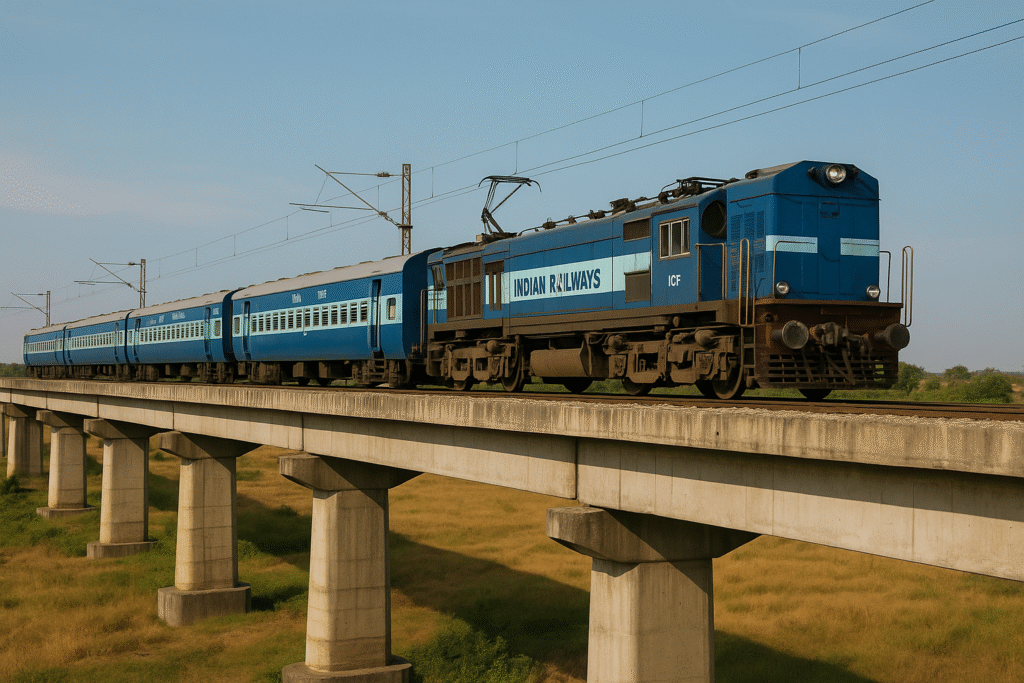
India has taken a bold step in reshaping its transport and tourism future with the approval of ₹24,634 crore railway multitracking projects. The initiative, cleared by the Union Cabinet, is designed to expand connectivity, improve efficiency, and strengthen both freight and passenger networks across four states: Maharashtra, Madhya Pradesh, Gujarat, and Chhattisgarh.
The projects will add 894 route kilometres (rkm) to the Indian Railways network, enabling the transportation of an additional 78 million tonnes of freight every year. Beyond logistics, the upgraded routes are expected to significantly improve passenger travel experiences while unlocking fresh opportunities for domestic tourism and regional growth.
Overview of Approved Projects
The Cabinet Committee on Economic Affairs (CCEA) has given the green light to four critical multitracking initiatives that aim to decongest busy routes and ensure smoother train operations. These include:
- Wardha – Bhusawal third and fourth line (314 rkm, Maharashtra)
- Vadodara – Ratlam third and fourth line (259 rkm, Gujarat & Madhya Pradesh)
- Gondia – Dongargarh fourth line (84 rkm, Maharashtra & Chhattisgarh)
- Itarsi – Bhopal – Bina fourth line (237 rkm, Madhya Pradesh)
Together, they represent one of the most ambitious expansions in recent years, ensuring both freight and passenger trains operate with greater punctuality, speed, and safety.
Strengthening Freight Efficiency
India is already the second-highest rail freight-loading country in the world, and these new multitracking projects will reinforce that position. The additional lines are designed to improve the movement of essential commodities such as coal, cement, steel, food grains, fly ash, and containers.
With the country’s manufacturing and industrial sectors continuing to grow, the demand for efficient logistics has never been higher. Indian Railways is projected to handle over 2 billion tonnes of freight in the coming years, up from 1.61 billion tonnes in FY 2024-25. Faster and more reliable rail transport will lower logistics costs, reduce delivery times, and support industries vital to India’s economic progress.
Enhancing Passenger Connectivity
For millions of travelers, the new lines will mean faster, more comfortable, and more reliable journeys. By reducing congestion on existing tracks, the projects are set to improve punctuality while ensuring greater passenger convenience.
Better connectivity between urban centers, semi-urban areas, and rural towns will make travel easier across Maharashtra, Gujarat, Madhya Pradesh, and Chhattisgarh. Improved rail access will stimulate local economies, enhance employment opportunities, and strengthen regional trade hubs.
For passengers, this means shorter waiting times, smoother train services, and greater access to important destinations—whether for business, education, or leisure.
Railways as a Driver of Tourism
Railways are not just about transport—they are a gateway to India’s vibrant culture, heritage, and natural wonders. These new multitracking projects are expected to significantly boost domestic tourism by improving accessibility to a wide range of destinations.
Key attractions along the enhanced routes include:
- Sanchi – A UNESCO World Heritage site in Madhya Pradesh, famous for its ancient Buddhist stupas.
- Bhimbetka Rock Shelters – Prehistoric caves with some of the world’s oldest rock art.
- Satpura Tiger Reserve – A haven for wildlife tourism in central India.
- Hazara Falls – A scenic waterfall attracting eco-tourism in Chhattisgarh.
- Nawegaon National Park – A major forest reserve offering safari experiences in Maharashtra.
By making these heritage and nature-rich sites more accessible, Indian Railways will not only expand tourism but also empower local communities through new opportunities in hospitality, handicrafts, and cultural promotion.
Economic and Social Impact
The ₹24,634-crore investment is expected to deliver long-term benefits that extend beyond rail operations. Among the anticipated outcomes are:
- Decongested routes improving both passenger and freight movement.
- Enhanced connectivity for industries and regional markets.
- Tourism growth, particularly in areas rich with cultural and ecological heritage.
- Employment generation in construction, operations, and tourism-related services.
- Sustainable growth by encouraging energy-efficient rail travel over road transport.
The projects align with India’s broader vision of modernizing its rail infrastructure to meet growing demands while also promoting inclusive regional development.
Tourism-Led Development
By providing better access to remote and lesser-known destinations, the expansion of railways will give domestic and international tourists the chance to discover India’s diversity in a sustainable way. Rural areas near tourist hubs will benefit from increased visitor footfall, leading to improved livelihoods and infrastructure in smaller towns and villages.
For international travelers, the improved network will also make multi-destination itineraries smoother, helping position India as a convenient and attractive tourism hotspot.
Conclusion
India’s ₹24,634-crore railway multitracking projects represent more than just an investment in tracks and trains—they mark a strategic step toward building a modern, efficient, and tourism-friendly rail network. By adding nearly 900 route kilometres and boosting freight capacity by 78 million tonnes annually, the projects will enhance logistics, reduce congestion, and make travel more seamless for passengers.
At the same time, the initiative is expected to unlock India’s tourism potential by improving access to cultural landmarks, wildlife reserves, and natural attractions across four major states. From boosting freight logistics to promoting sustainable tourism, these projects stand as a transformative milestone in India’s journey toward modern infrastructure and inclusive growth.
For more travel news like this, keep reading Global Travel Wire