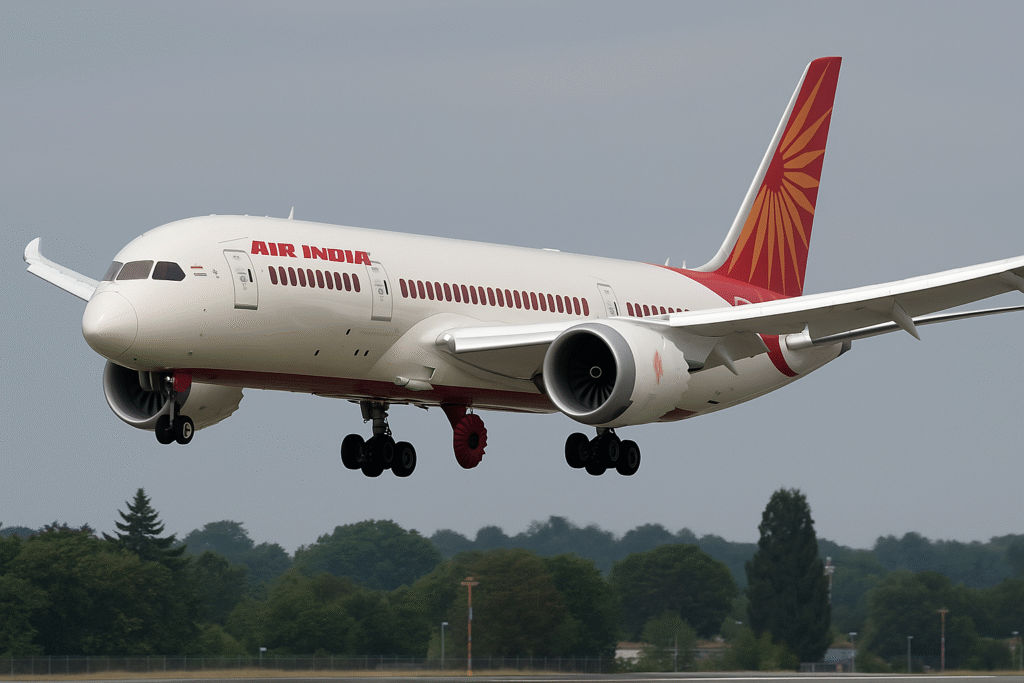
The Boeing 787 Dreamliner, once celebrated as a marvel of modern aviation, is now at the heart of an intensifying global safety debate. A recent technical failure on an Air India flight has triggered widespread alarm and growing pressure for a full-scale safety review.
On October 4, 2025, Air India Flight AI117 from Amritsar to Birmingham encountered an unexpected malfunction during its final descent. At just 500 feet, the aircraft’s Ram Air Turbine (RAT) deployed without warning, despite all primary systems functioning normally. The RAT, a critical backup device, is designed to provide emergency power during extreme failures such as engine shutdowns or electrical collapses. Its unexpected activation has raised serious concerns about the integrity of the Dreamliner’s advanced electrical systems.
Mid-Air Shock for Passengers and Crew
Although the aircraft landed safely and no injuries were reported, the event sent shockwaves through the aviation community. For passengers and crew, the sudden deployment of the RAT was unnerving, especially so close to touchdown.
Air India immediately grounded the aircraft for inspections, cancelling the return flight to Delhi. Engineers cleared the plane the following day, but the event reignited debates over the safety of the Boeing 787 fleet.
Previous Incidents Add to Worries
This was not an isolated case. Earlier in the year, another Boeing 787 operated by Air India suffered a similar glitch, when its RAT deployed mid-flight without a valid trigger. These recurring malfunctions point to possible deeper flaws in the aircraft’s electrical design.
For airlines and regulators, this pattern has become too alarming to ignore. Pilots across India have voiced strong concerns, some demanding the immediate grounding of the Boeing 787 fleet until thorough safety checks are conducted.
Aviation Safety at Stake
India’s aviation industry is one of the fastest growing in the world, with millions of travelers depending on long-haul flights each year. Air India relies heavily on the Boeing 787 for both domestic and international routes. Any extended grounding could cause major disruptions, stranding passengers and impacting the country’s booming tourism and business travel sectors.
The Directorate General of Civil Aviation (DGCA) has already launched an in-depth investigation. Authorities are now focusing on potential electrical vulnerabilities, including wiring harnesses, sensors, and power distribution systems. Aviation experts suggest that repeated RAT activations could be signs of systemic weaknesses within the Dreamliner’s sophisticated power architecture.
Boeing’s Response to the Crisis
Boeing, meanwhile, has acknowledged the concerns and promised full cooperation with airlines and regulators. The company has deployed engineering teams to assist with inspections and is conducting parallel internal reviews.
According to Boeing, the RAT system includes multiple safeguards designed to prevent false deployments. However, aviation specialists remain unconvinced. With repeated cases surfacing in Air India’s operations, questions are mounting about whether similar issues may be present in other fleets worldwide.
A Risk to Boeing 787’s Reputation
The Dreamliner was hailed as a revolutionary aircraft at its launch. Built with composite materials and cutting-edge electrical systems, it offered airlines lower operating costs and passengers greater comfort. Its reduced fuel consumption made it one of the most environmentally efficient widebody jets in service.
But the ongoing technical concerns risk overshadowing its achievements. Public confidence in the Boeing 787 Dreamliner is now being tested, particularly in markets where it forms the backbone of long-haul operations. If doubts continue, airlines may face pressure from travelers who are increasingly aware of aviation safety issues.
Potential Global Impact
Although the current crisis is centered in India, regulators in other countries are closely monitoring the situation. The Boeing 787 is widely used by major airlines across Asia, Europe, and North America. Any confirmation of systemic electrical flaws could trigger fleet-wide audits, grounding orders, and even long-term financial implications for Boeing.
The European Union Aviation Safety Agency (EASA) and the Federal Aviation Administration (FAA) in the United States are expected to evaluate whether similar issues have been reported elsewhere. Aviation authorities stress that incidents like these, while rare, must be taken seriously to prevent future disasters.
Pressure on Aviation Regulators
Pilots’ unions in India have intensified their calls for immediate grounding of all Dreamliners in the country. They argue that until comprehensive checks are carried out, every flight poses an unnecessary risk.
Regulators face a tough balancing act: ensuring aviation safety without causing massive disruption to air travel. A sudden grounding of dozens of widebody aircraft could lead to cancelled flights, stranded tourists, and significant financial losses for airlines. Still, experts emphasize that safety must always take precedence over convenience.
Lessons for the Aviation Industry
The Air India incident is a reminder that technological innovation in aviation comes with complex challenges. While aircraft like the Boeing 787 have transformed global travel, their reliance on intricate electronic systems makes them vulnerable to unexpected faults.
The industry must now reinforce its commitment to continuous testing, rigorous maintenance, and transparent communication with the public. Airlines are expected to intensify inspections of their Boeing 787 fleets and regulators may enforce stricter oversight of electrical and emergency systems.
Looking Ahead
The fate of the Boeing 787 Dreamliner rests on how effectively Boeing and regulators address these safety concerns. If investigations confirm systemic faults, corrective measures will need to be swift and thorough.
For passengers, reassurance will come only when authorities demonstrate that safety audits are complete and that every aircraft meets the highest standards of reliability. Until then, the Boeing 787, Air India, and global aviation safety will remain at the center of international attention.
For more travel news like this, keep reading Global Travel Wire