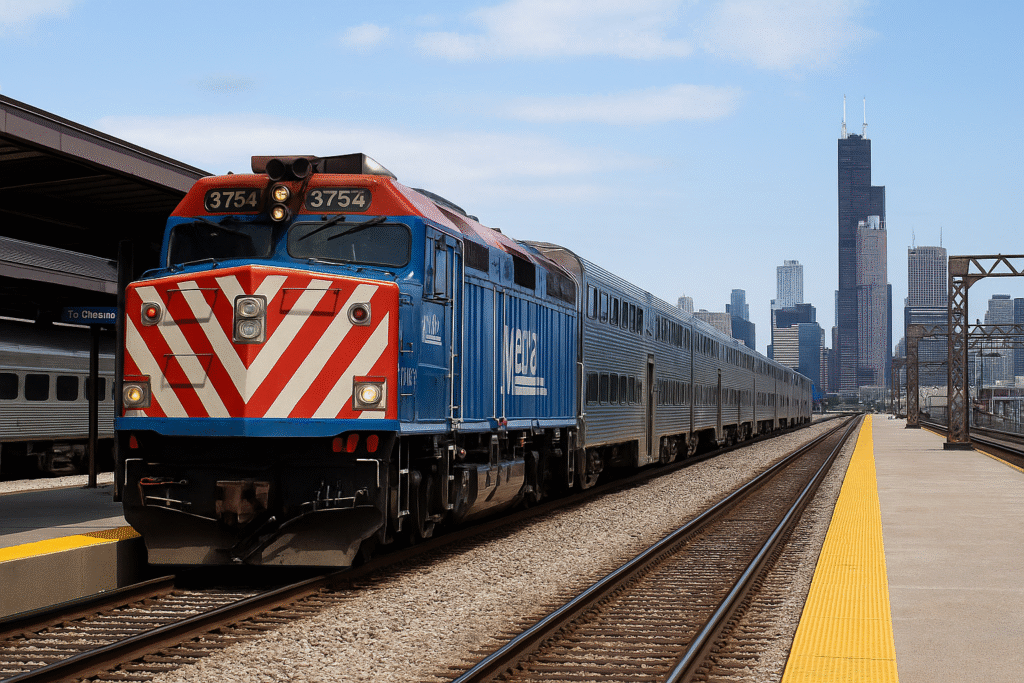
Metra’s unveiling of its 2026 budget marks a decisive moment for Chicago’s regional rail system, balancing tough financial constraints with a firm commitment to preserving full service. Though the budget includes fare hikes of 13 to 15 percent, Metra has chosen not to cut any train routes or reduce frequency—an assurance that underscores the agency’s dedication to both commuters and the city’s broader travel and tourism network.
Fiscal Tightrope: Raising Fares to Sustain Full Service
Over the past several years, Metra has faced growing fiscal stress following reductions in federal pandemic relief and uncertainties regarding long-term state funding. In response, the Regional Transportation Authority required Metra to align its 2026 plan strictly with currently available revenue sources. The result is a $1.1 billion operational budget that ups fares while keeping the entire service map intact.
Starting February 1, 2026, riders will see one-way fares climb (for example, from 50 cents to $1 in certain zones), day passes rise to $2, and monthly passes increase from $10 to $30. Although these changes represent a significant adjustment for some commuters, the alternative—service cuts—was ruled out. Metra leadership emphasizes that maintaining connectivity is essential for the many who depend on the system daily.
To gauge public sentiment and accountability, Metra has scheduled eight in-person public hearings in November 2025, plus a virtual session, giving riders a chance to voice concerns or support for the proposed budget.
Capital Investments: Modernizing Rolling Stock and Infrastructure
While fare adjustments are necessary, the heart of Metra’s strategy lies in deep capital investments. Of the $575.3 million capital outlay planned, nearly $268 million is allocated to acquiring and upgrading rolling stock. That includes $141 million for new multilevel passenger cars from Alstom, and $168.2 million earmarked for eight battery-electric trainsets from Stadler—reflecting a bold push toward cleaner, low-emission transit.
Beyond new trains, Metra is investing in station renovations, communications upgrades, and bridge reconstruction across its network of over 240 stations. Modernization efforts also prioritize improved accessibility—ensuring that stations comply with ADA standards and better serve all riders, including those with mobility challenges.
These enhancements aim to reduce delays, lower maintenance costs, and improve the overall passenger environment—capabilities critical to supporting higher ridership and offering a compelling experience for both commuters and visitors.
Sustainability at the Forefront
Environmental responsibility plays a central role in Metra’s 2026 vision. The addition of battery-electric trainsets promises lower emissions and quieter operations—vital on densely traveled corridors. These units, using advanced energy management systems, are expected to reduce reliance on conventional diesel power and align with broader regional and national climate goals.
Complementary upgrades—efficient lighting, energy-conscious station systems, and renewable energy deployment—support an enterprise-wide ethos of sustainability. For travelers, especially tourists exploring Chicago and its suburbs, these cleaner, modern trains offer an appealing alternative to car travel.
Safeguarding Regional Connectivity and Tourism
Metra’s decision to maintain full service despite the fare hike carries deeper strategic weight. For business travelers, students, cultural explorers, and weekend visitors, consistency in rail service ensures dependable access across the region—from the heart of Chicago to its outer suburbs.
In a city celebrated for its museums, architecture, parks, festivals, and neighborhoods, transit reliability is key to a positive visitor experience. Tourists increasingly expect seamless, sustainable transport options; Metra’s upgrades and rider-friendly approach support that expectation. The system’s enhanced capacity and improved service quality will assist in connecting destination nodes like Millennium Park, Lincoln Park Zoo, or suburban cultural hubs.
Moreover, by preventing route disruptions, Metra helps preserve intermodal links—bus, shuttle, and transit services—that channel passengers to attractions outside downtown. In effect, the commuter rail network operates as a backbone for the broader regional travel ecosystem.
Challenges and Strategic Imperatives
Even as the budget offers optimism, Metra must navigate key challenges. The fare increases may strain low-income commuters who depend on the rail system daily. The success of public hearings and possible modifications to the plan will be critical in maintaining public trust.
Also, rolling out new trainsets and infrastructure upgrades will require coordinated execution, contractor oversight, and system integration without major service disruption. On top of that, Metra must sustain operating reserves and guard against cost inflation in materials, labor, or energy.
The delicate balance between fare revenues and ridership retention will remain key. If higher fares push some riders to alternate modes, projected revenue gains may not materialize as intended.
Looking Ahead: A Vision for Rail in Chicago
Metra’s 2026 budget conveys a clear message: even in tight fiscal times, the agency views full service as nonnegotiable. Combined with aggressive capital investment and sustainability measures, the plan aspires toward a future of reliable, efficient, and greener commuter rail.
For daily riders, the new budget signals continued access and improvements despite financial headwinds. For visitors and regional travelers, it reinforces confidence that Chicago’s rail network remains dependable, modern, and tuned to evolving transit expectations.
More broadly, this effort positions Metra as a model for sustainable urban rail agencies: transparent in governance, strategic in investment, and resolute in service. As trainsets roll in and stations renew, the 2026 plan could mark a turning point in how the Chicago area travels—and how rail continues to support both community mobility and tourism appeal in the decades ahead.
For more travel news like this, keep reading Global Travel Wire