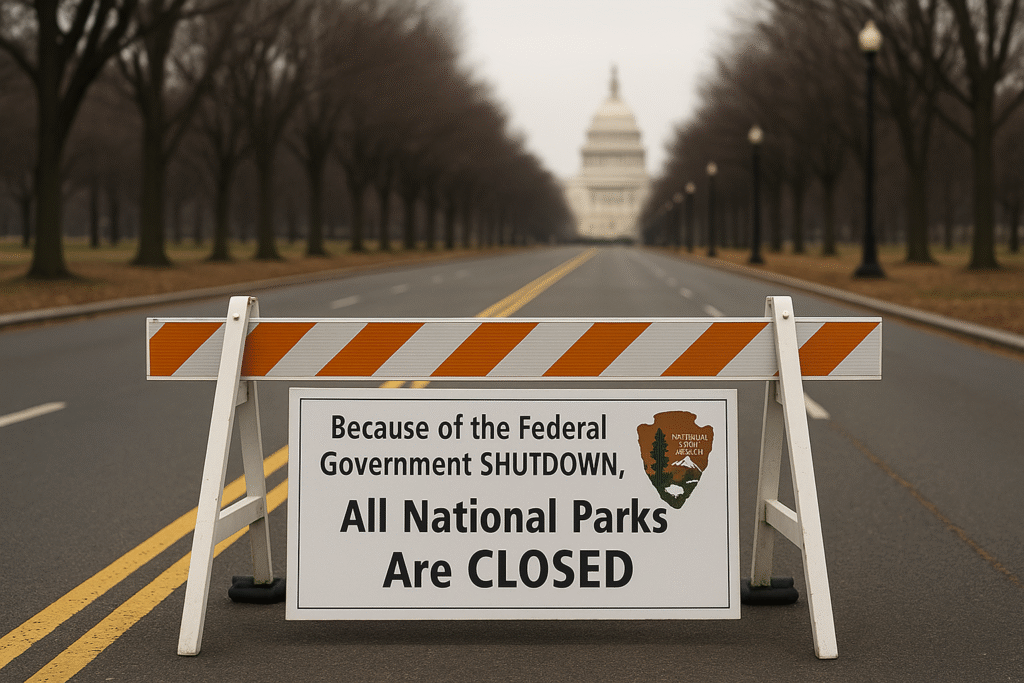
The US tourism sector is hurtling toward a tipping point as a prolonged federal government shutdown inflicts a weekly loss of around $1 billion and triggers a sharp fall in international arrivals. Service delays, closures of iconic sites, and rising travel costs are amplifying risks for travelers and tourism businesses alike.
Shutdown Reset Devastates Travel Economy
Since the shutdown began on October 1, 2025, following Congress’s failure to pass funding legislation, the effects have rippled far beyond Washington. Each week, the US travel economy is losing an estimated $1 billion due to service disruptions and closures. Many small businesses and destinations now face an uncertain survival challenge.
Many federal workers have been furloughed, while others designated “essential” continue working without pay. This includes air traffic controllers, TSA agents, and border officers—key roles that keep tourism alive. With morale low and absenteeism rising, service quality is slipping.
Air Travel Under Pressure
Air travelers are already feeling the impact. Security lines stretch ever longer as fewer TSA agents show up for duty. At major hubs like New York, Los Angeles, and Chicago, many travelers face delays or cancellations due to reduced staffing.
Air traffic control shortages are also causing strain. In one instance, a California airport lost its on-site controllers for six hours, forcing remote control systems to take over and creating chaos on the tarmac. Pilots had to coordinate among themselves for ground movements.
To manage risk, airlines have paused nonessential work like training new controllers, which only worsens the staffing deficit over time.
Border Waits and Processing Headaches
Canadian travelers, in particular, are seeing sharp effects. The US–Canada border, the world’s longest land boundary, is enduring longer wait times as Customs and Border Protection operates with minimal staff. At busy crossings, delays stretch for hours, especially during peak times.
In airports with US pre-clearance (such as those in Toronto, Montreal, and Vancouver), queues have ballooned. Some facilities may even halt pre-clearance operations entirely if staffing remains insufficient.
Whether arriving by land or air, visitors now face slower processing and heightened unpredictability.
Federal Sites Shut, Visitor Experience Falls
The shutdown has forced closures or reduced operations at many federal attractions—an unwelcomed blow for travellers who plan cultural and natural visits.
Several national parks, including Yellowstone and the Grand Canyon, are now partially or fully closed. Visitor centres, restrooms, and ranger services are unavailable. The Great Smoky Mountains National Park has managed limited operations thanks to local funding, but such efforts remain exceptions rather than the rule.
Museums, including those under the Smithsonian umbrella, have suspended operations. Monuments and historical sites no longer receive maintenance. Without access to maps, staff, or basic services, many destinations become unsafe or unwelcoming.
Economic Fallout Widens
Tourism groups warn this shutdown might not just stall recovery—it could reverse it. Inbound travel is expected to drop by over 6 percent in 2025 from 2024 levels.
International spending in the US is projected to fall by as much as 7 percent this year. The US is forecast to be the only major tourism market to see a drop in visitor spending, largely driven by fewer arrivals from Canada, the UK, Germany, and other major source markets.
Border towns and states dependent on cross-border travel are also reeling. Hotels, shops, and restaurants in those regions face steep declines in customers and revenues.
Impacts on Canadian and Global Travelers
Canadians may reconsider travel plans altogether. The combination of longer border delays, uncertain flight schedules, and closed attractions makes the US a more risky and less attractive destination.
Airlines are already reporting higher cancellation rates. Meanwhile, visa and travel authorization fees have increased—such as the rise in ESTA costs from $21 to $40, plus added visa integrity charges in many countries. These changes raise the barrier to entry.
Some travelers are opting for alternate destinations like Mexico, the Caribbean, or European nations that currently offer more stable conditions.
Outlook and Advice for Travelers
With no end yet in sight to the funding standoff, the US tourism sector may take months to recover from the damage. Even after a resolution, lost confidence and deferred trips may delay rebound.
Travelers planning trips to the US should consider flexible bookings, avoid tight connections, and build buffer time into their schedules. Monitoring airport conditions, applying for authorisations well in advance, and having alternate plans are smart precautions.
For now, the tourism story in the US is one of strain, uncertainty, and serious financial pain. The longer the shutdown drags on, the greater the long-term damage to one of America’s most vital economic sectors.
For more travel news like this, keep reading Global Travel Wire