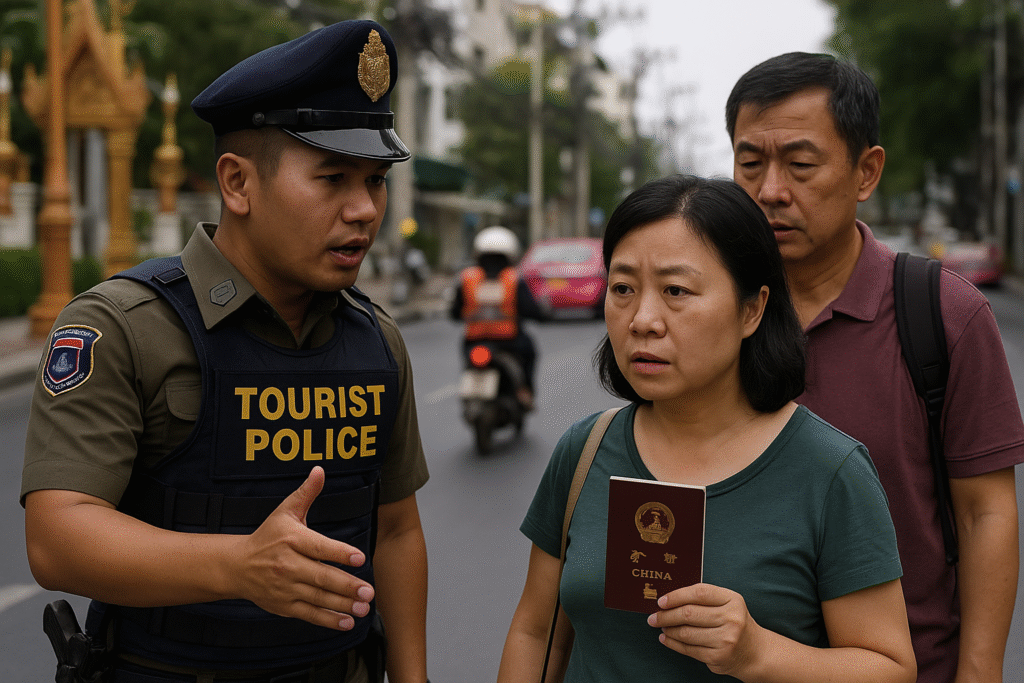
Thailand has become the center of a fresh caution from China, as the Chinese Embassy publicly warned its citizens about the growing risk of scams targeting Chinese tourists in Thailand. The appeal comes amid a rise in troubling incidents and a drop in visitor confidence.
Why the Warning Came
The alert follows a high-profile case where Chinese tourists were coerced into buying expensive items during guided tours. Videos showing pressure tactics went viral, prompting swift diplomatic response.
Authorities determined that the person orchestrating it was a Chinese national without the legal credentials to work as a tour guide in Thailand. He reportedly pocketed commissions from forced sales during the trip.
The embassy says such “too cheap” tour deals deserve close scrutiny.
What the Embassy Recommends
Chinese tourists are urged to avoid unreasonably low-cost packages. The embassy stresses that travelers should:
- Select tour operators with valid licenses
- Demand written contracts that clearly outline services
- Keep all evidence—receipts, messages, photos—in case of problems
- Report suspicious behavior immediately to Thai Tourist Police at hotline 1155
- Contact the Chinese embassy’s consular assistance if needed
Thailand law prohibits foreign nationals from acting as tour guides without proper licenses. Sticking to verified operators offers better protection.
Thailand’s Response & Legal Action
Thai authorities responded to the embassy’s requests by opening investigations. The Tourism Authority of Thailand (TAT), along with the Tourist Police, pledged to examine the tour company involved and hold negligent parties accountable.
Officials also plan to strengthen oversight of tour firms and individual guides to prevent recurrence.
To restore trust, Thailand is promoting a “safe travel certification” seal for hotels, restaurants, and shopping venues that meet safety standards. Efforts such as the “Sawasdee Nihao” campaign aim to reassure Chinese visitors of a safer environment.
Broader Challenges in Thailand Tourism
Scams and safety concerns have recently shaken China’s confidence in Thailand travel. Tourism data shows a sharp decline in Chinese arrivals in 2025 compared to 2024. Many cancelations stem from fears about scams, kidnappings, and fraudulent travel routes.
Scam operations often extend across borders into Myanmar and Cambodia, where criminal gangs run “scam centers” that trap tourists in illegal online schemes. Thailand has cooperated with China and neighboring countries to dismantle these rings.
One prominent case involved Chinese actor Wang Xing, who was lured to Thailand under a fake casting offer, abducted to Myanmar, and forced to work in a scam compound before being rescued. That incident drew intense media attention and spurred cross-border action.
Thailand’s tourism sector also faces persistent localized scams—tuk-tuk drivers who detour you into jewelry shops, gem or tailors who overcharge or supply poor quality goods, and taxi drivers who refuse meters. Bangkok is often flagged as one of the cities with higher rates of tourist fraud, especially with taxis and car rentals.
Practical Tips for Chinese Tourists
To keep your trip safe and enjoyable, follow these steps:
- Book through reputable agents. Use operators endorsed by the Thai tourism board or your embassy.
- Avoid “zero-cost” offers. Deals promising the world for a nominal fee usually hide extra charges.
- Check guides’ credentials. A legitimate guide should show licensing and identification.
- Be wary of pressure sales. If someone insists you buy something mid-tour, politely decline and leave.
- Use the meter in taxis. If the driver refuses, exit and find another ride.
- Stay in touch. Share your itinerary with friends or family and report any unusual demands or behavior.
What This Means for Thailand’s Image
Thailand still ranks among the top destinations for Chinese tourists due to its natural beauty, cultural heritage, and accessibility. But recent safety scares have exposed vulnerabilities in the tourism ecosystem.
The Chinese embassy’s advisory underscores the urgency of improving regulatory safeguards. The country’s reputation depends on building stronger accountability, stricter oversight, and cooperative law enforcement to protect visitors.
For travelers, awareness and smart choices make all the difference. Avoiding suspicious deals and staying alert can help you enjoy Thailand’s charm without falling victim to deceit.
For more travel news like this, keep reading Global Travel Wire