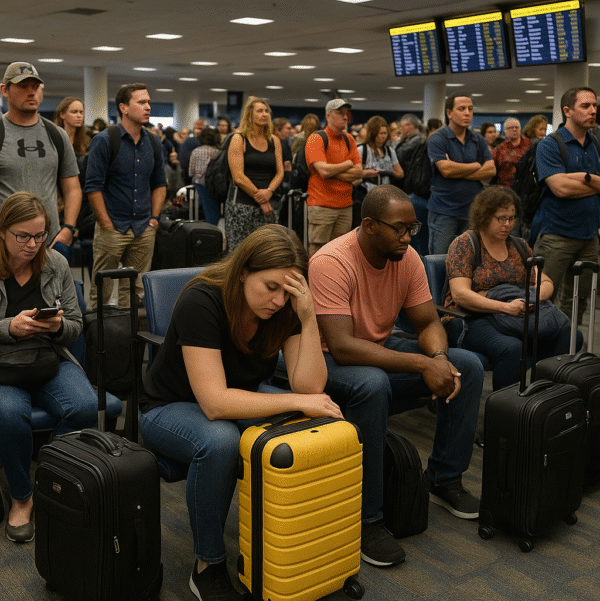
On October 19, 2025, the US air-travel system was thrown into widespread disarray. Major carriers—such as Delta, American, Southwest, Alaska and United Express—grounded around 110 flights and recorded more than 7,300 delays. From Nashville to Dallas, Boston to New Orleans, thousands of passengers found themselves stuck in airports, unable to reach their destinations or secure viable alternatives.
Major Hubs Hit Hard
Several major airports saw especially severe disruption. At Dallas-Fort Worth (DFW), approximately 28 flights were cancelled and over 260 delayed. Chicago O’Hare (ORD) reported two cancellations but more than 450 delayed flights. Charlotte/Douglas (CLT) and Atlanta (ATL) each dealt with more than 300 delayed flights. Even airports with fewer cancellations, like Newark (EWR) and San Francisco (SFO), recorded large numbers of delays.
Airlines Struggling to Cope
The complications weren’t limited to airports – airlines themselves were scrambling. American Airlines logged 35 cancellations and over 1,000 delays, Southwest faced more than 1,400 delayed flights, Delta had over 750 delays and United recorded more than 600 delays. Even regional carriers saw major impacts. These disruptions forced many travellers to spend hours rebooking, waiting in crowded terminals, or cancelling plans altogether.
Root Causes: Shutdown + Technical Problems
The primary driver of the chaos stems from a federal administrative shutdown which began earlier in October. Essential aviation workers—including air traffic controllers and screening staff—are still required to work, but many are going unpaid. The staffing shortfall has worsened longstanding vulnerabilities, leaving ground operations and air traffic control under strain. The Federal Aviation Administration (FAA) has reported severe delays linked to staffing issues, as well as reports of controllers calling in sick or unable to remain on duty at full capacity. At the same time, technical and operational glitches at airlines and airports compounded the problem, making it difficult for staff to recover normal flows and increasing the domino effect of delays.
Regional Impact on Tourism and Business Travel
This disruption hit major leisure and business travel markets. Airports in tourist-heavy destinations—such as New Orleans, Nashville and Boston—felt the ripple effect as delays and cancellations caused missed connections, cancelled hotel nights and frustrated travellers. Business travellers flying into hubs like Dallas or Atlanta found their plans upended, with knock-on effects for meetings, conventions and corporate schedules.
What This Reveals About the Aviation Network
The outage highlights systemic weaknesses. Years of under-staffing in air-traffic control combined with a shutdown tipping point have created a fragile environment. When multiple layers of the system face stress—ground handling, air traffic control, airline operations—the entire network falters. The data shows that delay causes linked to staffing issues have jumped from typical levels around 5% to over 50% in recent days, according to union and agency statements. The industry needs to reassess its contingency readiness, invest in staffing resilience and upgrade ageing systems to mitigate future risk.
Travel Advice for Passengers
For travellers in this environment:
- Check flight status early and often. Delays evolve rapidly when the system is stressed.
- Consider booking flexible or refundable tickets when possible.
- Arrive at the airport earlier than usual—ground delays and long lines at screening may occur.
- Have a backup plan: alternate flight routes, other airports nearby, or even road-travel options.
- Stay informed via mobile alerts from your airline and monitor airport advisories.
What Comes Next?
Unless the shutdown resolves and staffing levels stabilise, further disruptions are likely—especially during peak travel periods. The aviation sector now faces mounting pressure to strengthen its infrastructure and guard against future shocks. The events of this week underscore just how interconnected the system is and how quickly problems in one segment can cascade through the entire network.
This significant breakdown in the US air-travel network has left many passengers stranded, disrupted tourism and business travel, and revealed deep vulnerabilities in operations. Resolving the shutdown and shoring up staffing and technical systems will be essential to prevent a repeat of this sweeping travel chaos.
For more travel news like this, keep reading Global Travel Wire