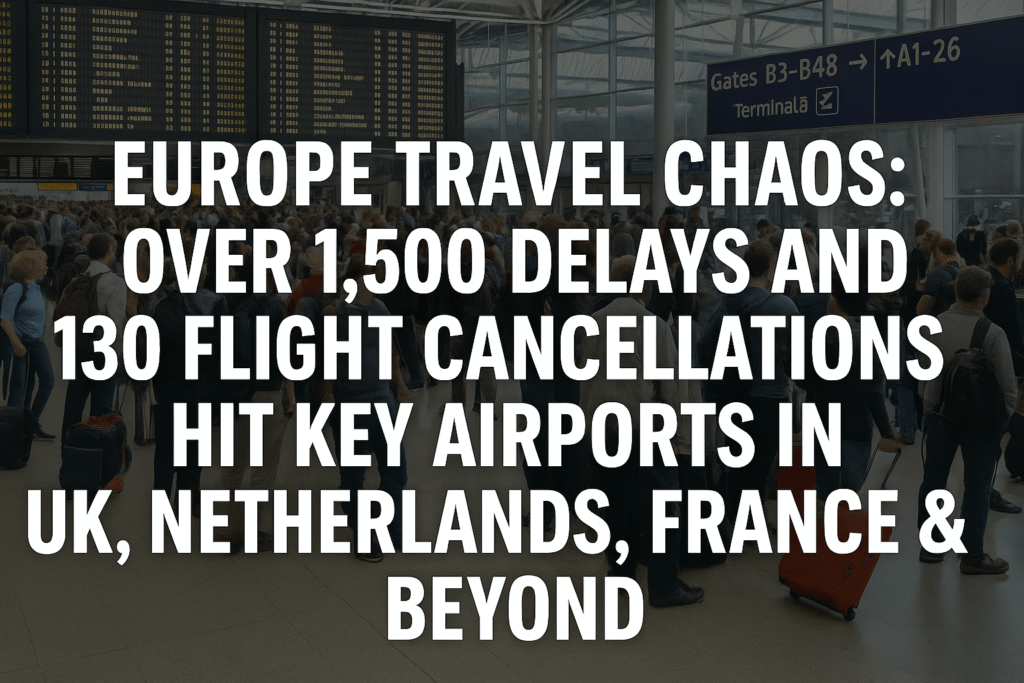
Thousands of travellers across Europe are grappling with significant disruption as a wave of flight cancellations and delays affects major hubs and regional airports alike. A span of over 1,500 delayed flights and more than 130 cancellations has struck airlines and airports across the United Kingdom, Netherlands, France, Norway, Italy and other European countries, leaving many visitors stranded and scrambling for solutions.
This disruption touches some of Europe’s most prominent airports — including London (Heathrow and Manchester), Amsterdam (Schiphol), Nice (Côte d’Azur), Oslo (Gardermoen) and Milan (Malpensa) — as well as myriad other cities offering vital global connections. Carriers such as British Airways, Air France, Brussels Airlines, Swiss International Air Lines and Helvetic Airways are among those confronting the challenge of disrupted schedules.
Disruption across major airports and travel routes
At key European gateways, the scale of disruption is palpable. In Paris at both Charles de Gaulle and Orly airports, cancellation percentages and delay rates have climbed sharply. For example, at Charles de Gaulle a noticeable portion of flights under Air France and partner carriers were cancelled, while many more were delayed. Similar issues have emerged in Amsterdam: several flights operated by KLM and other carriers were cancelled or experienced heavy delays. In London at Heathrow, British Airways reported a double-digit number of cancellations alongside hundreds of delays — many travellers report arriving at the airport only to find gate changes or cancelled flights with little notice.
The effect reaches into smaller regional airports too. Geneva, Basel/Mulhouse, Stuttgart, Toulouse, Milan, Oslo and other hubs reported disruptions, though some with lower cancellation percentages, the sheer volume means a high number of affected passengers. In Italy, Milan’s Malpensa International faced a substantial number of delays and a handful of cancellations from airlines like easyJet and British Airways. In Scandinavia, airports such as Helsinki-Vantaa and Stockholm-Arlanda observed cancellations and delays tied to both airline operational issues and staffing pressures at airports.
Why is this happening?
The reasons for the widespread travel disruption are varied, reflecting a mix of operational, regulatory and technical stresses. Among contributing factors:
- Staffing shortages at both airlines and airports have intensified pressure on flight operations, especially in peak travel periods.
- Airport operational bottlenecks — including passport control delays, new systems being introduced and evolving staffing protocols — have slowed turn-around times and pushed flights off schedule.
- Technical disruptions, such as cyber-related outages affecting check-in and boarding systems at several major European airports, have forced cancellations and heavy delays under manual processing conditions.
- Weather- and infrastructure-related issues also play a role; airports must juggle both scheduled flights and the ripple effects when one delay or cancellation affects multiple connecting flights across the network.
This mixture of causes means that travellers may face delays or cancellations even when flying with a previously reliable carrier or through a major hub. The network effect means that one cancelled or late inbound flight can cascade through schedules.
What travellers should do if their flight is cancelled or delayed
If you find yourself in the unfortunate position of having your flight cancelled or delayed, here are actionable steps to reduce stress and regain control:
Stay immediately updated: Keep a close watch on communications from your airline via email, mobile app or SMS. Airlines will often issue notifications of cancellation or delay, but you may need to act promptly to secure alternatives.
Contact your airline as soon as possible: Whether you’re at the airport or away from it, reach out to customer service for rebook options. At busy airports you may face long queues — online or phone contact may be more efficient.
Know your rights: Within the European Union and through many airline policies, you may be entitled to re-booking, a refund or assistance (meals, accommodation) depending on the length and cause of the delay or cancellation.
Consider alternate routing: If your original flight is cancelled, ask whether the airline can accommodate you on a partner carrier or alternative airport. Explore last-minute rebookings proactively.
Be ready for extended wait times: At some airports, the delays may force you to remain longer than expected. Make sure you have access to essentials (medication, chargers, snacks) and be prepared for changes to ground transport or hotel bookings.
Document your situation: Keep receipts, boarding passes, emails and other evidence in case you wish to claim compensation for rights under the relevant passenger protection regulation.
Stay flexible: Travel itineraries may need to shift—changes to flights, connections or even accommodation may be necessary.
What this means for future travel planning
For anyone booking travel to, from or through Europe in the coming weeks, the current wave of disruptions offers a cautionary tale. To travel smarter during this period:
- Build extra buffer time into itineraries: allow more than usual for connections and potential delays.
- Avoid tight onward connections if possible: a delayed inbound flight may jeopardise a tight link.
- Choose airlines and routes known for reliability and strong contingency support.
- Opt for travel insurance with coverage for cancellations and delays — it may prove invaluable when schedules shift.
- Remain alert for system-wide issues: apart from airline or airport problems, the broader network can be impacted by external causes (cyber-disruption, staffing strikes, weather) that push beyond one carrier.
- Stay connected: monitor airport status updates, airline notices and travel-advisory alerts to stay ahead of issues and reposition if needed.
Final thoughts
This outbreak of widespread flight cancellations and delays across Europe is a stark reminder of how fragile global travel networks can become under pressure. From top international hubs to regional airports, travellers are being challenged by uncertainty and sudden changes. Yet with informed steps—knowing your rights, staying flexible, and monitoring your journey—you can better navigate these disruptions. The skies may be unsettled for now, but travellers equipped with preparation and patience will still reach their destinations — just with a bit more caution and contingency planning.
For more travel news like this, keep reading Global Travel Wire