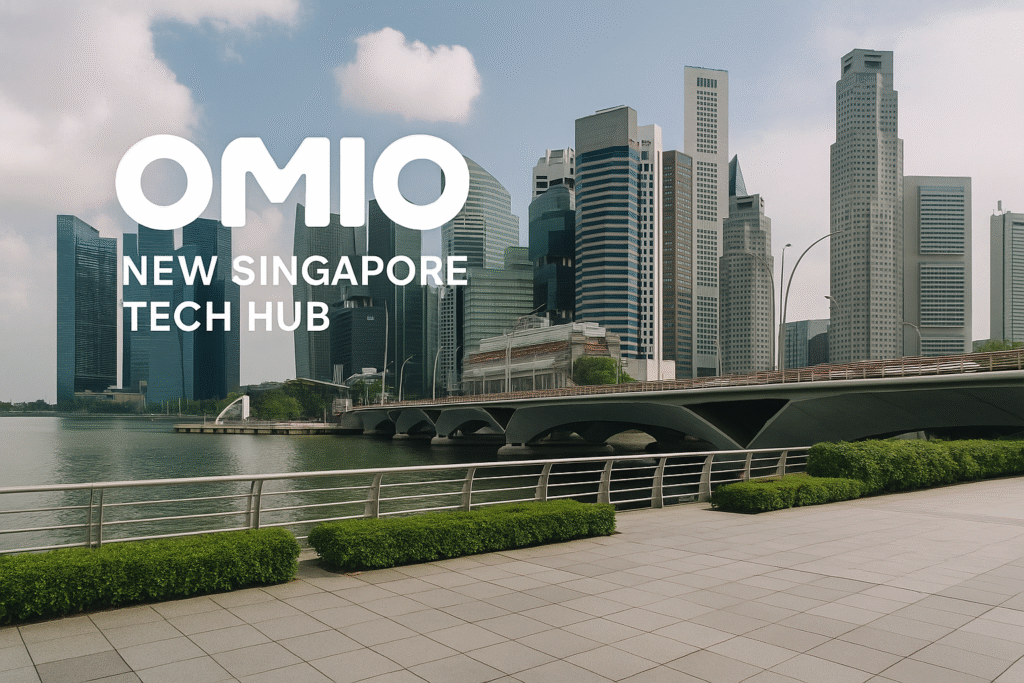
A major shift is underway in global travel booking with the launch of a new technology hub in Singapore by the multimodal platform Omio. This strategic move comes as part of the company’s drive to map out a future where travel by train, bus, ferry or plane becomes seamlessly integrated and highly personalised, powered by artificial intelligence and a robust regional footprint.
At the heart of the story is Omio’s new Singapore hub, officially operational since July 2025, which has been established to spearhead the company’s “AI-first” platform agenda. The hub is not just a regional office—it’s Omio’s Asia-Pacific technology centre, tasked with re-imagining how travellers book, connect and navigate journeys across multiple transport modes. Supported by a key partnership with EDBI, Singapore’s investment arm, this expansion brings together talent, tech and regional mobility infrastructure in one place.
Why Singapore? The city-state offers a tech-forward environment, a strong talent pool in AI and mobility engineering, and a regional location well-placed for the fast-growing travel markets of Southeast Asia. Omio’s presence there enables rapid scaling of its services in countries such as Malaysia, Thailand, Vietnam, Indonesia and Cambodia. With thousands of carriers already listed across flights and buses, the new hub will accelerate integration of additional modes like ferries, ride-shares and airport transfers.
For travellers and tourism operators, the implications are significant. Omio already unifies booking options in more than 46 countries across four continents. With the Singapore investment, the company is well-positioned to bring a host of benefits to users and destinations alike:
- Greater Choice and Integration: A journey may now include a bus leg, ferry crossing and train ride, all booked through a single interface. This simplifies how tourists plan regional trips—especially in areas where transport modes are fragmented.
- AI-Powered Planning: From pricing predictions to optimal route selection based on real-time conditions, Omio’s AI ambitions mean the travel booking experience becomes smarter. Travellers could receive suggestions not only for the best price, but the easiest connection, lowest carbon option and fastest transfer.
- Regional Access: For Southeast Asian destinations, improved connectivity via Omio means they become more discoverable. Smaller cities or lesser-known routes may now receive more attention through the platform’s inventory expansion and promotion.
- Seamless User Experience: With a dedicated technology hub focusing on user-centric design, the platform aims to make booking travel smoother—from comparison to payment to onward journey.
From Omio’s perspective, the hub represents a major growth milestone. Its CEO has emphasised the aim of offering a “seamless travel experience for everyone, anywhere, anyhow”, and sitting at this strategy is artificial intelligence. The Singapore centre is home to a growing team of AI engineers, product managers and cross-functional specialists who focus on evolving how mobility data, supply-side integration and customer demand interact.
Beyond technology, the partnership with EDBI underscores the strategic importance of Singapore as a digital-mobility hub in Asia. By collaborating with local investment networks and policy frameworks, Omio can tap into commercial, regulatory and talent advantages unique to the region. This positions the company not only as a regional player but as a global mobility innovator.
For tourism stakeholders—including accommodation providers, tour operators, local transport services and destination marketing organisations—the rise of platforms like Omio signals fresh opportunities. As more travellers rely on integrated, multi-leg bookings, destinations beyond the major gateways may benefit from improved visibility and access. A traveller might fly into a major hub, then seamlessly continue via ferry and bus to a remote region—all routed and booked in one go.
The role of AI in travel tech is evolving rapidly. Platforms are shifting from being simple comparison tools to full-journey orchestrators. Omio’s move to “AI-first” suggests that personalisation, predictive analytics and mobility orchestration are becoming core competencies rather than optional features. The Singapore hub is where this capability is being built and scaled.
Looking ahead, the expansion paves the way for several developments:
- Deeper ground-transport integration in Southeast Asia: More ferry routes, local bus networks and smaller carriers will be added.
- Smarter user interfaces: Expect improved mobile apps with suggestions tailored to time-of-day, destination type (city vs nature) and dynamic pricing.
- Better supply-side partnerships: Local operators in Asia may tap Omio’s network to reach broader audiences.
- Emergence of destinations beyond the usual suspects: With easier booking, less-visited regions may gain a share of the travel pie.
However, the transformation is not without its challenges. Data-privacy, regulatory alignment across cross-border transport modes, and maintaining service reliability in diverse geographies are significant considerations. For destinations and tourism operators, the task will be to ensure they are integrated into this evolving ecosystem—so that better booking technology translates into actual visitor flows and economic benefit.
In conclusion, Omio’s Singapore hub marks a key moment in travel-tech evolution: it signals that booking a journey will increasingly be less about selecting one mode and more about orchestrating a full mobility map. For travellers, that means simpler planning, greater flexibility and a gateway to previously harder-to-reach destinations. For suppliers and destinations, it offers an invitation to plug into a smarter, AI-driven network where connectivity, discoverability and efficient journeys become the new normal. This expansion is not simply corporate growth—it’s a signal that the future of travel is being coded, in Singapore and beyond.
For more travel news like this, keep reading Global Travel Wire