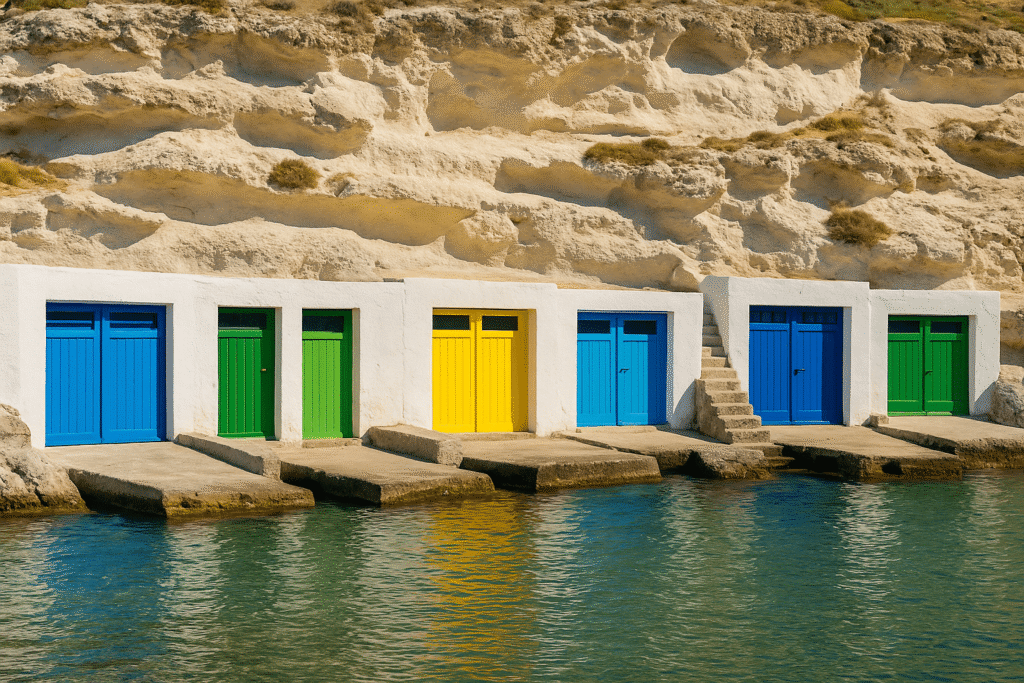
The Greek government has introduced a landmark measure to protect the signature seaside boat garages known as syrmata on the island of Milos. These distinctive structures, found chiefly in the village of Mandraki, are set to be officially designated as protected heritage sites under a ruling by the Ministry of Shipping and Island Policy. The new rule prohibits the conversion of these garages into tourist accommodations such as Airbnb-type rentals, thereby preserving their historic character.
Syrmata: Anchors of Milos’ Fishing Legacy
Syrmata are minimal-footprint, often rock-carved boathouses used over generations by local fishermen to store their vessels during winter. These are typically about six metres long and feature vibrant doors painted in blues, yellows or greens — hues chosen by boat owners and recycled from boat paint. Over time they became an indelible part of Milos’s visual identity and part of the island’s cultural narrative of sea-life and fishing tradition.
Habitually constructed directly on or into the shoreline, the lower level of a syrma stored the boat while the upper space was often a modest living quarter in earlier times. These buildings reflect both architectural ingenuity and local way of life tied to the Aegean Sea.
Commercial Pressures and Conservation Response
With Milos gaining popularity among tourists, many syrmata and similar structures came under pressure. Short-term rental platforms and villa conversions threatened their original purpose and appearance. Recognizing this risk, local officials and the Ministry acted to prevent further commercial repurposing that might erode the island’s heritage.
By legally designating an initial group of syrmata as protected, Greece ensures no future conversion into tourist accommodation will be permitted for those specified structures. This protection helps maintain the authentic shoreline ambience and supports longer-term sustainable tourism rather than short-term rental exploitation.
The First Protected Batch: 58 Syrmata in Mandraki
The first phase of this initiative covers 58 syrmata in Mandraki, officially published in the government gazette. These structures can no longer be altered for commercial rental use and their historic form must be preserved. Both local community members and heritage advocates have welcomed the move as a positive step for Milos and its cultural landscape.
Local Support and Community Impact
The decision enjoys wide local backing — residents, artisans and local government agree that preserving the syrmata is vital for Milos’s identity. The municipality sees the protection measure as a way to retain traditional architecture and safeguard livelihoods rooted in the sea. This initiative also aligns with broader state efforts to promote tourism that respects local culture, environment and history.
Milos as a Model of Heritage-Focused Tourism
By protecting its syrmata, Milos sets an example for island destinations worldwide facing the tension between tourism growth and cultural preservation. The move emphasises that heritage structures need safeguarding from commodification if authentic destination character is to survive. Sustainable tourism does not mean halting development, but managing it in ways that respect place, people and history.
Beyond the Syrmata: Milos’ Wider Allure
Milos already attracts visitors with its volcanic landscapes, dramatic coastlines, unpredictable geology and archaeological treasures. The syrmata are just one element of an island whose charm lies in natural variety and cultural depth. By protecting these boat garages, the island preserves yet another unique feature for visitors to enjoy — not as a rental “product” but as a living piece of heritage.
Why This Matters for Visitors
For travellers seeking more than a generic holiday, Milos offers something memorable: boat garages with colourful doors, waterside villages where life still flows from the sea, and architecture that tells a story of place. Protecting syrmata means future visitors will see the same authenticity earlier visitors saw, rather than a mass-tourism gloss.
Final Word
The decision to ban Airbnb-style conversion of Milos’ syrmata is both bold and timely. It recognizes that cultural heritage and tourism can coexist — but only if development is managed with care and respect. Milos is choosing not just to be seen, but to be experienced in a way that honors its past.
For more travel news like this, keep reading Global Travel Wire