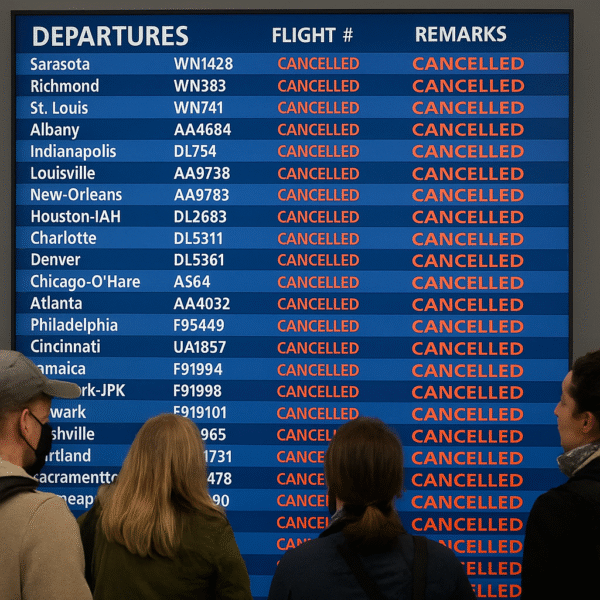
The U.S.. air travel landscape entered a turbulent phase as the holiday rush accelerated, with thousands of passengers across the country facing cancellations and extensive delays. On a recent travel day, major carriers cancelled 162 flights and delayed more than 7,000 departures, leaving many travellers stranded and scrambling for alternatives. The ripple effects were felt at airports from Nashville to Chicago and Orlando to Atlantic City, as operational issues, weather and staffing challenges combined to create one of the busiest and most frustrating periods for airlines in recent months.
The scale of the disruption is striking. For example, at one popular tourist hub, flights were delayed in excess of 300 departures in a single day—accounting for more than half of the scheduled service for that airport. At others, smaller but important regional gateways faced mass re-bookings and stranded passengers as connections were missed and staff struggled to keep pace with the volume of disruptions.
At the core of the problem are overlapping factors: weather conditions, high seasonal demand, and chronic staffing deficiencies—especially in air traffic control and ground operations. With the federal government shutdown putting additional stress on aviation staffing—particularly among air traffic controllers—industry watchers have warned of cascading effects on flight reliability. As one aviation expert noted, the intersection of heavy holiday volume and strained systems has heightened risks for passengers.
Major airports across the U.S. reported severe operational strain. In one southern tourist city, ten cancellations were accompanied by nearly 350 delayed flights, leaving large sections of the departure board blank for extended stretches. Smaller regional airports saw limited re-booking options, forcing many travellers to seek alternative routes or abandon holiday plans altogether. At a major hub in the Midwest, heavy delays caused thousands to miss connecting flights, compounding the chaos with long layovers and uncertain schedules.
The airlines themselves were not immune. Several major carriers reported hundreds of delayed flights each. One large carrier handling both domestic and international flights experienced over 1,000 delays and dozens of cancellations in key hubs such as Dallas/Fort Worth and Chicago. Another major U.S. domestic carrier reported nearly 1,500 delayed flights, a figure exacerbated by limited crew availability and tight turn-around schedules. Low-cost carriers also recorded hundreds of disruptions, leaving travellers at smaller airports particularly vulnerable, as fewer alternative flights were available.
The passenger experience has been harrowing. Crowded terminals, extended wait times, and limited communication from airlines were widely reported. Many passengers found themselves re-booking flights at last minute, with fewer options and higher stress. Some were left overnight in airport terminals, while others dealt with cascading delays that disrupted entire itineraries. For travellers already navigating holiday timing, the situation has added considerable anxiety and expense.
Industry insiders say this is a system-wide issue. The combination of aging infrastructure, lower staffing levels, and elevated travel demand is exposing vulnerabilities in the U.S. aviation sector. The federal shutdown has further impaired key support systems tied to air traffic control and staffing, resulting in fewer available controllers and greater strain on remaining personnel. Without swift action, travellers may face ongoing uncertainty throughout the holiday season.
For travel industry professionals, the message is clear: build in contingency time, plan for delays, and communicate clearly with passengers about the potential for disruption. Tour operators, airlines and airports need to collaborate proactively—especially as volume ramps up and margins tighten. For passengers, the advice is to check flight status frequently, arrive early, and anticipate alternative routing or overnight stays.
While airlines continue to operate and maintain most flights on schedule, the high volume of disruptions in this period serves as a warning. Even routine travel plans can be affected by staffing or scheduling shortfalls. The travel day in question may not represent the worst of the season, but it highlights how fragile the system can be under stress.
Looking ahead, recovery will require more than just better weather or improved forecasting. Airlines may need to bolster staffing, airports must enhance resilience, and travellers must adjust expectations. For holiday travellers, flexibility has become paramount. For the aviation sector, operational reliability is under new scrutiny—even in what is typically a predictable peak period.
In sum, the wave of cancellations and delays across U.S. airports is a wake-up call for the travel ecosystem. As thousands of travellers navigate this upheaval, the lessons are clear: plan for the unexpected, stay adaptable, and expect that even the most routine trips may encounter turbulence.
For more travel news like this, keep reading Global Travel Wire