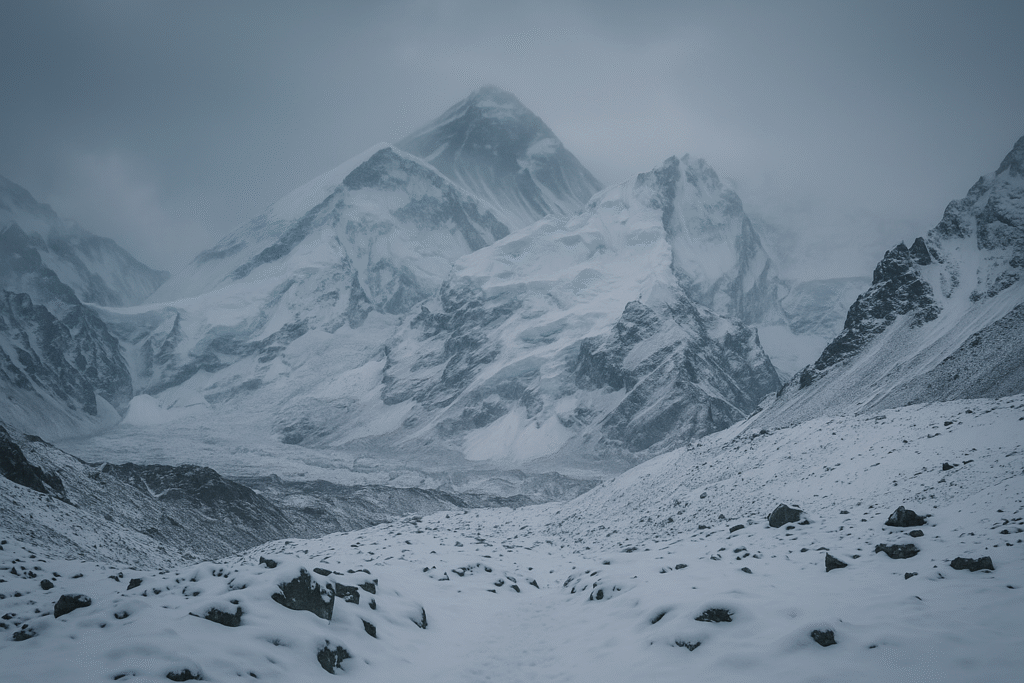
Tourism in the heart of the Himalayas has hit a sudden pause as extreme weather from Cyclone Montha has unleashed record-breaking snowfall and forced a shutdown of visitor access to the northern route of Mount Everest. Authorities on the Tibetan side have officially suspended all tourist and climbing operations, halting ticket sales and road access as the region grapples with heavy snow, high winds and sharply falling temperatures.
Himalayan High Country Under Hazardous Conditions
The southern flank of the Himalayas has borne the brunt of this rare winter-style weather event. Snow-accumulation on Tibetan access roads soared swiftly as warm, moist air drawn northwards by Cyclone Montha collided with the cold, high-altitude mountains. Portions of the route up to Everest Base Camp (north) are now iced over, visibility is near zero at times, and avalanche risk is elevated. On the Tibetan side, the county of Tingri, the main gateway for northern ascents, has already shut down tourist flows and alerted local operators to extreme caution.
Over on the Nepali side, climbing and trekking corridors across the Everest, Annapurna, Manaslu and Dhaulagiri regions have likewise been temporarily halted, as authorities there await more stable conditions before allowing visitors to proceed. The unusual volume of snow so early in the season has made standard high-altitude logistics more hazardous and unpredictable than ever.
Tourism Impact: Expedition Schedules Thrown Off Course
For travellers and expedition groups, this closure represents a significant disruption. Many mountaineering and trekking firms have already paused operations, postponed departures or re-scheduled expeditions until conditions improve. Some companies are offering refunds or shifting bookings into later months, recognising the elevated risk and reduced access profiles for their clients.
Local communities that depend heavily on tourism revenue are feeling the effect. Lodges, porters, guides and base-camp support services around Everest’s northern and southern portals face declining bookings, while pending travel launches have been held in abeyance. This weather-induced slow-down arrives at a time when operators had hoped to gain momentum ahead of the winter-spring climbing season.
Even when normal operations resume, the backlog of cancelled trips and the need to clear snow, repair trails and ensure safety may mean a compressed season ahead. Visitors planning travel in coming weeks are being advised to maintain flexibility, monitor weather bulletins and factor in potential delays to the mountain-access window.
Safety, Rescue and Government Coordination
Authorities in Tibet mobilised emergency operations rapidly once the snowfall began. Snow-clearing teams, avalanche-risk monitors, weather-observation stations and rescue-patrol units are all active in the Tingri region. On the Nepali side, high-altitude helicopters and rescue bases have been placed on standby amid a forecast of further snow and possible avalanches.
Both India’s and China’s meteorological agencies have flagged such Himalayan snowfall events as part of an emerging trend linked to more volatile moisture patterns and shifting atmospheric flows. With Cyclone Montha continuing to influence weather over the Bay of Bengal and the Himalayas, slow-moving storms and moisture surges are not yet over, making high-altitude travel more unpredictable.
In response, joint cross-border coordination between Himalayan-region governments has intensified. Data-sharing on snowfall, avalanche risk and clearing operations is now more frequent. Tourism ministries are also reviewing emergency-response and visitor-safety protocols, aiming to strengthen resilience in the face of future disruptions.
What Travellers Should Know
For those who were planning a trip to Everest or surrounding high-mountain regions, here’s what to keep in mind:
- Trips to the northern approach of Mount Everest are temporarily suspended. No new permits are being issued and travel authorities are advising postponement.
- If you are already in the area, adhere to local government guidance: stay in approved lodges, avoid moving into high-risk zones, monitor weather information and follow evacuation or safety instructions.
- Expect itinerary changes: trekking routes may be modified, delays in transport are probable and some services may be unavailable until conditions stabilise.
- Insurance: ensure your travel insurance policy covers weather-related disruptions, especially those involving high-altitude trekking or climbing.
- Future bookings: if you are planning for the coming season, consider flexibility in dates and ensure your provider has contingency plans in place.
Resilience and Long-Term Outlook
While the immediate impact on Himalayan tourism is severe, the pause may carry silver linings ahead. Authorities are using this downtime to inspect trails, reinforce infrastructure, upgrade weather-monitoring systems and train guides in enhanced risk protocols. There is growing recognition that mountain tourism must adapt to more extreme and erratic weather windows.
For visitors in the long term, destinations such as Mt Everest and surrounding Himalayan zones will remain highly attractive—but travellers and operators alike may need to adjust their expectations. Travel windows could shrink, insurance cover may become stricter and flexible booking options more important.
Final Word
The closure of access to Mt Everest’s northern route after heavy snowfall tied to Cyclone Montha is a stark reminder of nature’s power in high-altitude tourism landscapes. While the mountain and its surrounding regions await safer conditions, travellers, guides and local communities alike are adjusting to a new reality where weather, access and timing must align more carefully than ever. For now, patience, preparation and respect for environmental forces are essential. Once access resumes, the world’s highest peak will welcome visitors again—stronger, perhaps wiser and ready for a more resilient era of high-mountain adventure.
For more travel news like this, keep reading Global Travel Wire