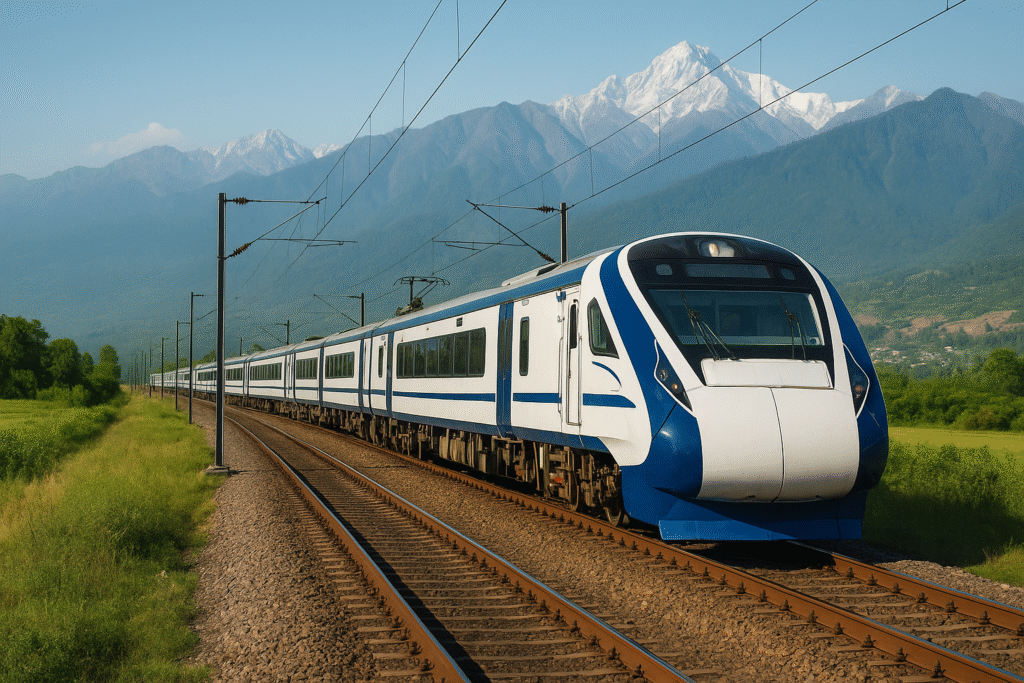
Kashmir stands on the verge of a major transportation milestone as Northern Railways works to link the Valley directly with major Indian cities. The completion of the Udhampur–Srinagar–Baramulla Rail Link (USBRL) marks a turning point in regional connectivity, providing the first-ever continuous rail line between Kashmir and the rest of India. This monumental achievement has transformed travel and trade in the Union Territory, which had long relied on challenging mountain roads for access to the plains.
The USBRL project, one of India’s most complex engineering feats, connects the Valley through tunnels and bridges across the Pir Panjal range. With this link now operational, the dream of seamless rail travel to and from Kashmir is becoming a reality.
Vande Bharat Express Ushers in Modern Travel
The successful launch of the Vande Bharat Express between Katra and Srinagar has given the region a modern, fast, and reliable mode of travel. These semi-high-speed trains have drastically reduced journey times, improved comfort, and introduced features such as reclining seats, smart lighting, and advanced safety systems.
Northern Railways has now turned its focus toward expanding this success to longer routes. The upcoming plans will see direct trains from Kashmir to Delhi, Mumbai, and other metros, ensuring faster travel and better economic integration with the rest of the country.
Reasi Station Becomes a New Halt
As part of this network expansion, Reasi railway station has been introduced as a new halt for the Srinagar–Katra Vande Bharat route. The halt is scheduled twice a day, with short two-minute stops to accommodate local passengers.
This decision is significant for the region, as Reasi serves as the gateway to the famous Mata Vaishno Devi Temple, one of India’s busiest pilgrimage sites. Improved rail access will benefit millions of devotees and ease road congestion along the Katra–Reasi corridor.
Authorities will monitor passenger turnout and demand before confirming Reasi as a permanent halt. For now, the addition marks a step forward in making rail travel more inclusive for local communities and visitors alike.
Boost for Pilgrimage and Tourism
Reasi’s new connection strengthens both tourism and religious travel in the region. The district is home to engineering marvels such as the Chenab Rail Bridge, the world’s highest railway bridge, and the Anji Khad Bridge, India’s first cable-stayed rail bridge.
The improved access will support a range of tourism segments, from religious journeys to adventure and heritage travel. Northern Railways is also exploring options to introduce dedicated tourist trains that will connect Reasi with scenic destinations and cultural landmarks across Jammu and Kashmir.
Reliable Transport in Mountainous Terrain
Operating rail services in Kashmir’s mountainous landscape requires constant vigilance and innovation. Landslides, snowfall, and intense rainfall are frequent challenges. Northern Railways has made major investments in ensuring year-round reliability through tunnel protection systems, track stabilization, and advanced monitoring technologies.
When highway traffic faced heavy disruption due to monsoon rains earlier this year, railway teams ensured that relief and passenger trains continued operating between Banihal and Katra. These measures have made the railway network a dependable alternative during weather-related emergencies.
Toward Direct Connectivity with Indian Metros
Planning is underway to launch long-distance train services from Kashmir to major metros like Delhi, Mumbai, Chennai, and Kolkata. These trains will not only carry passengers but also serve as critical freight links, improving the movement of agricultural products, industrial goods, and essential supplies.
The direct routes will also enhance opportunities for students, traders, and defense personnel, making travel easier and more efficient. This step represents a major stride in integrating Kashmir’s economy with national markets and infrastructure.
Strengthening the Local Economy
The economic impact of the new connectivity is already visible. Easier movement of goods and people supports local industries, agriculture, and handicrafts. Increased tourism inflow boosts hospitality and small business revenues. For the youth, better transport means easier access to education and employment opportunities in other parts of India.
Local authorities expect the rail expansion to generate thousands of direct and indirect jobs through construction, maintenance, and tourism-related activities.
Symbol of a Connected Future
The completion of the USBRL and the ongoing expansion under Northern Railways symbolize a new era of inclusion and progress for Jammu and Kashmir. From cutting through the Pir Panjal mountains to building the world’s tallest rail bridge, the project showcases India’s engineering excellence and determination to connect every region of the country.
With direct train services on the horizon, the people of Kashmir can look forward to smoother travel, greater business opportunities, and stronger ties with the rest of the nation. This transformation not only reshapes transport in the region but also represents a defining step toward unity, growth, and long-term prosperity.
For more travel news like this, keep reading Global Travel Wire