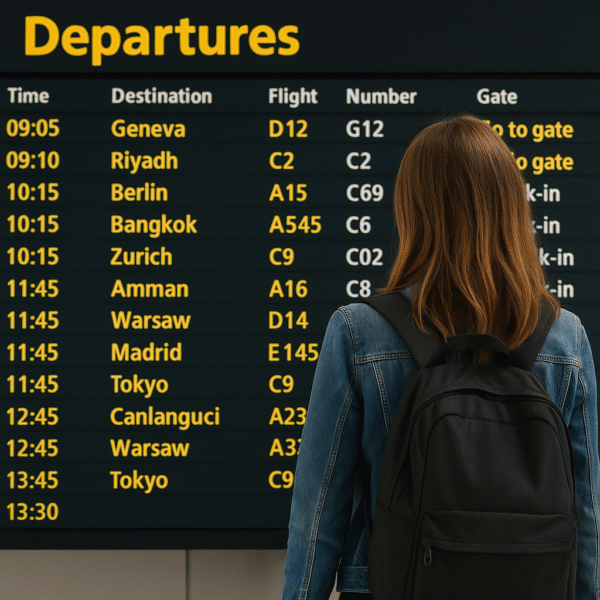
The Foreign, Commonwealth & Development Office (FCDO) has updated its travel guidance to include several key destinations. Among them: Saudi Arabia, Germany, Thailand, Switzerland, Jordan and Poland. The advisory reflects rising regional tensions, tightened visa and entry systems, and evolving border policies. Travellers from the UK need to pay close attention.
Saudi Arabia – Heightened Security and Visa Reforms
In Saudi Arabia, the FCDO advises against all travel within 10 km of the Yemen border, and against all but essential travel in the 10-80 km buffer zone. The region remains unstable amid wider Gulf tensions.
Entry rules are also evolving. A passport must be valid for at least six months upon arrival and previous travel to Israel may result in refusal of entry. E-visas now cover multiple entries for 90 days across a year, while electronic visa waivers allow a single stay up to six months.
Travellers are urged to carry valid insurance and adhere to Saudi laws on public behaviour, identity documents, and customs. Even minor infractions, such as public displays of affection or rude gestures, may lead to legal penalties.
Germany – New EU Border System and Strict Checks
Germany has introduced the EU’s new Entry/Exit System (EES) from 12 October 2025. UK visitors to the Schengen zone may need to register biometric data (fingerprints and a photo) upon arrival.
UK passport-holders can stay visa-free for up to 90 days in any 180-day period, but must comply with rules on passport age and expiry. German authorities emphasise stricter checks, and overstays may trigger bans for up to three years. Travelers should carry proof of accommodation, funds and return tickets.
Security alerts remain high in Germany. The FCDO classifies the threat of terrorist attack as “very likely”. Popular public spaces and transport hubs are under increased surveillance.
Thailand – Border Volatility and Cultural Sensitivity
Thailand remains popular but carries added caution. Travel to several southern provinces—including Pattani, Yala, Narathiwat and parts of Songkhla—is advised only if essential due to ongoing unrest near the Malaysian border.
Additionally, after recent cross-border clashes with Cambodia, the FCDO warns against travel within 50 km of the Thai–Cambodia land border. Some popular sites such as Khao Phra Wihan/Preah Vihear and Ta Muen Thom remain closed.
Visitors should also respect local mourning periods and dress codes following the passing of Thailand’s Queen Mother, and note that carrying cannabis—even when transiting—is illegal and has led to arrests.
Switzerland – Low Crime but New Border Systems
Switzerland retains a generally low crime rate, yet it is included in the new advisory due to its implementation of the EES and tighter border controls as part of the Schengen area.
Travellers must exercise vigilance in crowded locations such as airports and train stations, where pick-pocketing has increased. Strict local laws also apply—for example, face-covering bans in certain cantons can result in fines from 100 to 10,000 Swiss francs.
For those planning mountain or adventure activities, it is vital to have insurance covering helicopter rescue, evacuation and repatriation, as costs are very high in the Swiss Alps.
Jordan – Region-Linked Risk and Entry Changes
The FCDO advises against all travel within 3 km of the Jordan–Syria border, citing militia activity and regional instability. Even though the wider cease-fire between Israel and Iran holds, tensions remain high.
Entry requirements have become stricter. Non-tourism visitors may be asked to provide biometric data. Tourist areas face moderate security risks—especially large public sites and hotels. Protests and roadblocks in Amman are possible. Petty theft is rare but not unheard of, and visitors are urged to keep valuables and passports secure.
Poland – Schengen Rule Updates and Dual-Nationality Caution
Poland is affected by the rollout of the EES. UK citizens may enter visa-free for short stays but must adhere to 90-day/180-day limits and passport validity rules under Schengen regulations.
Dual British-Polish nationals must use a Polish passport or national ID when departing Poland; using a UK passport may lead to being denied exit. Security concerns are moderate, but areas near the Ukrainian border see increased military activity and restricted zones.
Broader European Changes – ETIAS, EES and Enforcement
Across the EU, travellers from the UK will face tighter controls from October 2025 and into 2026 via the EES and the European Travel Information and Authorisation System (ETIAS). Under EES, biometric registration replaces passport stamps and exit checks become more automated. Travellers should anticipate extra time at border checks and ensure the total 90-day stay within 180 days is not breached.
Practical Advice for Travellers
- Check passport validity: Many countries now require passports to have at least six months’ validity or to be issued within a certain timeframe.
- Register for alerts: Sign up for email updates from FCDO and follow its social channels to stay informed.
- Use proper insurance: Ensure your policy covers emergent scenarios, including evacuations, rescues and cancellations.
- Respect local law and culture: From dress codes to prohibited conduct, being aware of local rules reduces risk of penalties.
- Plan and document travel: Keep records of entry/exit stamps, bookings and financial means. For Schengen travel, avoid surpassing the 90-/180-day limit.
- Be alert: Monitor regional news, anticipate airport delays or border checks and adjust travel plans accordingly.
Conclusion
With the new travel advisory, British travellers must adapt to a world where security threats and digital border checks increasingly shape travel norms. Destinations like Saudi Arabia, Germany, Thailand, Switzerland, Jordan and Poland illustrate how evolving entry requirements and regional risks demand greater attention to planning, compliance, and local regulations. Equipped with awareness, travellers can still navigate these popular destinations—but they must now do so with increased preparedness.
For more travel news like this, keep reading Global Travel Wire