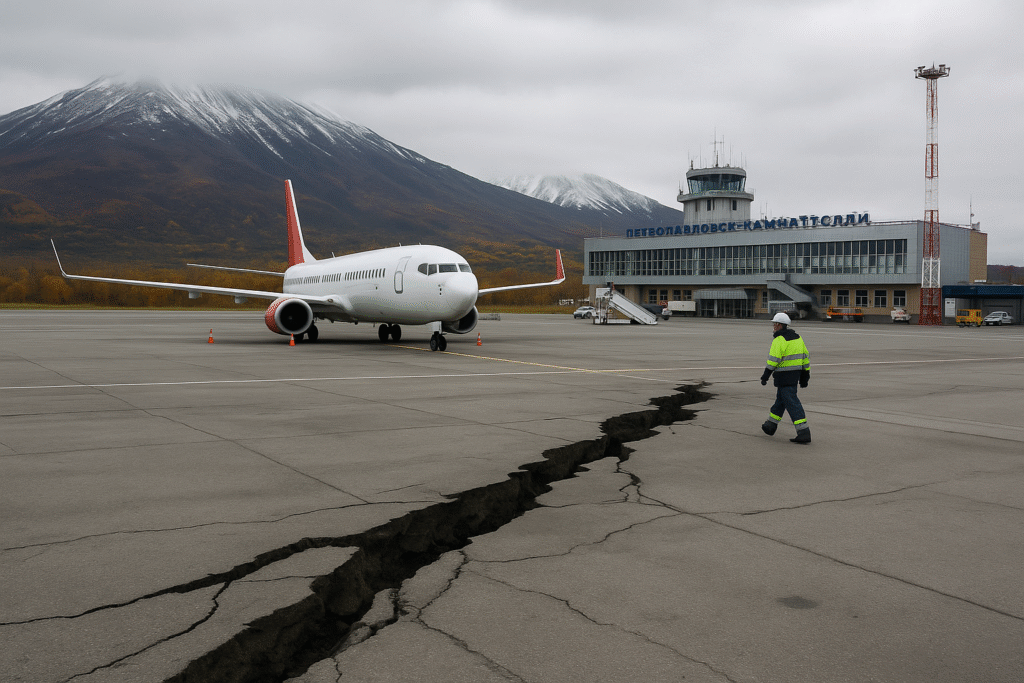
On 30 July 2025, a massive magnitude 8.8 earthquake struck off the coast of the Kamchatka Peninsula in Russia’s Far East. The epicentre lay beneath the Pacific Ocean, close to the peninsula’s shoreline.
The seismic event triggered tsunami alerts across the northern Pacific and led to significant disruptions within the region’s transport and tourism infrastructure.
Transport and Airport Chaos
In the immediate aftermath, airlines suspended flights to and from Petropavlovsk‑Kamchatsky’s main aviation hub. Terminal damage, power interruptions and structural inspections forced the airport to delay or cancel services.
Ground transport also faced chaos: roads and trekking tracks were temporarily closed while authorities evaluated the stability of infrastructure and potential aftershock risks.
Tourist Routes and Wildlife Excursions Halted
The region’s adventure tourism—volcano treks, wildlife tours, remote lodge stays—took a hit. With seismic activity heightened, national parks and natural reserves closed key access points. Tour operators paused expeditions to ensure visitor safety.
For international guests arriving for rugged wilderness and volcanic vistas, the disruption came as a stark reminder of the region’s geologic volatility.
Why It Happened: Geology at Work
The Kamchatka Peninsula lies on the Pacific “Ring of Fire,” a zone of intense tectonic activity where the Pacific Plate pushes beneath the Eurasian Plate. This subduction process makes the region prone to major earthquakes and volcanic eruptions.
The quake’s shallow depth combined with its proximity to inhabited zones amplified its effects and led to widespread alerts and infrastructure checks.
Response and Recovery Efforts
Emergency teams from regional agencies and the federal rescue service deployed quickly to evaluate damage. Officials reported no major casualties, thanks in part to robust building codes and preparedness efforts.
Tourism authorities worked with local governments and transport operators to restore safe access and provide updates to travellers and tour groups. Some airports and routes resumed service after safety clearances.
Impact on Tourism: Short-Term Hit, Long-Term Watch
In the short term, bookings for the upcoming season dropped and many travellers postponed or cancelled trips to the peninsula. Tour operators acknowledged fears over safety in this remote, seismically active area.
However, tourism officials remain cautiously optimistic. They emphasise that the region’s natural attractions—volcanoes, geysers, wildlife, remote landscapes—remain intact and appealing. They also stress that enhanced safety protocols and real-time communications can rebuild traveller trust.
Travel Advice for Visitors
- Check local travel advisories and contact tour operators for the latest status of routes and accommodations.
- Ensure your travel insurance covers seismic disruptions, evacuations or route closures.
- Choose operators with robust safety procedures, evacuation plans and modern equipment.
- In the field, remain alert for aftershocks, heed park ranger instructions and avoid unstable slopes or unmarked trails.
- Register your travel plan with your embassy or consulate and keep emergency contacts handy.
Looking Ahead: Lessons and Opportunities
The quake is a reminder that even in the world’s most spectacular natural-tourism destinations, geologic risks are real. For the Kamchatka region, this event could catalyse better infrastructure resilience, improved visitor communication and more sustainable adventure-tourism practices.
For visitors, it highlights the value of travelling with informed, responsible operators, staying flexible with plans and choosing destinations with strong local support and crisis-preparedness.
The earthquake may have shaken Kamchatka’s ground—but the region’s wilderness spirit remains. With care, planning and awareness, visitors can still discover one of Russia’s most unique and wild corners—safely.
For more travel news like this, keep reading Global Travel Wire