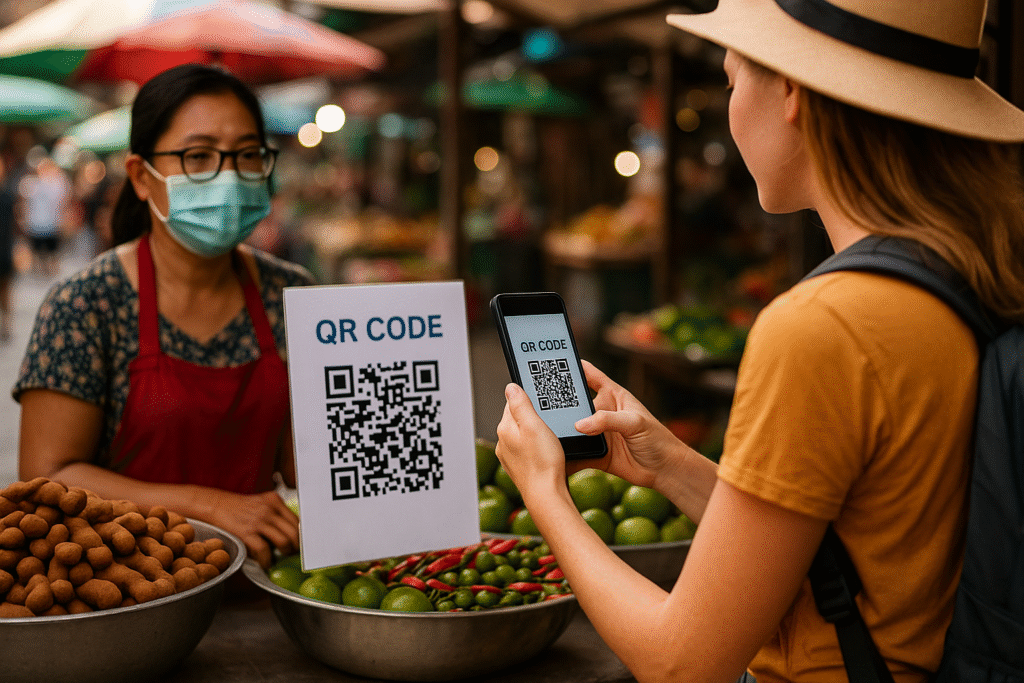
Thailand, Vietnam, and Indonesia lead Southeast Asia’s digital payment revolution. Mobile wallets, QR codes, and contactless systems now dominate transactions from hotels to street vendors.
Governments promote these systems as symbols of innovation and convenience. Yet, for many tourists, the same technology that promises frictionless travel brings unexpected costs and growing scam risks.
The Shift to Cashless Travel
Tourists now arrive expecting cash-free convenience. In Bangkok, Hanoi, and Bali, QR payment signs appear at nearly every shop.
Indonesia’s QRIS network connects users across borders, while Vietnam’s mobile wallets grew rapidly in 2024. Thailand’s PromptPay system lets even small vendors accept digital payments instantly.
This digital transformation improves efficiency but also exposes travellers to hidden fees, conversion losses, and payment fraud.
Hidden Fees and Price Confusion
Many tourists assume digital payments match cash prices. In reality, merchants often charge more for QR or card transactions.
A coffee shop might quietly add a small processing fee, while a market stall could round up totals to offset transaction costs.
These small extras accumulate fast. Foreign visitors may also lose money to unfavourable exchange rates embedded in app conversions.
In Vietnam, mistakes happen easily. Prices in dong contain long strings of zeros, and one wrong tap can multiply a bill tenfold.
QR Code Scams Rising Across the Region
QR codes bring convenience but also new fraud risks. Scammers sometimes place fake QR stickers over real ones, diverting money to personal accounts.
Tourists unfamiliar with local languages or apps often can’t tell genuine codes from imitations.
In Thailand, police report rising cases of QR-linked theft. Authorities introduced daily transaction caps to protect users from large unauthorized transfers.
Yet enforcement remains difficult, especially among informal merchants and small vendors.
Dynamic Pricing and Tourist Overcharging
Some vendors quietly use digital pricing to charge tourists more. Apps and terminals can display different rates for locals and foreigners.
Currency conversions add another layer of confusion. When tourists pay in their home currency, apps often apply inflated exchange rates.
In popular tourist spots like Phuket or Hoi An, visitors may pay up to 10% more when using foreign-linked wallets or cards.
These small discrepancies create what experts call “digital tourist inflation”—a growing hidden cost of travel in cashless economies.
Government and Industry Response
Authorities across Southeast Asia acknowledge the challenges.
Thailand’s central bank has imposed stricter transaction verification rules and limits on large mobile transfers. Indonesia continues to improve QRIS integration and consumer protection.
Vietnam’s government is upgrading its fintech infrastructure, aiming for greater transparency and secure cross-border payments.
Despite progress, enforcement remains inconsistent, especially in rural areas where digital literacy is low and vendors operate independently.
Tourist Confusion in Fragmented Payment Systems
Each country uses different apps, wallets, and QR formats. Tourists often juggle multiple downloads just to pay for food or transport.
In Bangkok, some vendors prefer TrueMoney or GrabPay, while in Bali or Hanoi others rely on local-only wallets.
This patchwork of systems creates confusion and higher costs. Tourists may unknowingly pay multiple conversion fees as they move between apps or currencies.
The lack of standardization limits the supposed simplicity of “cashless travel.”
How Travellers Can Protect Themselves
Tourists can enjoy digital convenience safely by staying alert and informed.
Here are five key tips:
- Verify totals before paying. Double-check the amount displayed on your phone.
- Use trusted apps only. Avoid scanning random or damaged QR codes.
- Ask about surcharges. Confirm whether QR or card payments cost more than cash.
- Keep backup cash. Smaller stalls may not accept digital payments consistently.
- Check statements daily. Spot unauthorized or duplicate charges early.
Awareness prevents small mistakes from becoming costly travel surprises.
Economic Impact and Regional Tourism
Cashless travel supports tourism growth but challenges visitor trust.
Hidden fees or unclear payment processes discourage spending. Tourists may avoid digital payments entirely after one bad experience.
That hesitation affects small businesses relying on digital sales. To maintain growth, regional tourism boards must promote secure, transparent payment systems.
Education for both merchants and tourists is essential. Clear fee disclosure and multilingual payment interfaces can rebuild confidence.
The Future of Travel Payments
Digital payments are reshaping Southeast Asia’s travel industry. By 2026, most major destinations will run nearly cashless economies.
Thailand, Indonesia, and Vietnam are setting the pace with fast adoption and smart integration.
However, success depends on fairness and transparency. If tourists feel exploited or confused, the promise of frictionless travel fades.
The region must ensure innovation doesn’t come at the cost of trust. When technology and transparency align, Southeast Asia can lead the world in safe, cashless tourism.
For more travel news like this, keep reading Global Travel Wire