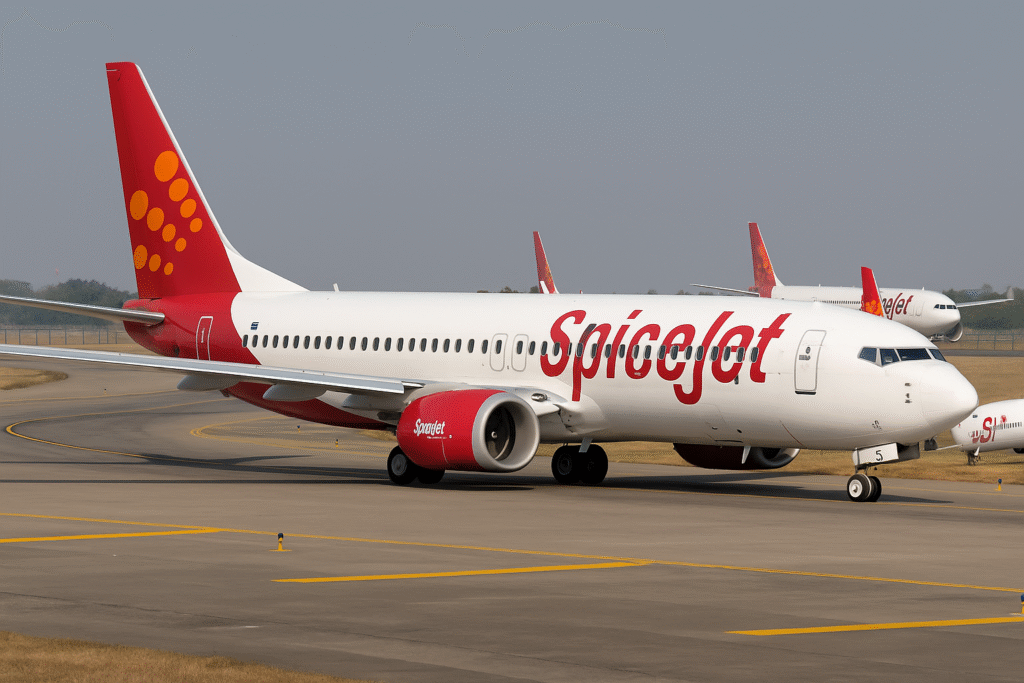
India’s budget carrier SpiceJet has stepped up its operational strategy by inducting ten new aircraft this season, with five added recently through damp leases. This places the airline on track to meet the high travel demand expected during the 2025 winter peak.
The latest additions include a re-activated Boeing 737 MAX alongside three Boeing 737s and an Airbus A340, all already deployed in commercial service. The airline’s goal: to more than double its operational fleet and triple its available seat kilometres (ASKM) by end-November.
Strategic Timed Additions and Route Capability
The new aircraft have begun flying on key domestic and international routes. By expanding the fleet now, SpiceJet is positioning itself to offer greater flight frequency, strengthen its network reach and provide more affordable travel options during the busy winter and festive season.
The use of damp lease agreements—where the lessor provides the aircraft with crew, maintenance and insurance—allows the airline to scale quickly without committing to long-term ownership or incurring significant upfront capital costs.
Domestic and International Coverage Boost
With more aircraft ready to fly, SpiceJet is enhancing both its domestic and overseas connectivity. The Airbus A340 wide-body brings medium-haul capacity, while the Boeing 737 series suits short-haul and regional operations. This mix enables the carrier to open new routes and deepen existing ones.
Passengers can expect increased choices in flight timings and destinations. The airline’s expansion comes at a time when travel demand in India is on the rise, especially as the winter holiday season approaches and consumption of affordable air travel grows.
Efficiency and Sustainability Moves
The inclusion of newer aircraft — especially the Boeing 737 MAX — supports improved fuel efficiency and lower carbon emissions compared with older models. This aligns with SpiceJet’s longer-term aim to manage environmental impact while scaling operations.
Faster turnarounds, streamlined boarding and increased aircraft availability will help the airline maintain competitive service levels even as passenger volumes rise.
Outlook and Market Positioning
By the end of November, SpiceJet expects to operate a fleet more than twice its current size and lift its ASKM threefold. This major boost in capacity could solidify its position in the Indian low-cost carrier market and better serve the surge in winter travel across domestic and international markets.
The expansion also offers the airline flexibility to absorb peak-period load, respond to emerging demand and launch new routes more freely. For travellers, the result could be more flights, better availability and potentially more competitive fares.
What It Means for Travellers
- More flight options: Increased seat capacity means greater flexibility in choosing flight times and destinations.
- Better coverage: Enhanced fleet allows SpiceJet to serve additional destinations, possibly including Tier-2/3 cities and international points.
- Affordable travel: As capacity increases, there’s a good chance fares may stay competitive during the busy season.
- Greater reliability: With more aircraft operational, delays due to aircraft unavailability may reduce and connections may improve.
Final Thoughts
SpiceJet’s fleet expansion ahead of winter 2025 is a clear strategic move to meet rising consumer demand, scale operational capacity and enhance its network competitiveness. With ten new aircraft already in service and ambitious targets set for November, the airline is poised for a busy peak travel season. For passengers planning their winter trips, the timing aligns well with expectations for increased availability and improved connectivity across India and beyond.
For more travel news like this, keep reading Global Travel Wire