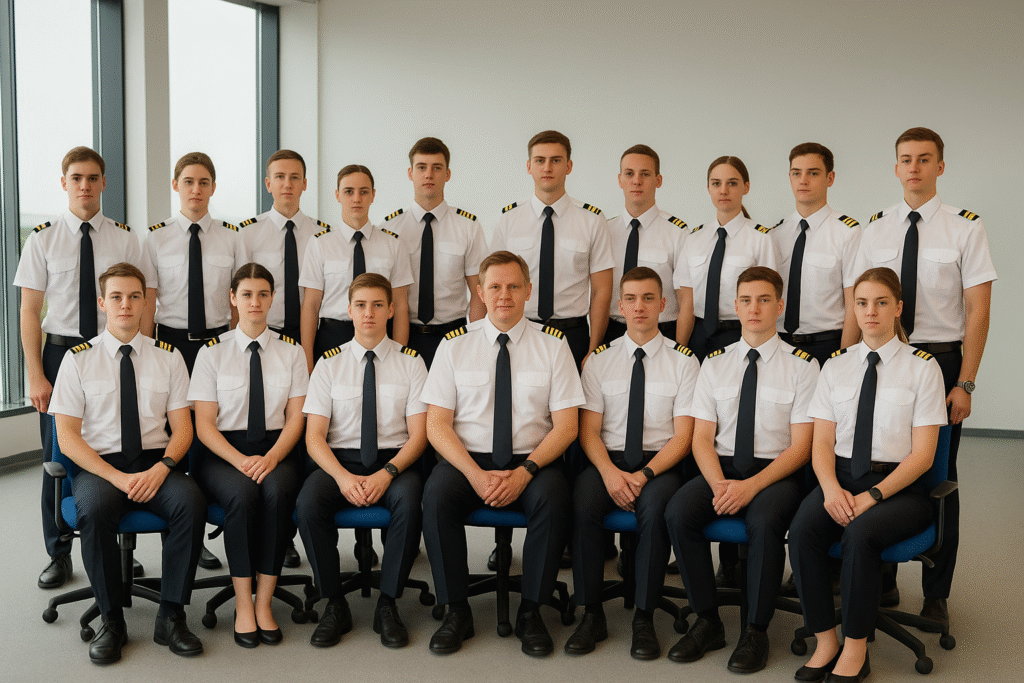
airBaltic has just welcomed its 28th training cohort, composed of 17 aspiring pilots hailing from Latvia, Lithuania, Estonia, France and Germany. These individuals have begun their full-time training at the airline’s pilot academy with the aim of obtaining a commercial pilot license.
Broad Europe Participation
The new group reflects the academy’s increasingly international appeal. By including participants from multiple countries, airBaltic emphasises its dedication to building a diverse and skilled pilot workforce across its Baltic region base.
Path to the Cockpit
The training programme is geared toward the acquisition of the airline transport pilot license (ATPL). Upon successful completion, trainees will join the ranks of licensed commercial pilots ready for airline operations.
Academy Growth and Track Record
The pilot academy currently hosts more than 150 active students from across Europe, with a notable representation of women among them. Over its lifetime, the academy has seen over 160 graduates go on to become First Officers and several advance to Captains. This track record underlines the strength of the training pipeline and its connection to airline-career progression.
Financing the Flight Path
To enrol, aspiring pilots cover initial theory and flight hours fees. Once they pass the airline’s assessment and secure a role with airBaltic, the company steps in to support remaining training costs via loan arrangements. This financial model enables access while tying training to future employment.
Training Technology Upgrade
In support of its training programme, airBaltic invested in a second full-flight simulator for the Airbus A220 platform, located at its training centre in Riga. This high-tech simulator allows cadets to experience realistic flight conditions in a controlled environment, enhancing their readiness and safety before real-world operations.
Strategic Growth and Talent Pipeline
The expansion of the pilot academy aligns with airBaltic’s wider growth ambitions. With a network spanning over 80 destinations across Europe, the Middle East, North Africa and the Caucasus, the airline is strengthening its operational base by developing its own skilled flight crew pool.
Why This Matters for Aviation & Tourism
Well-trained pilots are foundational to safe, reliable airline services. For the Baltic region and beyond, the growth of the pilot academy helps ensure consistent connectivity and supports tourism and business travel by maintaining robust flight operations.
Looking Ahead
As the 28th cohort begins its journey, airBaltic continues to build a sustainable aviation talent pipeline. With advanced training facilities, a clear career path and international recruitment, the airline is actively shaping the next generation of commercial pilots ready for a dynamic aviation landscape.
For more travel news like this, keep reading Global Travel Wire