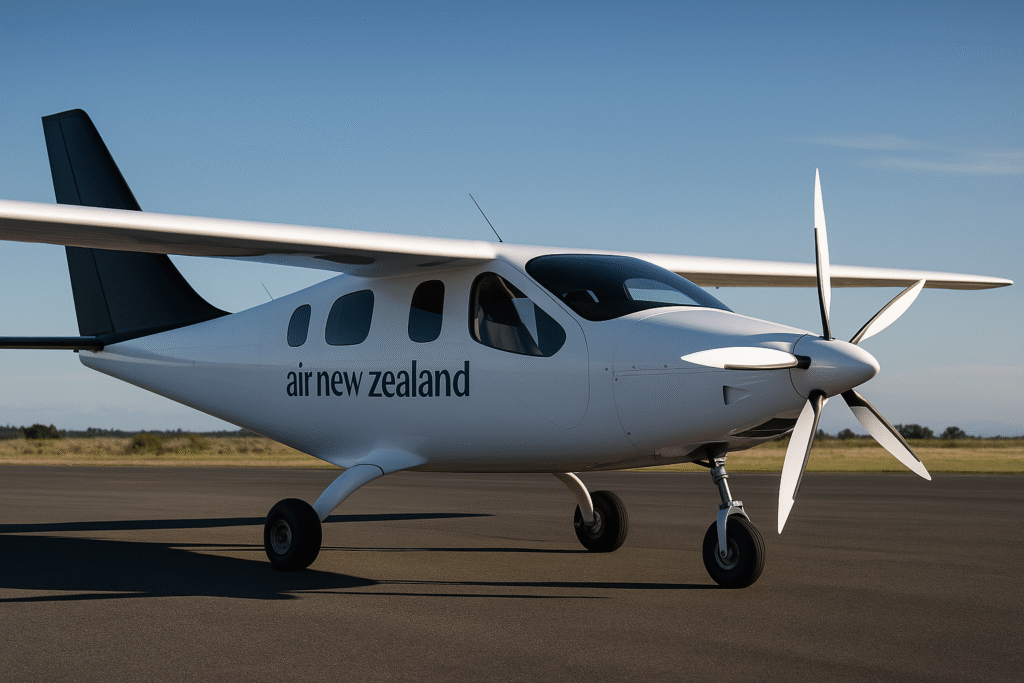
Air New Zealand has taken a groundbreaking leap into the future of air travel with the launch of the ALIA CX300 electric aircraft. The introduction of this aircraft marks the beginning of a new chapter in sustainable aviation, both for New Zealand and the world. Designed by BETA Technologies, the ALIA CX300 forms part of Air New Zealand’s Next Generation Aircraft Programme, an initiative that aims to revolutionize short-haul flights with zero-emission technology.
This bold step supports the country’s commitment to sustainability and reflects the airline’s drive to pioneer innovative, eco-friendly travel solutions. New Zealand’s geography and reliance on renewable energy make it an ideal testing ground for electric aviation.
Launching a Four-Month Flight Programme
The four-month flight programme began in November 2025, with the ALIA CX300 taking its first flight in Hamilton. The aircraft will undergo rigorous testing across New Zealand, flying through various cities, including Taupō, Napier, Wellington, and Palmerston North. By January, it will attempt flights over Cook Strait to Blenheim, showcasing its endurance and adaptability.
These test flights will evaluate the aircraft’s performance across diverse weather and terrain conditions, collecting essential data on its efficiency, safety, and reliability. The goal is to integrate electric aircraft into New Zealand’s airspace while developing operational frameworks for future commercial use.
A Partnership Driving Innovation
This pioneering project is the result of collaboration between Air New Zealand, BETA Technologies, and key partners such as the Civil Aviation Authority (CAA) and Hamilton Airport. Each organization plays a crucial role in ensuring that electric aviation becomes a safe and viable part of New Zealand’s transport future.
The CAA’s involvement ensures that testing aligns with strict safety and regulatory standards. This partnership also allows the authority to refine rules and frameworks that will guide the safe integration of electric aircraft into the national aviation system.
Hamilton Airport’s participation demonstrates its commitment to supporting emerging aviation technologies. By providing infrastructure for the demonstrator programme, the airport strengthens its position as a hub for innovation and sustainability.
The ALIA CX300: Engineering a Cleaner Future
The ALIA CX300 stands as one of the most advanced electric aircraft developed to date. Its design focuses on efficiency, quiet operation, and minimal environmental impact. The aircraft runs entirely on electricity, using cutting-edge battery technology that allows for fast charging and extended flight duration.
The aircraft’s aerodynamic build, lightweight materials, and advanced propulsion system allow it to perform regional flights efficiently and quietly. With a range suited to New Zealand’s short-haul routes—most under 350 kilometers—the ALIA CX300 is perfectly matched to the country’s aviation needs.
By eliminating fuel emissions and reducing noise pollution, the aircraft demonstrates how electric aviation can transform air travel into a cleaner, more sustainable experience.
Supporting New Zealand’s Sustainability Goals
Air New Zealand’s move into electric aviation aligns with New Zealand’s broader environmental strategy. The country generates more than 80 percent of its electricity from renewable sources, making it a global leader in sustainable energy. This clean power grid supports the viability of large-scale electric transport, including aircraft.
With aviation contributing significantly to carbon emissions, the introduction of electric planes represents a major step toward the nation’s net-zero emission targets. Air New Zealand’s leadership in this field enhances its role in helping the country achieve its sustainability goals while inspiring other nations to follow suit.
Testing, Data, and Global Impact
Throughout the demonstration programme, Air New Zealand’s pilots will work alongside BETA Technologies’ engineering and operations teams. Together, they will test the aircraft’s systems in real-world conditions, including different altitudes and flight paths. These tests will generate valuable data for developing training programmes, maintenance procedures, and infrastructure for electric aviation.
The knowledge gained from these flights will help guide international efforts to introduce electric aircraft into commercial operations. It will also set new standards for safety, efficiency, and environmental responsibility in the aviation sector.
Building Toward Commercial Electric Flights
Air New Zealand’s innovation strategy positions the airline as a frontrunner in sustainable aviation. The ALIA CX300’s demonstration will provide a foundation for the future introduction of commercial electric aircraft, reducing dependence on fossil fuels and making regional air travel cleaner and more affordable.
The project’s success could accelerate the rollout of electric aircraft across the Asia-Pacific region and beyond. It also signals a shift toward a more environmentally conscious aviation industry, where technology and sustainability work hand in hand.
The Role of BETA Technologies
BETA Technologies, a U.S.-based aerospace company, plays a vital role in this initiative. The firm’s mission focuses on designing electric aircraft and charging systems that reduce the aviation industry’s carbon footprint. Its collaboration with Air New Zealand highlights how international partnerships can drive innovation in sustainable transportation.
The company’s expertise ensures that the aircraft meets both performance and safety standards while maintaining efficiency. Together, BETA Technologies and Air New Zealand aim to demonstrate that electric aircraft can operate reliably in real-world conditions.
Leading the Way in Global Electric Aviation
New Zealand’s introduction of the ALIA CX300 represents more than a technological milestone—it marks a cultural and environmental shift in global aviation. With its renewable energy resources and short-haul flight network, the country stands at the forefront of sustainable aviation development.
This collaboration between Air New Zealand, BETA Technologies, and local partners sets a precedent for the aviation industry worldwide. It shows how innovation, sustainability, and cooperation can create meaningful change.
A Vision for Greener Skies
As Air New Zealand continues to test the ALIA CX300, the project promises to redefine what sustainable flight looks like. It combines advanced technology with a strong environmental purpose, offering a glimpse into the future of air travel.
This initiative reinforces New Zealand’s reputation as a leader in environmental innovation. By investing in cleaner skies today, Air New Zealand is shaping a future where aviation supports both connectivity and sustainability.
The ALIA CX300 isn’t just an aircraft—it’s a symbol of progress, leadership, and hope for a greener tomorrow.
For more travel news like this, keep reading Global Travel Wire