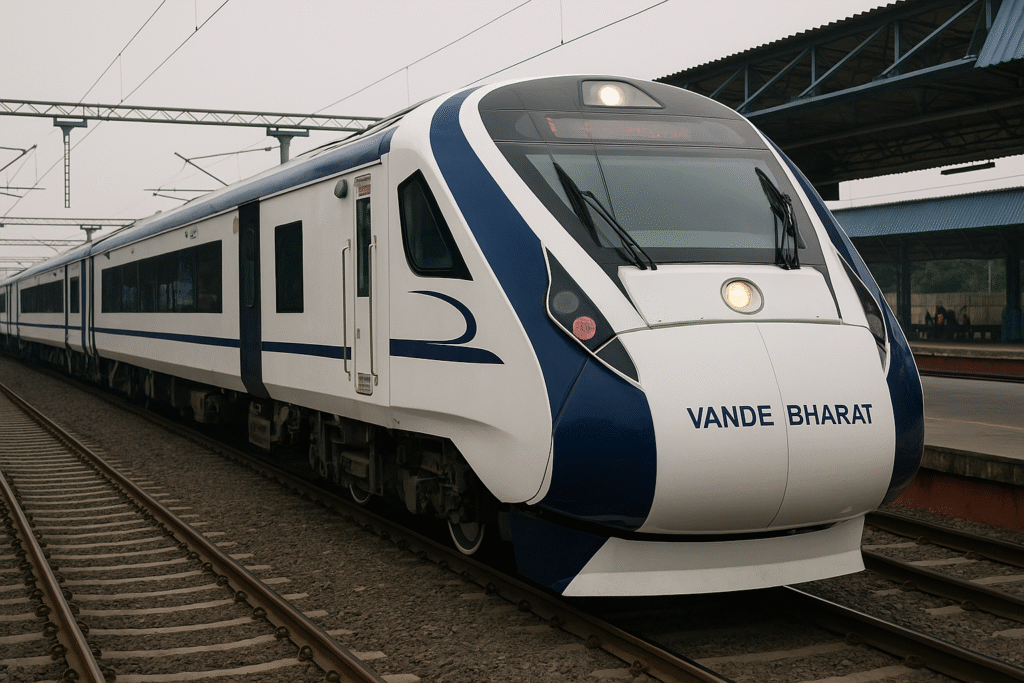
In a landmark development for India’s railway and tourism sectors, the Indian Railways has introduced four new Vande Bharat Express trains—bringing the total number of services to 164. These high-speed, modern rail services are set to redefine inter-city travel, strengthen regional economies and deliver enhanced connectivity across cultural, leisure and business corridors. The new routes cover Banaras–Khajuraho, Lucknow–Saharanpur, Firozpur–Delhi and Ernakulam–Bengaluru, each chosen for the strategic advantages they bring in terms of reduced travel times, tourism potential and regional integration.
Transforming travel and tourism with high-speed connectivity
Designed and manufactured by India’s leading rail coach facility, the Integral Coach Factory (ICF) in Chennai, the Vande Bharat Express trains represent a significant leap in rail comfort, speed and convenience. With air-conditioned chair-car travel, modern safety systems and faster schedules, the trains offer a fresh alternative to long overnight journeys. Their launch is expected to spur regional growth by linking lesser-connected destinations and making them accessible for both domestic tourists and local commuters.
Route highlights and impacts
- Banaras–Khajuraho: This route connects the revered city of Varanasi (Banaras) with the UNESCO-listed temple complex at Khajuraho. Travel time between these pilgrimage and cultural hotspots will now be reduced by almost 2 hours 40 minutes, opening up new possibilities for spiritual tourism, heritage visits and connected itineraries across Uttar Pradesh and Madhya Pradesh.
- Lucknow–Saharanpur: Linking the Uttar Pradesh capital region to Saharanpur in the state’s northwest, this train will shave nearly an hour off previous schedules, while also improving access to neighbouring pilgrimage hubs such as Haridwar via Roorkee. This corridor combines business travel, daily commuters and weekend tourism into a more integrated whole.
- Firozpur–Delhi: This route strengthens connectivity between Punjab’s border-region cities like Firozpur, Bathinda and Patiala and the national capital. With the journey time set to around 6 hours 40 minutes, the new service supports trade, tourism and cross-state mobility in northern India.
- Ernakulam–Bengaluru: A major link connecting Kerala with Karnataka, this train will reduce travel time by over two hours and deepen connections between India’s south-west and southern states. It supports tourism between hubs such as Kochi and Bengaluru, while also catering to business travellers, tech professionals and culture seekers.
Driving regional economic growth and tourism
The introduction of these new services goes beyond transit enhancement—it is a tourism strategy in motion. By making key destinations more accessible, the railways encourage longer stays, multi-city travel and economic spill-over into hotels, restaurants, guided tours and local markets. For example, quicker access from Varanasi to Khajuraho allows visitors to plan combined trips focused on heritage and culture. Similarly, faster links between Ernakulam and Bengaluru invite tourists to explore coastal Kerala and Karnataka’s hill stations more seamlessly. In border and interior regions like Firozpur or Saharanpur, improved connectivity boosts business flows, regional trade and weekend tourism. The rail-link upgrades underscore a broader national policy focus on inclusive growth—ensuring that not just metro centres but smaller cities and towns also gain the benefits of modern rail infrastructure.
Modern amenities and travel experience
Passengers on these new Vande Bharat Express trains can expect features such as airline-style seating, automatic doors, large windows, onboard WiFi, infotainment systems, and strong safety systems including train-protection technology. The emphasis on speed, comfort and reliability elevates rail into a new category of mobility. From a tourism standpoint, smoother journeys make multi-destination itineraries more viable—travelers are less fatigued, more likely to explore beyond the main city and enjoy a richer experience.
Operational and strategic significance
The launch of these four new routes aligns with India’s broader vision to modernise its rail network under initiatives such as “Make in India” and sustainable mobility. By utilising semi-high-speed trains capable of 160 km/h on dedicated tracks and reducing reliance on air travel for medium-distance corridors, India is building cost-effective, inclusive mobility solutions. The geographic distribution of routes—covering North, South and central India—also reflects a conscious effort to balance development and open up tourism potentials across the country.
What this means for travellers
- More direct and faster options on key corridors mean travelers can plan tighter itineraries and explore lesser-visited destinations with ease.
- The tourism-value of regions like Khajuraho, Saharanpur/Haridwar, Punjab’s border areas and the Kerala–Karnataka corridor is enhanced thanks to better access.
- Business travellers and daily commuters also benefit from increased convenience and reliability, while families and holiday-makers gain more leisure options.
- Travel planning becomes simpler: shorter travel times mean less overnight travel, more daytime exploration and opportunities for same-day return trips on select routes.
Looking ahead
As the Vande Bharat network expands further, these trains will form the backbone of future mobility, regional tourism and corridor development. Plans for the next generation—often referred to as Vande Bharat 4.0—are already underway, signalling faster speeds, larger route coverage and even greater comfort. The current expansion with four new routes is just the beginning—a visible step towards an integrated, modern rail ecosystem that supports both movement and experience.
In summary, the launch of the four new Vande Bharat Express routes transforms India’s rail-travel landscape. By knitting together cultural hubs, business centres and regional markets with faster, comfortable trains, the initiative strengthens tourism, regional economies and mobility for millions. Whether you’re a pilgrim journeying through ancient cities, a professional commuting between states or a family discovering new destinations, the upgraded Vande Bharat network opens up new worlds on rails.
For more travel news like this, keep reading Global Travel Wire