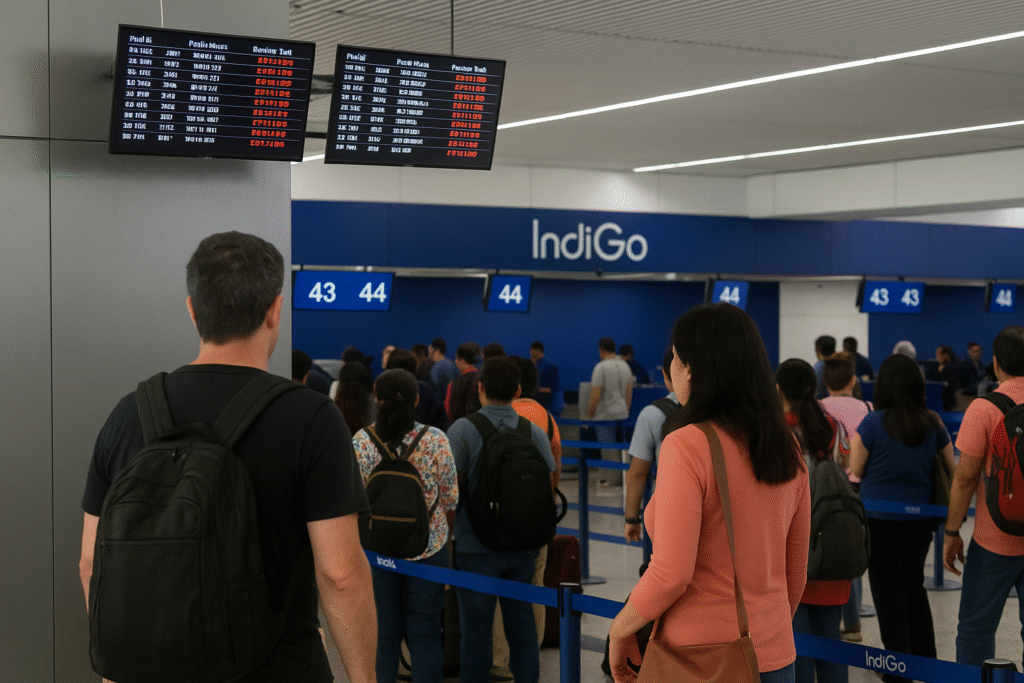
A major disruption struck one of India’s busiest airports, the Indira Gandhi International Airport (IGI) in Delhi, as a key system used in air-traffic control failed. The system in question is the Automatic Message Switching System (AMSS), which supports flight-planning data across airlines. Because of the fault, hundreds of flights were delayed or cancelled across northern India, creating confusion for passengers.
The fault forced air-traffic controllers to revert to manual processes, slowing all operations and resulting in an average departure delay of around an hour.
Impact on Airlines and Passengers
Major carriers, including IndiGo Airlines, issued advisories to travellers and adjusted arrival and departure times. IndiGo confirmed that it is working closely with airport authorities to restore full services and requested passengers to check flight statuses before departing for the airport.
At IGI, airport authorities confirmed that operations had gradually stabilised, although some delays remained due to accumulated backlogs. The disruption affected more than 800 flights at its peak and caused ripple effects at other airports.
Why the AMSS Matters
The AMSS handles secure data exchange between airlines and air-traffic control, including flight plans, air-space clearances and coordination between airport systems. When it crashed, controllers had to process flight plans manually, a far slower method that created bottlenecks across entry and departure movements. Because IGI handles more than 1,500 flights each day, even a short system outage generated major knock-on effects.
What IndiGo and Airport Authorities Are Doing
IndiGo announced that its operations teams, ground staff and customer-support teams were fully engaged in managing the disruption. It also said normal flight schedules will “soon” resume and thanked customers for their patience.
Meanwhile, airport officials and the Airports Authority of India (AAI) confirmed the AMSS had been restored and was “up and functional”. They emphasised that while the system is back online, some delays will linger until the schedule backlog clears.
Travel Tips for Tourists
- Check your flight status before heading to the airport. Airlines and IGI have trailed advisories urging passengers to stay updated.
- Allow extra travel time to the terminal. Even after the system is restored, ground services may lag.
- Stay in touch with your airline for updated arrival or transfer information. Use the official mobile apps or SMS alerts where possible.
- Expect longer wait-times at security and boarding, as internal scheduling catches up and airlines try to clear delays.
- Have a backup plan for onward travel. If you miss a connection or your flight is delayed significantly, check alternate flights or plan flexible accommodation options.
Why This Matters for Tourism
With IGI being a major gateway for national and international tourism, any large-scale disruption can spread delays to local hotels, tours, car rentals and onward transfers. Tour operators and travellers alike feel the ripples when logging and housing is booked around narrow arrival windows. Ensuring flexible plans and staying alert to advisories becomes vital for tourists arriving or departing through Delhi.
Outlook & Looking Ahead
While the immediate technical fault is resolved and flight operations at IGI are normalising, aviation officials are now pushing for system upgrades and redundancy measures to prevent future glitches. The aim is to strengthen the network and avoid major disruptions in one of the country’s most critical transport hubs.
For tourists and airlines, the key message now is: stay informed, expect some residual delay, but also anticipate a return to smooth travel shortly.
Overall, although the system fault caused significant inconvenience, the coordinated response by the airport, air-traffic control and airlines has helped restore services quickly. Travellers through Delhi this week should check their flight information closely, plan extra time, and keep in contact with their carriers to make the best of the situation.
For more travel news like this, keep reading Global Travel Wire