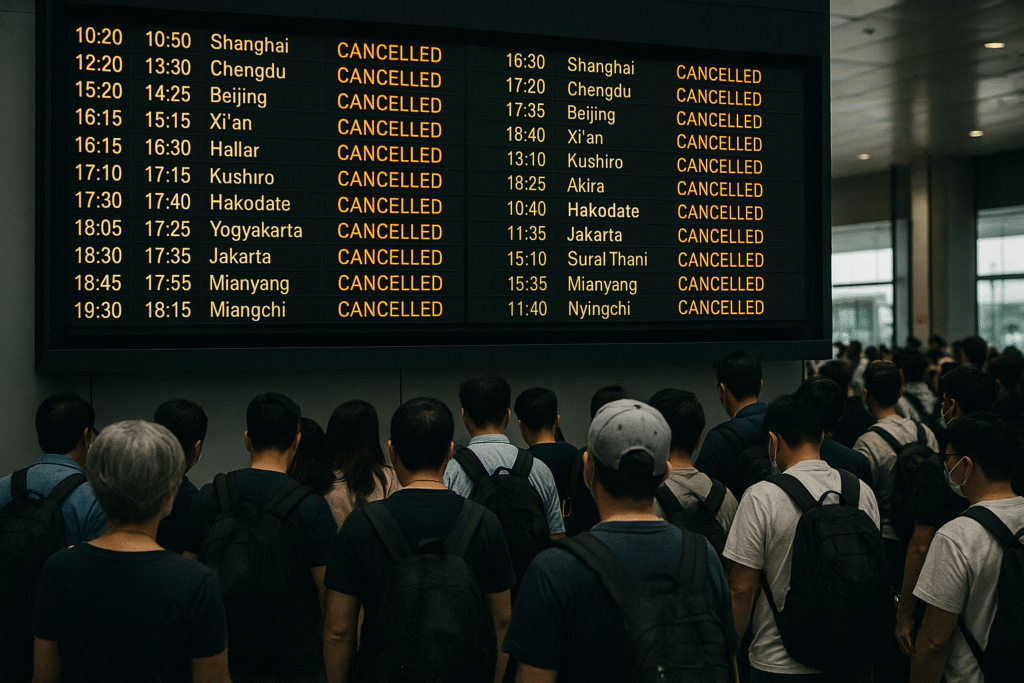
Travel disruption is sweeping through Asia. Over 65 flights were cancelled this past weekend across China, Japan, Indonesia and Thailand. Major carriers and regional airports faced the fallout as severe weather and technical issues converged.
Tourists and business travellers found themselves stranded, connecting flights missed, and travel plans upended. The crisis underscores how fragile aviation networks remain when weather, operations and infrastructure all strain simultaneously.
China: Storms Strike Major Hubs
In China, the number of cancelled flights stood at roughly 40. Airlines such as one of the country’s largest carriers grounded nearly 20 flights while regional operators cancelled about 20 more across domestic routes. In cities like Beijing, Chengdu, Xi’an and Guangzhou, storms brought heavy rain, strong winds and poor visibility.
Passengers reported long waits in terminals, limited information on rescheduling, and mounting frustration. The cancellations affected both origin and connection flights, triggering a cascade of delays.
Japan’s North Hit by Heavy Snow and Wind
In Japan, a regional carrier based in Hokkaido saw around 17 flights cancelled amid heavy snow and gusts in the north. Airports in Sapporo, Hakodate and Akita were overwhelmed with stranded passengers.
The snowstorm reduced visibility and caused operational chaos. Travellers faced uncertainty about when they could board, while airport lounges filled up fast.
Indonesia Struggles with Rain-Lashed Routes
Indonesia’s weather woes caused disruption for another eight flights, with heavy rainfall and storms affecting routes between Jakarta, Surabaya, Yogyakarta and Bali. Flights were cancelled or delayed at key hubs, while ground operations such as baggage handling suffered bottlenecks.
The timing is especially poor for a region that relies heavily on tourism. Airport infrastructure that was designed for normal flow struggled when storm conditions hit.
Thailand and Tibet: Small Numbers, Large Impact
Even in Thailand and Tibet, where only a few flights were cancelled, the impact was still felt. Two flights in Thailand were scrapped due to thunderstorms, affecting connections for travellers. Meanwhile, in Tibet, domestic cancellations left passengers stuck with limited alternatives.
Though the numbers are smaller, the disruption in remote or tourist-heavy zones adds to the broader travel headache.
The Wider Picture: Aviation Networks Under Pressure
What started as isolated weather or technical issues has grown into a region-wide problem. Pilots, crews and ground staff are being stretched, while airlines scramble to rebook, refund or reroute large numbers of travellers.
Beyond weather, airlines in Asia are also dealing with tight resources such as crew shortages and supply-chain delays. These underlying weaknesses amplify the effect of any storm or technical glitch.
Tourist Fallout: It’s More Than Just a Flight Delay
For tourists, this isn’t a minor inconvenience. Many booked tours, hotel stays and domestic travel based on air-journey timetables. Cancellations ripple into missed excursions, extra nights in lodgings, meals that go unserved and ripple effects on local businesses.
Destinations such as Bali, northern Japan and inner-China cities saw tourist flow drop. Service sectors that count on smooth arrivals now face empty seats and sudden cancellations.
How You Can Stay Ahead of Travel Disruption
- Check your flight status before you leave for the airport, especially if weather alerts are in effect.
- Keep flexible bookings for hotels and tours in case flights change at short notice.
- Have a backup plan—know alternative airports, routes or transport options if your flight is cancelled.
- Stay in touch with your airline and download its app for updates and re-booking options.
- Plan extra time and budget for potential delays when flying in the region this season.
Looking Forward: Building a More Resilient Travel Network
The aviation industry in Asia faces a clear test. As airlines, airports and meteorological services recognise the risk, investments in forecasting, communication systems and operational flexibility are becoming essential.
Better weather-alert systems, improved ground handling during storms, and faster passenger re-accommodation will all help. With coordinated action between airlines, governments and travel agencies, the region’s travel fabric can bounce back stronger—though it may take time.
In short, the recent wave of cancellations across Asia is more than a headline. It affects thousands of travellers and the tourism ecosystem around them. For anyone planning to fly through the region, staying informed and booking smart is now more crucial than ever.
For more travel news like this, keep reading Global Travel Wire