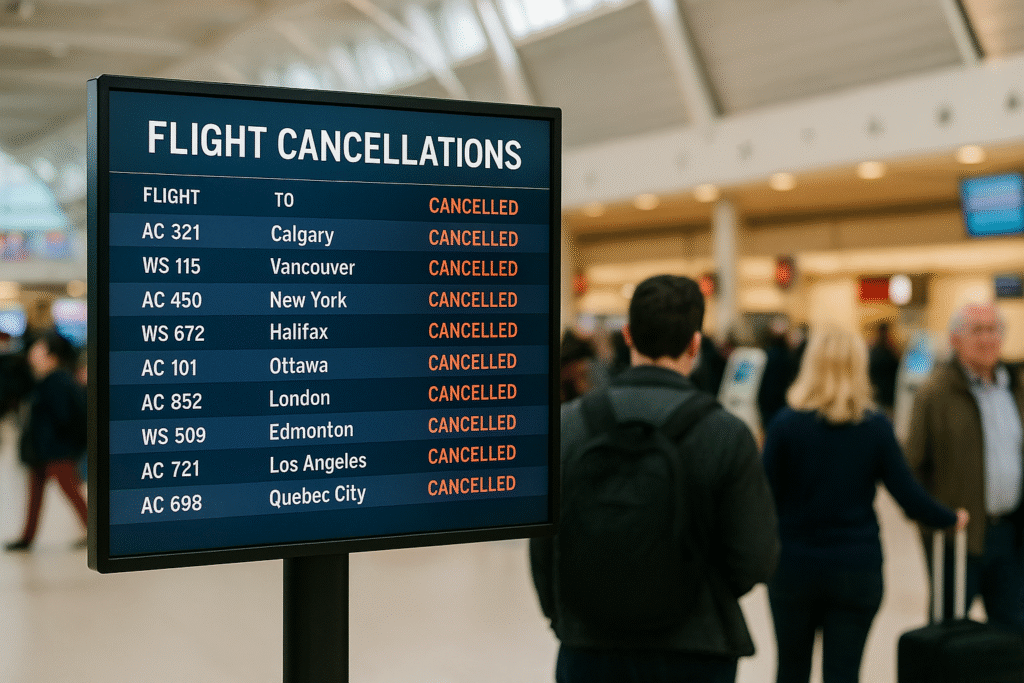
Millions of travellers heading through Canada’s busiest hubs are feeling the impact of a series of flight cancellations. Major carriers, including Air Canada, WestJet and regional partner Jazz Aviation, have reported twelve aircraft cancellations across two major airports—Toronto Pearson International Airport and Montréal‑Trudeau International Airport.
The disruptions have ripple effects: delayed schedules, re-bookings, and anxious passengers wondering what comes next.
Impact on Toronto and Montreal Hubs
In Toronto, Air Canada’s low-cost unit reported four cancelled flights. Air Canada cancelled two of its own flights, and WestJet added another two. Over in Montreal, WestJet cancelled two flights, Jazz cancelled one (and delayed one), and Air Canada cancelled a single flight.
Though the raw numbers may seem small in absolute terms, the cancellation rate at Montreal stands out—WestJet’s cancellations there represent a much higher proportion of its scheduled flights. The difference highlights how the disruption is not evenly spread.
Why Are Flights Being Cancelled?
Carriers cite a mix of reasons: limited staffing, unexpected weather conditions, and operational glitches. While airlines maintain standard protocols for cancellations, the cascading effects make it harder to restore normal flow quickly.
The disruptions reflect vulnerabilities in the airline system. Even modest cancellations can cascade into greater delays and re-routing problems, especially at airports that serve as national gateways.
What Should Travellers Do?
Stay alert: Keep an eye on your email or SMS and check your airline’s app frequently for any changes.
Contact the airline promptly: If your flight is cancelled, speak to the carrier’s customer-service desk or call the airline’s helpline without delay.
Know your rights: Under Canadian rules such as the Canadian Transportation Agency’s Air Passenger Protection Regulations, you may be entitled to re-booking or compensation when cancellations are within carrier control.
Explore alternatives: If your flight is cancelled, ask about other available flights, different carriers or alternative transport like buses or trains.
A Reminder of the Travel Reality
This situation underscores how fragile travel plans can be, even when no single major event is publicised as the cause. Whether due to weather, operational issues or staffing constraints, the result is the same: travellers must remain flexible.
For those flying into or out of Canada’s major airports, especially Toronto and Montreal, this is a moment to check updates, build in time buffers and prepare alternatives. The aviation system is working hard to stabilise service, but full normalcy may take time.
As airlines and airports refocus efforts, passengers must take an active role in monitoring their itineraries. With the right preparation, disruptions can be navigated more smoothly, even when the skies don’t behave as planned.
For more travel news like this, keep reading Global Travel Wire