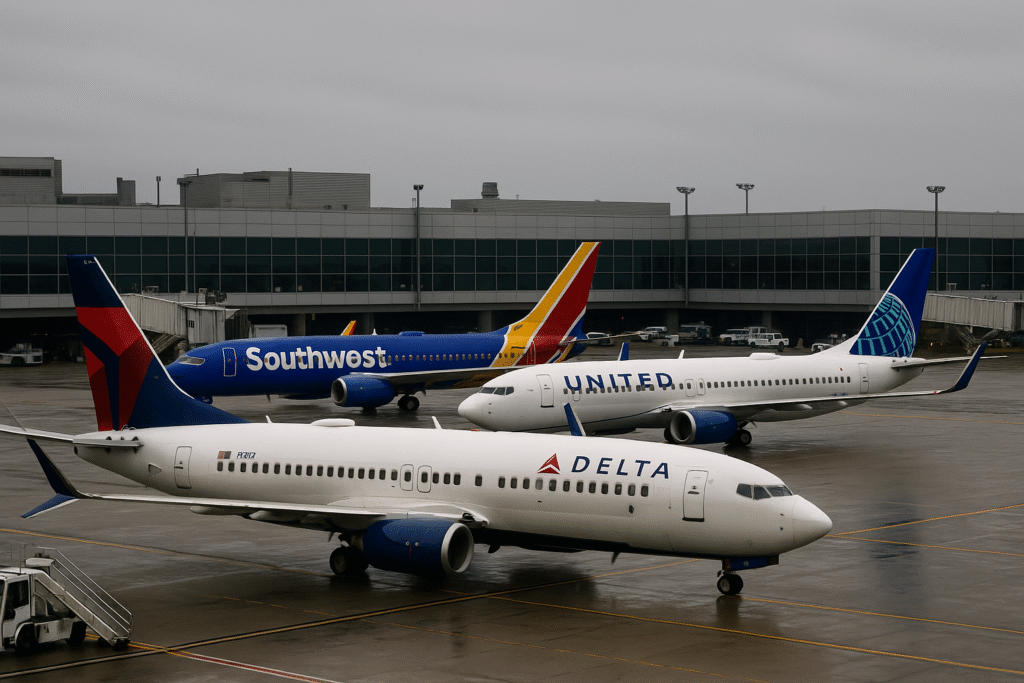
The United States is facing one of its worst travel disruptions of the year. Delta Airlines, Southwest Airlines, and United Airlines have canceled over 60 flights between Los Angeles, Chicago, Boston, and other major cities. Thousands of travelers are stranded, and tourism across several states has taken a direct hit.
These cancellations come during a crucial travel period when airports are crowded with holiday passengers. The affected routes include both domestic and international destinations, adding pressure to an already strained airline network. The situation has highlighted the growing challenges faced by airlines as they try to meet record travel demand with limited staff and resources.
Delta Airlines Faces Operational Challenges
Delta Airlines has canceled several key flights from major airports, including Los Angeles, Seattle, and Atlanta. The disrupted routes cover popular tourist and business destinations such as Orlando, Las Vegas, Detroit, and New York.
Airports in Portland, Seattle, and Salt Lake City also saw flight disruptions. Travelers scheduled to fly on routes like Los Angeles to Austin and LaGuardia to Orlando were forced to find alternate travel plans. These cancellations not only inconvenience passengers but also affect tourism in major cities that rely on steady visitor traffic.
Destinations such as Orlando and Las Vegas, where tourism drives the economy, are seeing immediate consequences. Local hotels, restaurants, and attractions face reduced foot traffic, particularly as the holiday travel surge approaches.
Southwest Airlines Sees Widespread Disruptions
Southwest Airlines, known for its extensive domestic network, canceled multiple flights linking major hubs like Chicago Midway, Phoenix, and Denver. Routes connecting California, Arizona, and Nevada were hit hardest, with cancellations between cities such as Las Vegas, Phoenix, and Los Angeles.
Travelers heading to popular tourist spots such as Orlando and San Diego faced the most frustration. Many vacation plans were derailed as flights were delayed or grounded due to scheduling and crew shortages.
These disruptions also threaten regional tourism, especially in destinations dependent on short-haul flights. Cities like Phoenix and Las Vegas could experience a decline in visitor numbers during what should be one of the busiest travel periods of the year.
United Airlines Hit by Domestic and International Cancellations
United Airlines, a key player in both domestic and international routes, has canceled several flights from Newark, Chicago, and Houston. The airline’s cancellations affected routes to Toronto, Jamaica, and major US hubs.
Flights between New York, Boston, and Florida were among those impacted, creating ripple effects through the tourism sector. Caribbean-bound travelers were left stranded, and Canadian tourists faced disruptions in returning home or reaching US destinations.
United’s situation highlights how interconnected global air travel has become. When one major airline experiences disruption, it can affect multiple countries and tourism markets.
Impact on US Tourism and Local Economies
Tourism hotspots such as Orlando, Las Vegas, and New York depend on air travel for consistent visitor numbers. With widespread cancellations, the economic impact is being felt across hotels, restaurants, and entertainment venues.
Local tourism boards have expressed concern that the ongoing disruptions could discourage international travelers from booking US trips. The timing, just before the holiday season, is particularly damaging. The hospitality sector, already recovering from previous travel slowdowns, faces renewed uncertainty.
In Florida, reduced arrivals could affect theme parks and beach destinations. In Nevada, casinos and convention centers are preparing for potential declines in visitor turnout. Meanwhile, cities like Chicago and Boston, which rely heavily on business travel, are seeing event cancellations and lower occupancy rates.
The Pressure Mounts on Airlines
The three major airlines are under intense pressure to restore normal operations. Staffing shortages, technical challenges, and weather delays have combined to create a perfect storm of cancellations. Travelers report long lines at help desks and limited rebooking options.
Delta, Southwest, and United are all reviewing their schedules to minimize further disruptions. However, as the holiday season approaches, demand continues to rise faster than airlines can manage. This mismatch has created one of the most unpredictable travel periods in recent memory.
Airline analysts note that the industry is still rebuilding after years of instability. Pilot shortages, aging aircraft, and unpredictable weather continue to threaten reliability. Without rapid adjustments, experts warn of ongoing disruptions through early 2026.
Travelers Seek Alternatives
With limited flight availability, passengers are turning to trains, car rentals, and regional airports. Amtrak has reported an increase in ticket bookings as travelers search for backup options. Rental car agencies in cities such as Los Angeles and Chicago are also experiencing surging demand.
While alternative travel can help reduce pressure on major airports, it is not enough to offset the nationwide disruption. Many travelers have no choice but to delay or cancel their plans altogether.
The Road Ahead for Airlines and Tourism
The travel chaos underscores the fragility of the US aviation system. As flight cancellations pile up, confidence among passengers declines. Rebuilding that trust will require better planning, more staffing, and improved coordination between airlines and airports.
Government agencies are urging airlines to strengthen contingency measures and ensure compensation for stranded passengers. Meanwhile, tourism officials are working to reassure travelers that destinations remain safe and accessible once operations stabilize.
Conclusion: Rebuilding Traveler Confidence
The wave of cancellations from Delta, Southwest, and United has exposed the cracks in America’s air travel system. Passengers are demanding more reliability, and local economies are depending on fast recovery.
For the tourism sector, the priority is to restore smooth travel before the peak holiday rush. The industry’s recovery depends on stability, communication, and trust between airlines and travelers. As the nation prepares for the busiest travel season of the year, the hope is that lessons learned from this disruption will lead to a stronger and more resilient travel network in the months ahead.
For more travel news like this, keep reading Global Travel Wire