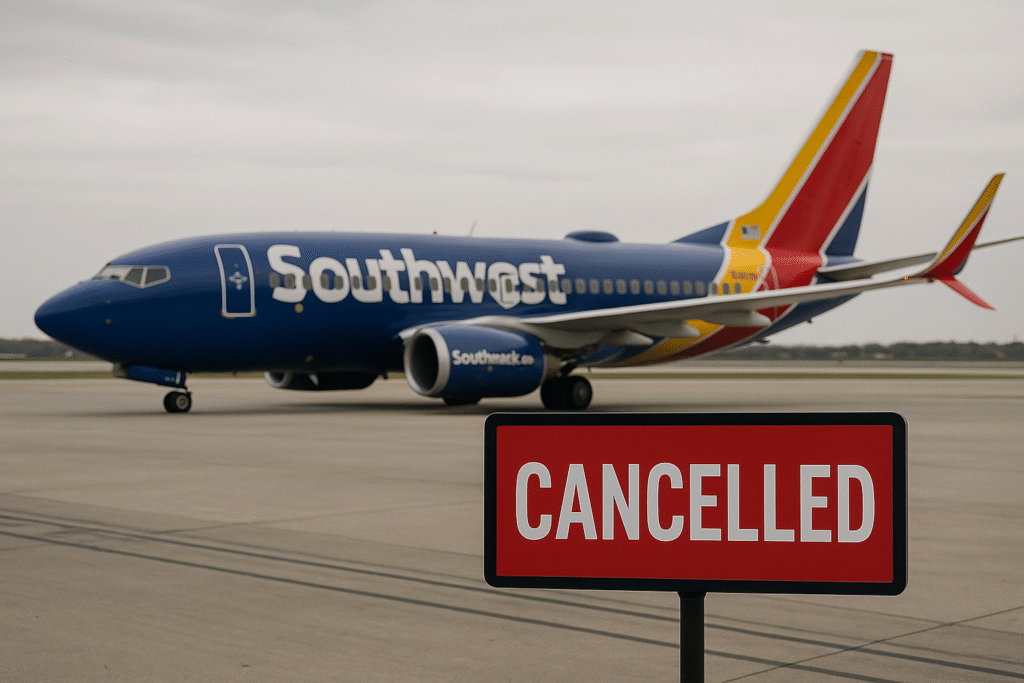
Southwest Airlines shocked travelers this weekend after cancelling 20 flights across some of the busiest domestic routes. The abrupt schedule changes affected major airports in Los Angeles, Oakland, Dallas, Phoenix, Denver, Las Vegas, and more. Passengers heading out on routine Friday and Saturday journeys found themselves facing last-minute rebooking struggles, long customer service queues, and rapidly disappearing seat availability.
The cancellations hit during a period when domestic travel tends to run near full capacity. Even a small wave of disrupted flights can trigger delays, bottlenecks, and price jumps. For many travellers, what started as a quick hop across states turned into a frustrating scramble to secure the next available departure.
Key Routes Affected by the Sudden Cuts
The cancellations spanned major corridors connecting California, Texas, Nevada, Arizona, Georgia, Florida, and Washington. Flights between Los Angeles International, Dallas Love Field, Phoenix Sky Harbor, Oakland International, and other key hubs were pulled from schedules with little warning.
The affected flights included high-demand morning and midday departures, such as:
- Los Angeles to Oakland
- Dallas to Phoenix
- Phoenix to Wichita
- San Diego to Albuquerque
- Seattle to Phoenix
- Denver to Fort Lauderdale
- Las Vegas to Phoenix
- San Jose to Las Vegas
These routes often carry a mix of leisure travellers, business passengers, and weekend flyers. With limited alternative departures available, many were forced to pivot travel plans entirely or opt for next-day flights.
Why These Cancellations Matter
Even though 20 flights may seem minor for a major airline, the impact can ripple across an entire travel network. Popular routes funnel thousands of travellers through tight connection windows and rely on predictable schedules. When those schedules shift without warning, travellers lose flexibility, and airports experience added pressure.
Shorter routes between cities like Los Angeles, Oakland, and San Diego may offer more alternatives. However, flights connecting to Phoenix, Denver, or Fort Lauderdale often have fewer same-day options. As a result, passengers on those routes may face longer delays, higher costs, and reduced rebooking availability.
Disruptions like these also chip away at traveller confidence. Many passengers build itineraries around trust that flights will operate as scheduled. When major carriers falter, it raises broader concerns about staffing, aircraft availability, and operational stability.
Regulatory Environment and Traveller Rights
While there is no specific government order tied to these exact cancellations, travellers should remember that U.S. aviation regulations provide various protections in controllable disruptions. The U.S. Department of Transportation (DOT) requires airlines to outline their compensation rules publicly. Southwest, like other carriers, must offer refunds for cancellations and must provide additional compensation in certain circumstances.
DOT guidance reminds passengers that refunds apply even for non-refundable tickets when airlines cancel flights or make significant schedule changes. Airlines must also disclose policies on vouchers, rebooking, hotel accommodations, and meal coverage during long delays.
Earlier reminders from federal agencies have reinforced expectations for better customer service, clearer communication, and faster response times during operational breakdowns. These broader standards shape how carriers handle disruptions like the ones seen across Southwest’s network.
What Travellers Should Do Now
Passengers booked on one of the cancelled flights should take quick action to avoid extended delays:
1. Check the Status of Your Booking
Use the Southwest Airlines app or website. Automated updates often appear sooner than phone-based customer service notifications.
2. Rebook as Soon as Possible
Alternative flights may fill quickly, especially on peak travel days. If flexible, look at nearby airports such as Burbank, Long Beach, or San Jose to expand options.
3. Request Refunds if Needed
If your flight was cancelled, you are entitled to a refund. This applies whether or not you decide to travel.
4. Track Extra Expenses
If you spent money on meals or accommodation due to the disruption, keep receipts. Depending on the cause, some expenses may be reimbursable.
5. Build Buffer Time for Future Trips
Travel experts often recommend adding extra time between flights or avoiding tight same-day commitments when disruption risks rise during peak travel seasons.
What This Means for Domestic Travel
These cancellations serve as a reminder that even large, well-established airlines can struggle to maintain operational stability. Factors like staffing shortages, aircraft rotations, high demand, or technical issues can force sudden schedule adjustments.
For travellers, this means flexibility matters more than ever. Planning ahead, monitoring flight status early, and staying aware of airline policies can help reduce stress when disruptions arise.
Final Takeaway
The cancellation of 20 Southwest Airlines flights across major U.S. cities disrupted hundreds of travellers and highlighted how quickly routine travel can unravel. Passengers affected by these last-minute changes faced delays, uncertainty, and unexpected expenses. For the airline, the incident raises questions about operational resilience and customer communication.
As domestic travel remains strong, travelers will watch closely to see how Southwest and other carriers respond to operational challenges. In a system built on timing and trust, consistency matters. This weekend’s cancellations underscore how fragile that balance can be—and how crucial it is for airlines to support passengers when plans fall apart.
For more travel news like this, keep reading Global Travel Wire