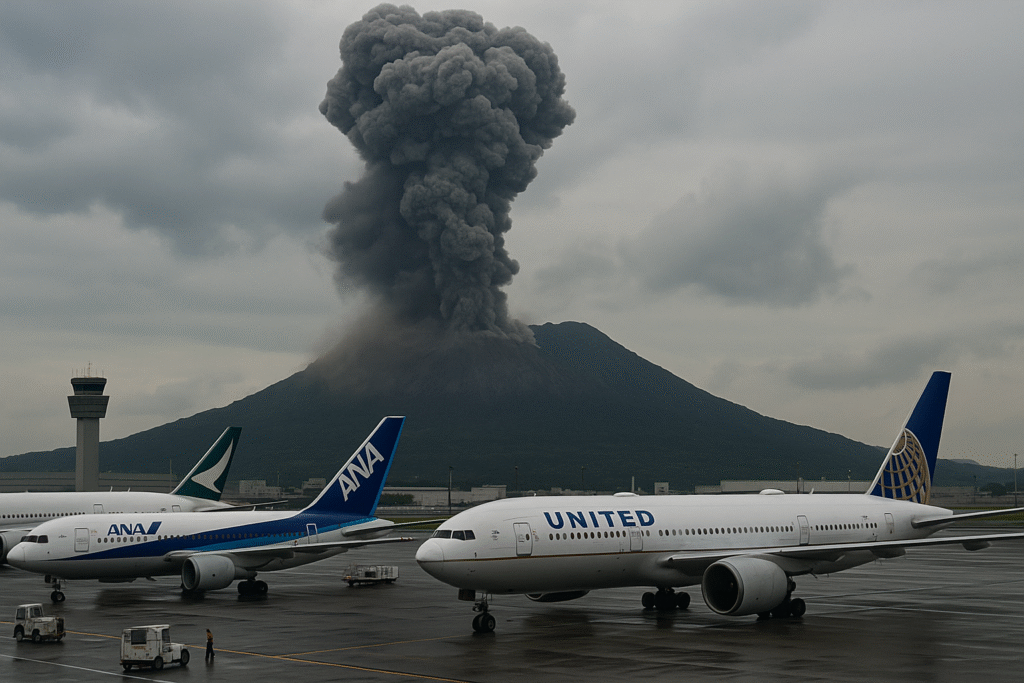
Japan faces major travel disruption after a powerful eruption at Sakurajima volcano forced airlines to cancel dozens of flights. Ash clouds rising more than 4,400 meters created unsafe flying conditions across large parts of the country. Airlines struggled to manage the sudden impact. Travellers experienced long delays, missed connections, and uncertainty over revised schedules.
Eruptions Force Rapid Cancellations Across Japanese Airports
The eruption began shortly after midnight and continued through the day. Each blast pushed more ash into the air. Ash drifted northeast and reached airports far from Kagoshima. Ground crews struggled to clear runways in time. Airline operations slowed as safety checks increased. Flights at Kagoshima, Haneda, Okinoerabu, and Kobe faced interruptions. Many airports reported long lines as travellers searched for new options.
Airlines reacted quickly. Crews moved aircraft away from high-risk zones. Some carriers suspended routes until visibility improved. Conditions changed rapidly. Travellers relied on frequent updates to plan their next steps.
Kagoshima Airport Hit Hardest by Severe Ashfall
Kagoshima Airport saw the highest impact. Most cancellations came from this region because of its proximity to the volcano. Several domestic carriers halted operations during peak hours. Jet engines can suffer major damage when exposed to ash, so safety protocols forced a stop to most movements. Travellers faced hours of waiting with limited clarity on possible departure times.
Runway cleaning teams worked non-stop. Vehicles cleared ash between eruptions, but new blasts created fresh hazards. Airlines urged passengers to check updates before arriving at the airport.
Disruptions Spread to Major Cities Including Tokyo
Tokyo’s Haneda Airport also experienced significant disruption. Ash clouds affected visibility and flight paths. Airlines adjusted routes to avoid dangerous airspace. Some international carriers halted services into Tokyo. Strong winds carried ash farther than expected. This created unpredictable traffic patterns over several regions.
Haneda saw delays throughout the morning and afternoon. Many international passengers missed connecting flights. Crew rescheduling created further complications. Airlines tried to secure hotel rooms for stranded travellers. High demand made this difficult during peak hours.
International Airlines Struggle to Maintain Operations
International carriers faced complex challenges. Air France, Delta, Cathay Pacific, United, and Asiana had several cancellations. Aircraft needed detailed inspections before returning to service. Teams reviewed engines and exterior surfaces for ash residue. Carriers must follow strict safety rules in volcanic events.
Several long-haul flights waited for revised routing permissions. Some planes diverted to nearby airports to avoid ash clouds. Travellers with onward connections faced long delays as alternate plans formed. Many passengers sought rebooking options for the following days.
Domestic Carriers Experience Major Backlogs
Domestic airlines also struggled. Japan Airlines, ANA, ANA Wings, Skymark, Solaseed, and Japan Air Commuter reported heavy delays. Schedules changed repeatedly as the ash cloud shifted. Carriers had to reposition aircraft across Japan. This created shortages in some locations and overcrowding in others.
Ground operations faced strain. Staff worked extended shifts to manage sudden schedule changes. Airport buses and lounges filled quickly as travellers waited for new departure times. Customer service teams handled a surge of calls from passengers seeking updates.
Weather Alerts Increase Travel Uncertainty
The Japan Meteorological Agency issued several alerts through the day. Officials warned of ashfall across Kagoshima, Miyazaki, and parts of Kumamoto. Residents were advised to limit outdoor movement. Volcanic debris reduces air quality and affects visibility on roads. Authorities urged caution in areas close to the volcano.
Tourists near Sakurajima followed evacuation guidance in case activity increased. Parks and hiking areas near the volcano closed for safety reasons. Visitors in southern Japan adjusted their plans as travel options changed.
Tourism and Local Business Sectors Feel Immediate Impact
The eruption caused a ripple effect in the tourism sector. Visitors travelling to southern Japan faced cancelled tours. Hotels near Kagoshima managed a sudden wave of booking changes. Local shops saw fewer customers as transport slowed. Tour operators rescheduled activities to avoid exposure to ash. Cruise ships also adjusted itineraries around the region.
Events planned in major cities faced risk of reduced attendance. Many business travellers delayed meetings or cancelled trips altogether. The disruptions showed how natural hazards can quickly affect Japan’s travel network.
Airlines Work to Stabilise Operations
Airlines are now focused on restoring service. Crews continue to inspect aircraft. Runway cleaning continues at affected airports. Carriers encourage travellers to monitor updates through official channels. Flexible rebooking options help passengers manage revised plans. Airlines expect delays to continue until volcanic activity stabilises.
Travellers Urged to Stay Alert as Activity Continues
Authorities advise travellers to check flight updates often. Weather conditions around Sakurajima may change quickly. More eruptions could cause new waves of ashfall. Travellers flying through southern Japan should plan extra time for airport procedures. Those with international connections should prepare for possible schedule changes.
Japan continues to monitor the volcano closely. Safety teams remain on high alert. The aviation sector works to keep disruptions minimal as the situation evolves. Travellers should stay flexible and follow official advisories to ensure safe movement across the region.
For more travel news like this, keep reading Global Travel Wire