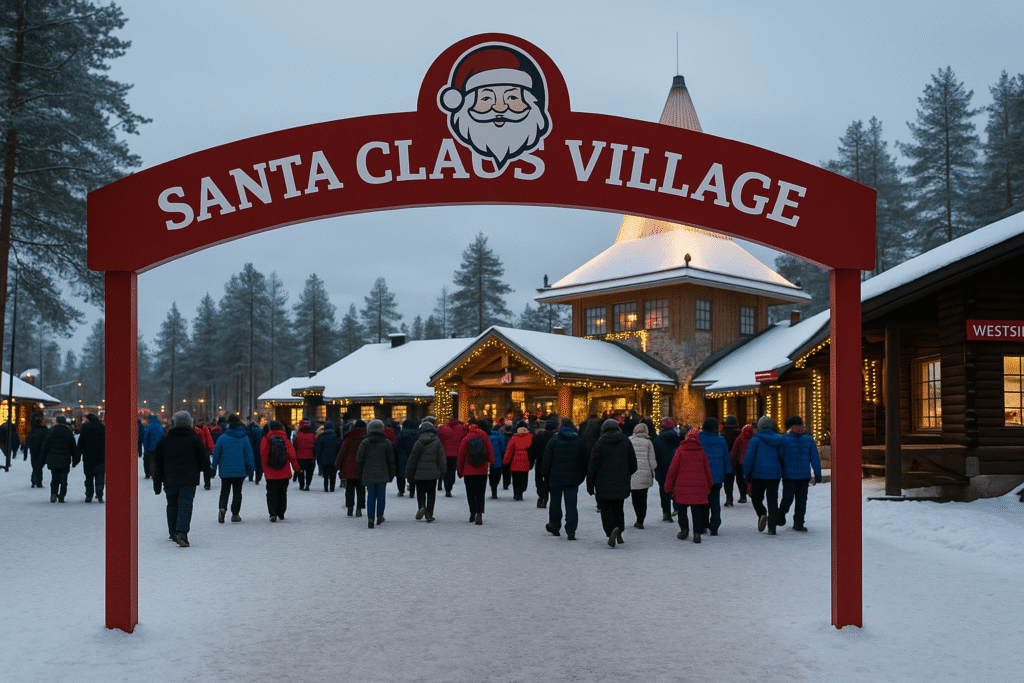
Finland celebrates a tourism boom, yet Rovaniemi now faces serious overcrowding. The Arctic town recorded 1.2 million visitors in 2023. This marks a sharp 30% jump from the previous year. New flight routes and global demand for winter experiences drove the surge. The appeal of Santa Claus Village fueled much of the growth. However, the rapid rise also created concerns about overtourism and the long-term sustainability of Lapland’s most famous destination.
Santa Claus Village Draws Global Crowds All Year
Rovaniemi sits on the edge of the Arctic Circle. The town promotes itself as the official hometown of Santa Claus. This identity attracts visitors from Europe, Asia, and North America. Santa Claus Village remains the centrepiece of the region’s tourism offering. Families explore snow-covered paths, visit Santa’s office, and enjoy reindeer sleigh rides. Many travelers view this experience as a once-in-a-lifetime holiday.
The village welcomes more than 600,000 guests every year. Winter remains the busiest season. Yet summer and autumn now draw steady crowds. Travelers seek northern lights tours, husky trekking, and Arctic wilderness excursions. This year’s strong recovery from the pandemic added momentum. Tour operators in Rovaniemi reported strong bookings as early as January. The number of direct flights increased as airlines added new routes from cities across Europe. These additions made travel far easier for first-time visitors.
Surge Brings Strain on Infrastructure and Local Life
The sharp increase in arrivals created pressure on Rovaniemi’s streets and services. Roads leading to Santa Claus Village often became congested. Local residents noticed heavier traffic and crowded public areas. Hotel occupancy rates reached record highs during peak weeks. Many visitors relied on short-term rentals, which expanded rapidly. Some locals welcomed the extra income from these rentals. Others raised concerns about neighbourhood disruption and rising housing costs.
The demand for winter activities also stressed natural resources. Guides reported higher traffic on forest trails. Reindeer farms saw long queues during midday tours. Waste management teams worked longer hours during peak holiday periods. Many residents supported tourism growth, yet they also expressed frustration over the pace of change. The town now faces a critical challenge: maintain the visitor experience without harming the local environment.
New Flight Routes Accelerate Tourism Growth
Rovaniemi Airport added thirteen new flight routes in 2023. These routes connected the town to cities such as Geneva, Berlin, and Bordeaux. Airlines promoted Lapland as an easy and attractive winter getaway. Tourists from France, Germany, and the UK formed the largest groups. Visitors also came from Asia and the Middle East in growing numbers. The increased accessibility boosted hotel bookings and tour sales.
The airport expansion created benefits for local businesses. Restaurants saw higher foot traffic. Winter clothing shops recorded strong sales. Tour operators increased their staff for the holiday season. Yet the sudden rise in passenger volume pushed the airport close to its operational limit. Long lines formed during afternoons when several charter flights landed at once.
Local Officials Push for Sustainable Solutions
Rovaniemi’s leaders now seek ways to balance growth and sustainability. Mayor Ulla-Kirsikka Vainio recognises the economic value of tourism. She also highlights the need to protect local life and the region’s fragile Arctic environment. Officials work with tourism boards to introduce better management strategies. Discussions include improved visitor flow systems, new public transport options, and stronger rules for short-term rentals.
Rovaniemi also explores environmental protection measures. These include trail maintenance programs, stricter waste control, and visitor education campaigns. The town wants travelers to enjoy the Arctic without harming its delicate ecosystems.
Finland Promotes Sustainable Tourism Across Regions
Finland continues to promote sustainable tourism nationwide. The country positions itself as a leader in eco-friendly travel. Officials encourage visitors to explore regions beyond Rovaniemi. This strategy aims to distribute tourism more evenly and reduce overcrowding. Finland offers many nature-rich destinations that remain less visited. National parks, lakeside villages, and Sámi cultural areas provide unique experiences with lower tourist pressure.
Tourism boards also promote off-season travel. They encourage guests to visit Lapland during spring and autumn. These seasons provide milder crowds and unique natural landscapes. Hotels and tour operators created special packages to draw attention to these months.
Businesses Adapt as Visitor Numbers Rise
Local businesses continue to adjust to the surge. Many hotels expand their capacity. Adventure companies train more guides. Restaurants build larger seating areas. Some smaller operators diversify their services to reduce dependence on winter tourism alone. These changes aim to create a more balanced tourism economy that supports long-term growth.
Businesses also work on environmental goals. Many adopt energy-efficient systems, plastic-free practices, and local sourcing strategies. These shifts help preserve Lapland’s pristine environment while supporting the needs of modern travelers.
Rovaniemi’s Future Depends on Balanced Growth
Rovaniemi stands at a crossroads. The town celebrates global recognition, yet it must protect the Arctic charm that draws visitors. Finland’s tourism industry has a clear opportunity to set high sustainability standards. With careful planning and cooperation, the region can maintain its magic while managing growing demand.
Rovaniemi’s story shows how a beloved destination must balance prosperity with preservation. With strong community engagement and responsible travel practices, Finland can guide its tourism future with confidence.
For more travel news like this, keep reading Global Travel Wire