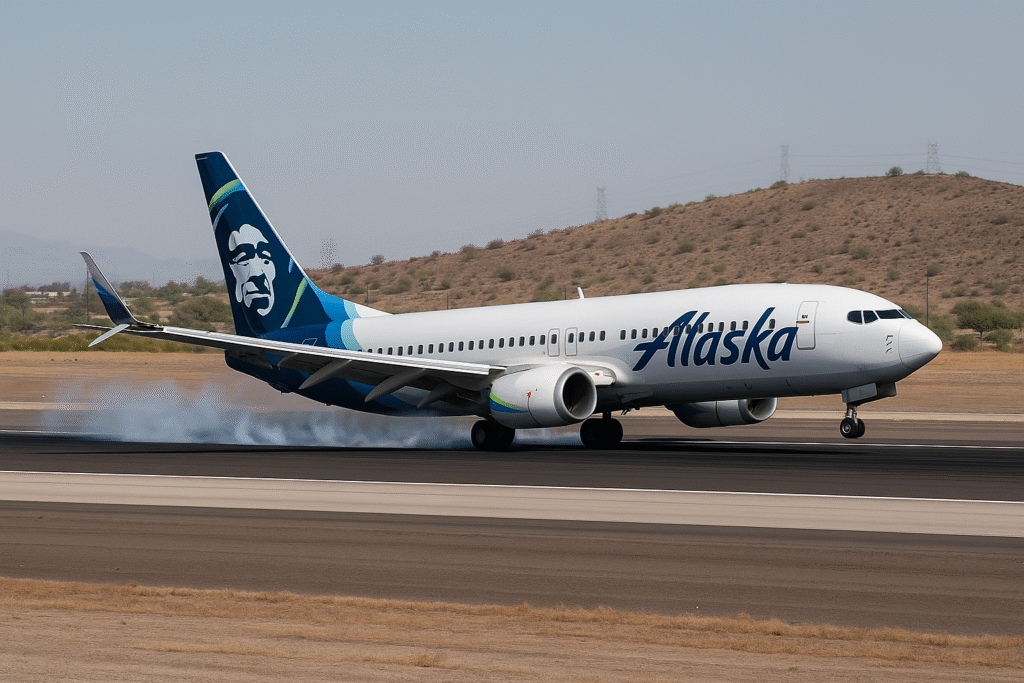
Alaska Airlines flight AS1348, a Boeing 737 operating a scheduled service from Phoenix to Portland, made a dramatic emergency landing only 37 minutes after departure. What began as a delayed routine flight turned into a tense mid-air situation that left passengers shaken but safe. The incident occurred on November 18, 2025, when smoke appeared inside the cabin shortly after the aircraft reached 17,000 feet.
The experienced crew reacted fast, declared an emergency, and returned to Phoenix Sky Harbor Airport. Their rapid actions ensured the safety of all on board and prevented the situation from escalating.
A Late Departure Turns Into a High-Stress Situation
The journey started with a delay of over an hour before the Boeing 737 finally took off from Phoenix at 13:32 MST. Passengers, already tired from waiting, had no idea that the flight would soon face a serious technical issue. After a smooth takeoff from runway 7L, the aircraft began its climb. However, the ascent stopped abruptly at 17,000 feet.
Pilots detected something unusual and chose caution. Moments later, smoke was reported inside the cabin. At that point, the flight crew initiated emergency procedures and notified air traffic control. The decision to turn back was immediate. Safety took priority over schedule or destination.
Inside the Cabin: The Moment Smoke Triggered an Emergency
Smoke inside an aircraft is one of the most serious inflight hazards. Even a small amount can signal an electrical or mechanical failure. Passengers on AS1348 reported a strong smell and visible haze before the captain announced the emergency.
The crew declared a “squawk 7700,” the global emergency transponder code used when an aircraft needs immediate priority. Cabin crew began safety preparations and reassured passengers while pilots coordinated with controllers to secure the fastest possible landing.
The aircraft made a controlled return, touching down safely on runway 08 at Phoenix Sky Harbor. Emergency teams were positioned and ready, though no injuries were reported.
Swift Response at Phoenix Sky Harbor Airport
Phoenix Sky Harbor Airport is known for its strong emergency response capabilities. Once the distress call was received, ground teams prepared for the aircraft’s return. Fire rescue units stood by, ready to support in case the smoke issue worsened.
The Boeing 737 taxied to gate E6, where passengers disembarked calmly. The cooperation between the flight crew, air traffic controllers, and airport staff played a crucial role in ensuring a safe landing.
Alaska Airlines Moves Quickly to Assist Affected Passengers
After the emergency landing, Alaska Airlines acted promptly. Passengers were met by airline representatives who guided them through the next steps. Another Boeing 737 was dispatched to transport them to Portland, ensuring minimal disruption to their travel plans.
Travelers were offered rebooking assistance and support services. The airline communicated clearly and worked to ease passengers’ concerns after the stressful event.
Alaska Airlines emphasises safety as its highest priority, and its response reflected that commitment. From the pilots’ decision-making to the ground team’s coordination, every phase was handled with precision.
What Caused the Smoke? Understanding the Potential Technical Issue
While the full investigation into the smoke source continues, such events often relate to electrical malfunctions, faulty ventilation components, or overheating equipment. Aviation authorities treat any smoke incident with extreme seriousness because onboard fires can escalate rapidly.
The crew’s decision to return immediately was aligned with global safety standards. By acting fast, they prevented any possible worsening of the issue.
Lessons for Air Travelers: Staying Calm During Emergencies
Events like this highlight the importance of being prepared during air travel. Passengers can protect themselves by following simple but vital steps:
- Listen to crew instructions. Cabin crew are trained extensively for emergency scenarios.
- Stay seated and calm. Panic can complicate evacuation or emergency procedures.
- Pay attention during safety demonstrations. These briefings are essential for rare moments like this.
- Use official airline updates. Notifications through the airline app or cabin announcements give accurate information.
Though inflight emergencies are rare, understanding basic steps helps passengers remain composed.
Phoenix Sky Harbor’s Role as a Reliable Emergency Hub
Phoenix Sky Harbor is one of the busiest airports in the United States and is equipped to manage inflight emergencies efficiently. Its runways, ground staff, and emergency units are trained to respond instantly to aircraft in distress.
The airport’s preparedness contributed significantly to the safe landing of AS1348. Coordinated planning and rapid communication ensured that passengers and crew were never at further risk.
Alaska Airlines Reinforces Its Strong Safety Protocols
The AS1348 emergency landing underscores the strength of Alaska Airlines’ safety culture. The crew’s judgment prevented a potentially severe situation. The airline’s dedication to regular training, aircraft maintenance, and crisis response remains central to its operations.
This incident serves as a reminder of how essential it is for airlines to maintain strict safety standards and for passengers to trust the professionals tasked with protecting them.
A Close Call That Ended Safely
The emergency landing of Alaska Airlines flight AS1348 was alarming for passengers, yet it ended without injuries. Thanks to decisive actions from the cockpit, coordinated ground response, and airport readiness, everyone on board reached safety quickly.
Such incidents highlight the unpredictable nature of air travel, but they also show the effectiveness of strict aviation safety protocols. AS1348’s safe outcome stands as a testament to skilled crews, trained responders, and robust airline safety systems.
For more travel news like this, keep reading Global Travel Wire