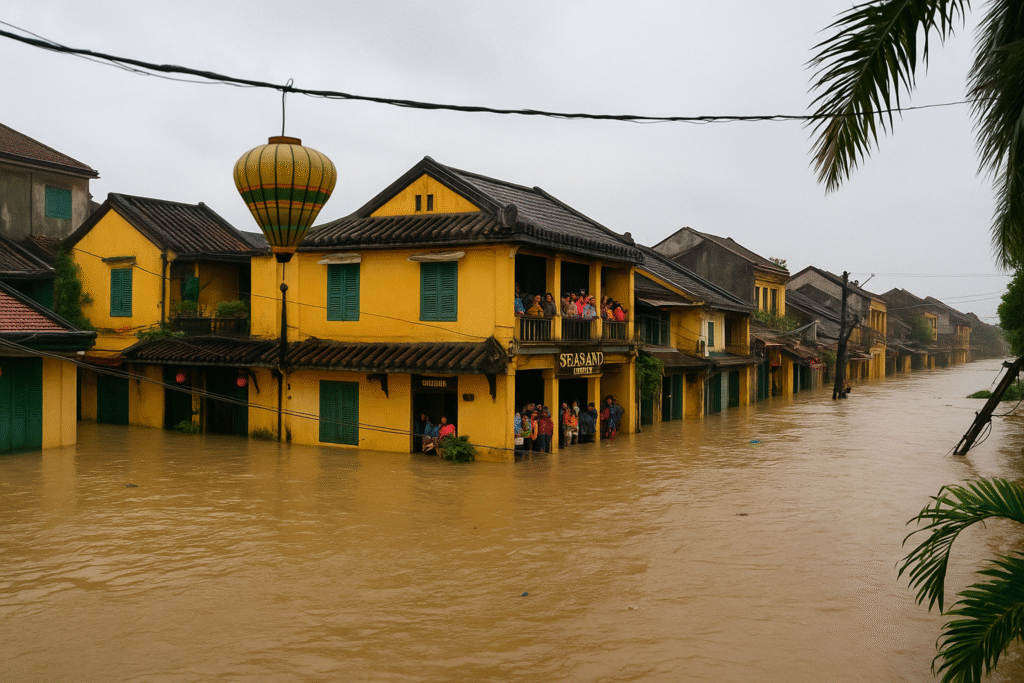
Heavy rains battering Vietnam’s central region have triggered wide-scale flooding and landslides. At least 41 people are confirmed dead, with more missing as floodwaters continue to rise. Homes have been submerged across multiple provinces while vital infrastructure lies damaged or cut off.
Affected Tourist Destinations
Popular destinations such as Nha Trang, Da Nang and Hoi An face major disruptions. Coastal resorts and heritage towns now host evacuees. Key highways and rail links remain blocked, complicating access for visitors and locals alike.
Transport & Access in Disarray
Flooding and landslides have shut rail services between major north-south corridors. Mountain pass roads are damaged and some airports, while technically open, face operational uncertainty. Tour operators and visitors must expect cancellations and route changes.
Evacuations & Emergency Response
Authorities report around 62,000 people evacuated from flooded zones. Military and police units are deployed to deliver aid, reinforce dams and reach isolated communities. Power outages affect over a million households as restoration work continues.
Travel Advice for Visitors
• Avoid non-essential travel to the central provinces until conditions stabilise.
• Expect possible restrictions in access to major sites and resorts.
• Monitor weather alerts carefully; further rainfall may trigger new landslides.
• Check cancellation policies and ensure you have travel insurance covering natural disasters (terms vary).
• Remain flexible with itineraries; lodging in impacted zones may serve as shelters.
Why It Matters for Tourism
The central region contributes significantly to Vietnam’s tourism revenue, drawing millions of visitors annually. The current disaster threatens not only immediate travel plans but also longer-term recovery of resorts, heritage sites and local economies. Crops and farms in tourist-adjacent zones are also hit, affecting local supply chains.
Economic & Environmental Impact
Preliminary assessments place damage upwards of one hundred million dollars. Agricultural losses include thousands of hectares of crops and tens of thousands of livestock. Schools and infrastructure are damaged or closed, affecting hundreds of thousands of students and residents.
Recovery Outlook & What to Watch
While local authorities are mobilising resources to restore transport, power and accommodations, recovery could take months. For travellers keen to visit Vietnam, monitoring official updates and adjusting plans accordingly is key. Resilience is strong among local communities, but the road ahead remains challenging.
As the floods recede, many tourism operators, accommodation providers and heritage-site managers begin the cleanup and rebuild. Visitors who remain informed and flexible can still explore Vietnam safely—but for the central region right now, caution is the best companion.
For more travel news like this, keep reading Global Travel Wire