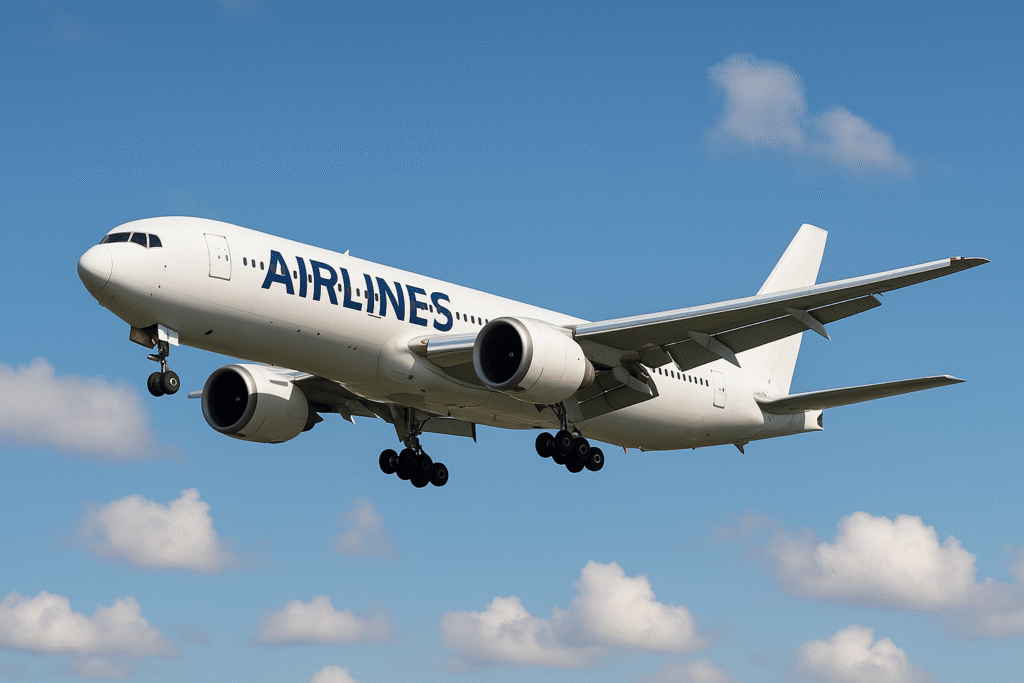
Thai Airways International, Thailand’s national carrier, has long been recognised for its service quality and overall safety record. However, between 2022 and 2025, the airline reported several landing-related events that drew widespread attention from travellers and aviation observers. Although such incidents remain rare given the airline’s large network and number of annual flights, the situations revealed important lessons about operational safety, aircraft maintenance and crisis response in modern air travel.
This period saw events ranging from tyre issues and ground collisions to cracked windscreens, landing-gear malfunctions and turbulence-induced injuries. Each occurrence, though managed professionally, underscored the unpredictable nature of aviation and the need for constant vigilance.
Tyre Deflation in Bengaluru – April 2022
In April 2022, shortly after international travel began recovering from the pandemic, Thai Airways resumed several long-haul routes. One of these flights, TG325 from Bangkok to Bengaluru, landed safely before ground personnel discovered a deflated tyre during taxi-in. Passengers disembarked normally, and airport authorities confirmed the deflation occurred after landing.
The aircraft remained grounded for detailed inspection, and travellers scheduled for the return flight were rebooked. While not an emergency landing, it was the only landing-related technical report for Thai Airways that year and highlighted the importance of ground safety checks and proper post-landing inspection routines, especially as fleets return to pre-pandemic operating levels.
Taxiway Collision at Tokyo Haneda – June 2023
In June 2023, an Airbus A330-300 operating flight TG683 was taxiing for departure at Tokyo Haneda when its right wingtip made contact with a parked aircraft belonging to another carrier. All passengers and crew were safely returned to the terminal, and the flight was cancelled for inspections.
Though the incident occurred on the ground rather than during flight, it raised concerns about congestion at major airports and the importance of situational awareness while manoeuvring wide-body aircraft in tight taxiway layouts. Thai authorities and Japanese investigators conducted safety reviews, reinforcing the need for improved ground-handling oversight.
Runway Excursion in Bangkok – September 2024
A more serious event occurred on 14 September 2024, when Thai Airways flight TG466 from Melbourne arrived in Bangkok. The Airbus A350-900 veered off the left side of the runway during landing, damaging multiple runway edge lights. Passengers and crew were unharmed, and the aircraft sustained only minor damage.
Investigators began analysing factors such as runway condition, weather patterns, braking effectiveness and approach stability. As Bangkok regularly experiences heavy seasonal rainfall, runway friction levels and crosswind assessments became key areas of focus. Airports with high traffic density, like Suvarnabhumi, often conduct friction testing and rapid-response maintenance, and this incident highlighted the importance of such practices.
Windshield Crack on TG401 – February 2025
In February 2025, flight TG401 from Bangkok to Singapore returned shortly after take-off when the pilots reported a crack in the outermost layer of the cockpit windscreen. Aircraft windscreens are designed with multiple layers for exactly this reason: even when an outer layer cracks, inner layers remain intact.
Despite the lack of immediate danger, the crew made a precautionary decision to return to Bangkok. The aircraft landed safely, and passengers were transferred to a replacement flight. This event demonstrated the airline’s commitment to conservative safety decision-making and strict adherence to established emergency procedures.
Landing-Gear Door Malfunction on TG922 – May 2025
On 4 May 2025, a Boeing 777-300ER operating TG922 to Frankfurt experienced an issue shortly after departure when the main landing-gear door did not fully close. The crew climbed to a safe altitude, assessed the situation and initiated fuel dumping to reduce landing weight—a standard safety measure before returning to an airport.
The aircraft landed without incident, was inspected by maintenance teams and later departed again for its long-haul journey. While relatively routine for experienced aviation professionals, this type of malfunction highlights why mechanical vigilance and constant system monitoring are essential on large twin-engine aircraft.
Turbulence Accident on TG925 – August 2025
The most significant incident within the reviewed period occurred on 20 August 2025. Flight TG925, an Airbus A350-900 en route from Munich to Bangkok, was flying over Thailand when it encountered severe turbulence during cruise. Several passengers were injured—four seriously—and the crew began an emergency descent before diverting to Bangkok for immediate medical assistance.
The aircraft itself sustained no structural damage, but because passengers suffered injuries, the event was classified as an accident. Turbulence incidents of this nature are becoming more common globally, partly due to shifting weather patterns and increases in clear-air turbulence. Aviation authorities repeatedly urge passengers to keep seat belts fastened whenever seated, even when the sign is off.
What These Incidents Mean for Travellers
The events from 2022 to 2025 reveal a consistent theme: Thai Airways crews acted decisively and in accordance with international safety standards. Emergency returns following a cracked windscreen or landing-gear anomaly demonstrated careful judgement by pilots. Ground incidents in India and Japan reinforced the need for strong airport coordination, while the runway excursion and turbulence accident highlighted the complex environmental factors involved in modern air travel.
Across every incident, Thai Airways coordinated with aviation authorities, provided assistance to passengers and maintained transparency through public statements. These responses align with global aviation safety expectations and illustrate the robust oversight framework governing airlines in Thailand and abroad.
Conclusion
Though Thai Airways experienced several notable incidents between 2022 and 2025, the airline’s responses—and the absence of fatalities—demonstrate the strength of its safety culture. Each event serves as a reminder that aviation relies on constant risk management, skilled crew decision-making and continuous improvements in equipment maintenance. For travellers, these occurrences reaffirm that emergency landings, while dramatic, are part of a safety-first system designed to protect everyone on board.
For more travel news like this, keep reading Global Travel Wire