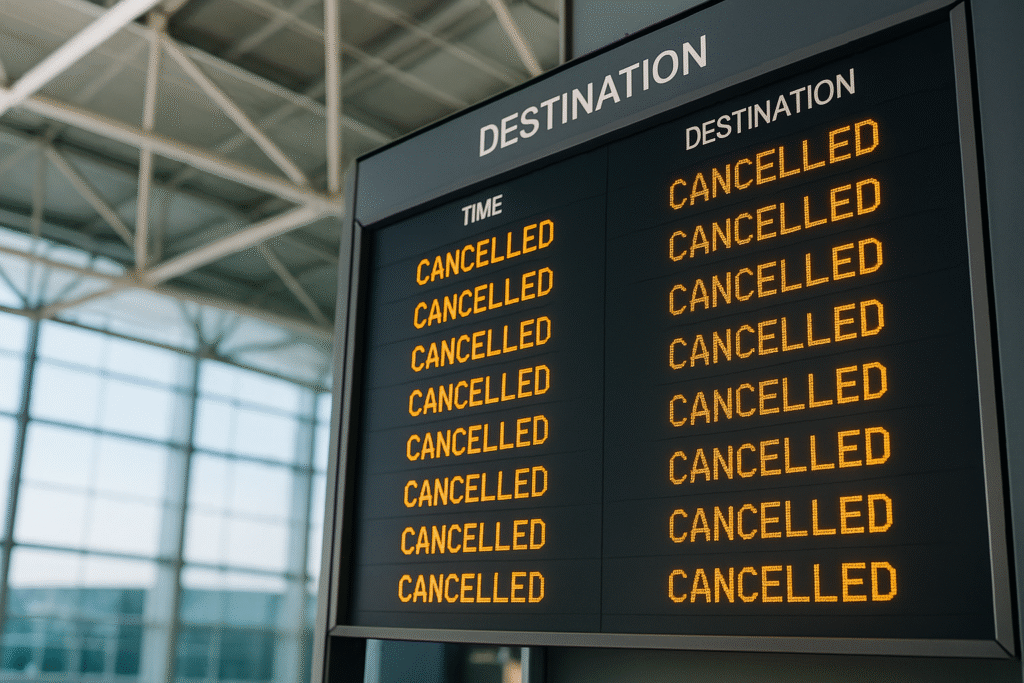
Travelers across Europe and long-haul routes faced fresh turmoil as Icelandair, SAS Link, Iberia and Air France cancelled 29 flights on some of their busiest routes. The sudden cancellations hit major hubs such as Brussels, Oslo, Paris, Madrid, and Caribbean gateways, unsettling travel plans and raising concerns within the tourism sector. The disruption stretched across Europe, North America, South America, and island destinations, affecting both holidaymakers and business travelers.
Industry observers say the situation highlights the vulnerability of global travel networks as tourism demand continues to rise. The ripple effects of these grounded flights have already reached hotels, tour operators, and popular attractions that rely on steady visitor flows.
Widespread Cancellations Across Key Routes
Flight cancellations affected short- and long-haul routes, including transatlantic and intra-European flights. These routes connect major tourism hubs, making the disruptions harder on passengers expecting seamless journeys.
Icelandair Disruptions
Icelandair cancelled two flights between Keflavik International Airport and Liege. These routes often serve travelers connecting to wider European destinations or seeking onward flights to Iceland’s natural wonders.
SAS Link Routes Affected
SAS Link cancelled two flights between Oslo Gardermoen and Billund in Denmark. Both airports support regional tourism and business travel, making the impact felt in Scandinavia.
Iberia Cancellations Across Europe and the Americas
Iberia saw the highest number of cancellations across several regions. Flights linking Brussels, Madrid, Milan, Caracas, and Buenos Aires were grounded. These routes are among Iberia’s busiest and link key tourism and trade corridors between Europe and Latin America.
Air France Grounded Multiple European Connections
Air France cancelled a wide range of short-haul and medium-haul flights from Paris Charles de Gaulle to Italy, Morocco, and St. Maarten. The affected connections include key business and leisure routes such as Milan, Florence, Venice and Casablanca.
Reasons Behind the Travel Disarray
Airlines often cancel flights due to operational issues, crew shortages, adverse weather, or aircraft maintenance. While the exact reasons vary by carrier, officials indicated that a mix of operational adjustments and scheduling constraints triggered the cancellations.
Aviation authorities across Europe continue to face pressure due to rising travel demand, airspace congestion, and staffing shortages in airports and air traffic control centres. As the region moves into peak travel season, even small disruptions can snowball into larger network delays.
Tourism Sector Feels the Strain
The latest wave of cancellations is more than a simple inconvenience. It comes at a time when tourism boards and businesses across Europe and the Caribbean rely on consistent visitor numbers to support economic recovery.
Iceland Sees Dip in Arrivals
Iceland’s tourism relies heavily on international flights into Keflavik. When flights get cancelled, fewer travellers make it to the island’s dramatic landscapes, geothermal spas, and volcanic attractions. Local tour operators often experience immediate booking disruptions.
Spain Faces Pressure at Key Entry Points
Madrid, Barcelona and Milan routes carry large volumes of holidaymakers heading to Spain’s beaches, cultural capitals, and island destinations. Iberia’s cancellations could temporarily reduce arrivals in top destinations such as Madrid, Catalonia, Andalusia, and the Balearic Islands.
France Endures Paris Flight Disruptions
Paris remains one of the world’s most visited cities. With Air France grounding flights from Charles de Gaulle to Italy and Morocco, tourism flows into and out of France may temporarily drop. Travellers connecting through Paris also faced last-minute itinerary changes.
Caribbean Tourism Takes a Hit
The cancellation of flights involving Princess Juliana International Airport in St. Maarten affects one of the Caribbean’s most photographed and visited islands. The region’s tourism relies heavily on direct air access, and disruptions can impact hotel occupancy, cruise excursions, and local businesses.
Travellers Scramble for Solutions
Passengers caught in the cancellations experienced long queues for rebooking, limited alternative flights, and communication delays. Many travellers chose rerouted options through nearby airports, while others postponed plans or cancelled trips altogether.
Travel experts recommend that passengers monitor airline apps, enroll in travel alerts, and allow extra time for connections during this period of irregular operations.
What This Means for Europe’s Travel Outlook
The cancellations highlight ongoing pressure on aviation networks despite rising travel demand. European tourism bodies have expressed concern about repeated disruptions, as the region prepares for festivals, holiday seasons, and international events.
Tourism analysts warn that frequent cancellations can erode traveller confidence and reduce last-minute bookings. Countries that rely heavily on air arrivals may feel the economic effects more quickly.
At the same time, airports and airlines continue working on long-term solutions, including hiring more staff, improving scheduling flexibility, and boosting operational resilience.
Conclusion
The cancellation of 29 flights by Icelandair, SAS Link, Iberia and Air France created widespread disruption and highlighted ongoing challenges in global aviation. With routes across Europe, Africa, the Americas, and the Caribbean affected, tourism-dependent destinations are feeling the impact. Travellers are advised to stay informed, stay flexible, and check their bookings regularly as airlines work to stabilize their schedules.
For more travel news like this, keep reading Global Travel Wire