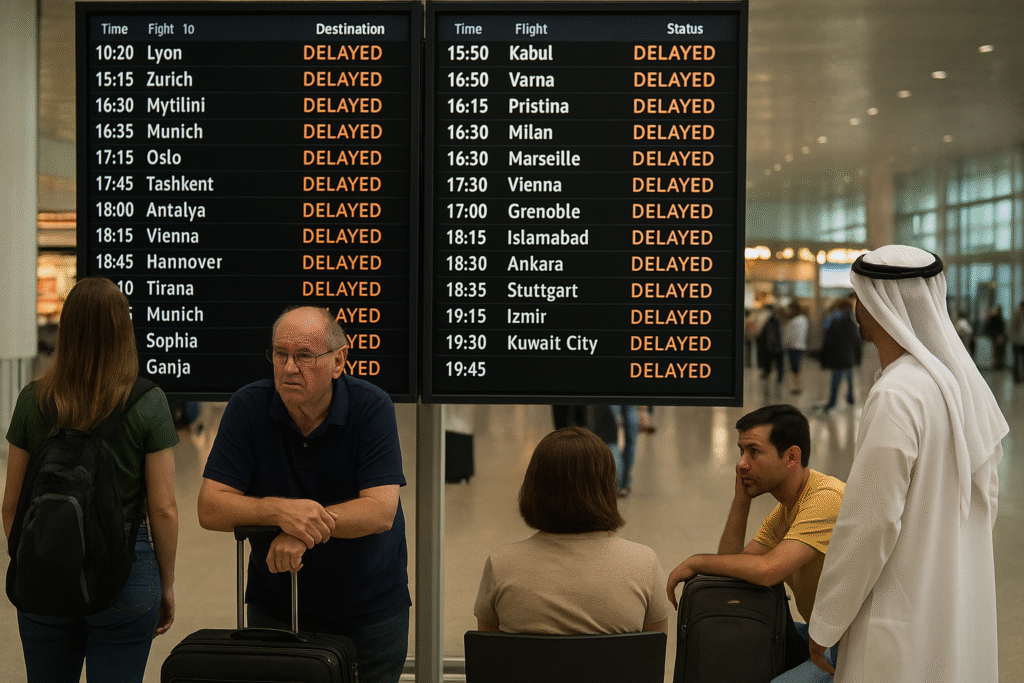
A wave of flight delays and cancellations swept across major Middle Eastern hubs today. Passengers at airports in Dubai, Istanbul, Abu Dhabi, Bahrain and Tehran faced unexpected queues, long waits and sudden schedule changes. In total, 290 flights were delayed and 19 were cancelled, affecting thousands of travellers across major tourism and transit corridors.
This sharp rise in disruption hit during peak travel hours, adding pressure on already busy terminals known for heavy international traffic. For many passengers, the day shifted quickly from anticipation to frustration.
Where Delays Hit the Hardest
Airports across the region recorded significant operational strain. Data from today’s movements show the following disruptions:
- Dubai International Airport: 127 delays, 4 cancellations
- Abu Dhabi International Airport: 63 delays, 2 cancellations
- Istanbul Airport: 52 delays, 3 cancellations
- Bahrain International Airport: 29 delays, 2 cancellations
- Al Maktoum International Airport: 13 delays, 2 cancellations
- Imam Khomeini International Airport: 6 delays, 6 cancellations
Dubai and Abu Dhabi saw the largest volume of delays due to high traffic loads. Meanwhile, Tehran’s Imam Khomeini Airport faced the most severe cancellation ratio, with every listed flight affected.
For passengers waiting in terminals, departure boards alternated between delays and outright cancellations, leaving many unsure of when they would travel next.
Why These Disruptions Are Happening
Travel delays in the region stem from several common causes. Aviation authorities often point to operational challenges such as:
- crew shortages
- aircraft turnaround delays
- air traffic congestion
- ground handling bottlenecks
- weather-related interruptions
- late arriving aircraft
At the busiest hubs, even a small operational issue can cascade. When one flight is delayed, the aircraft may miss its next scheduled route. As a result, several later flights also suffer delays. This pattern is especially common at transit-heavy airports like Dubai and Istanbul.
With travel demand rising across the Middle East—boosted by tourism, business travel and large-scale events—airport systems remain under constant pressure. More flights mean tighter schedules, more coordination, and smaller margins for error.
Impact on Global Travel Flows
The Middle East sits at the crossroads of Europe, Asia and Africa, making its hubs critical for global connectivity. When so many flights are delayed in this region, ripple effects spread far beyond local airports.
A delay leaving Dubai can impact flights connecting in Asia. A cancellation in Istanbul can disrupt travel routes into Europe. For many travellers, this means missed connections, longer layovers, and sudden itinerary changes.
For families on holiday, business professionals on tight schedules, or tourists catching connecting flights to island destinations, these interruptions can be costly and stressful.
What Passengers Experienced at Terminals
Across the affected airports, travellers described packed terminals and long queues at airline counters. Many arrived early, hoping for better clarity, but often found the situation changing minute by minute.
Families huddled around screens watching for updates. Business travellers rebooked meetings. Tourists rushed between gates searching for new options.
At Imam Khomeini Airport, where cancellations matched the number of scheduled flights, frustration grew quickly. Some passengers reported no available alternative flights for several hours.
Despite the challenges, airport staff in multiple hubs worked to manage the crowds, assist with rebooking and guide passengers through next steps.
What Authorities Emphasize During Massive Disruptions
Aviation regulations in most countries provide passengers with certain rights during long delays or cancellations. These typically include:
- rebooking at no extra charge
- refunds for cancelled flights
- care provisions such as meals or hotel stays
- communication updates
- assistance for missed connections
Clear communication remains essential. When airlines offer timely updates, travellers can adjust plans, make arrangements for accommodations or rearrange work commitments.
Governments and aviation bodies regularly advise passengers to stay informed, arrive early and keep digital notifications enabled when travelling during peak periods.
What Needs to Improve to Prevent Repeat Events
As international travel strengthens after recent global disruptions, airports face the challenge of building a more resilient system. Industry experts stress:
- better scheduling buffers
- expanded staffing
- stronger coordination between airlines and ground services
- modernized air traffic systems
- improved communication channels
These measures can reduce cascading delays and help airports handle heavy loads more efficiently.
A Reminder of the Human Journeys Behind Every Flight
Today’s disruptions across the Middle East highlight a simple truth: every delayed flight reflects real people and real stories. A missed holiday. A postponed family reunion. A lost business opportunity.
While numbers help measure the scale of disruption, the experience of travellers in crowded terminals captures the heart of the issue. Travel is more than movement. It represents moments, purpose and connection.
As airlines and airports look toward long-term improvements, ensuring reliability and protecting the passenger experience must remain the central priority.
For more travel news like this, keep reading Global Travel Wire