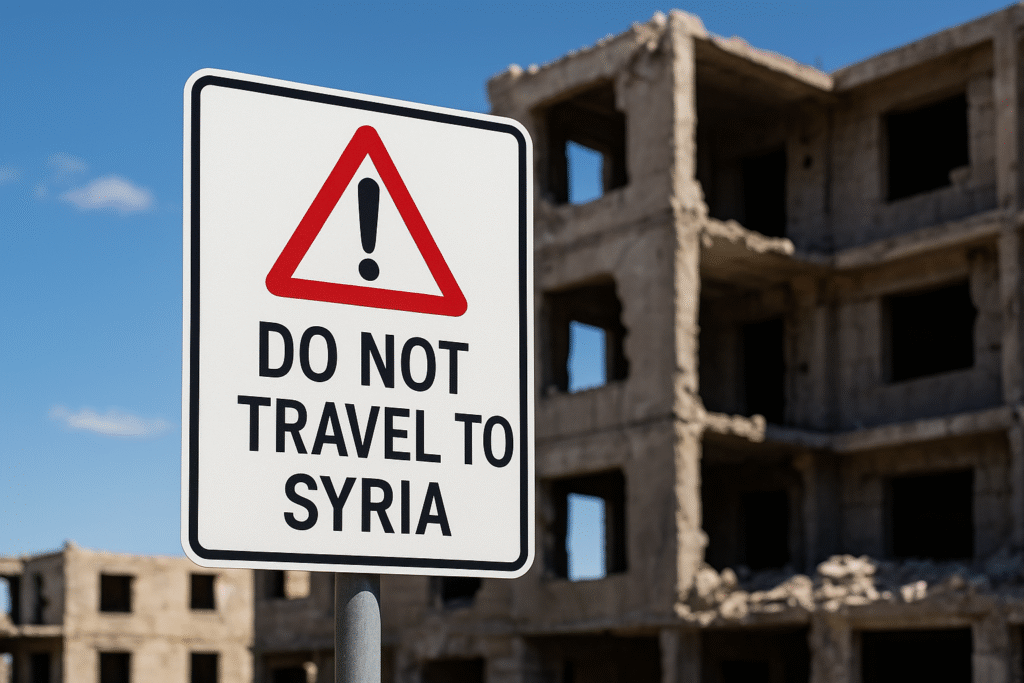
Australia has renewed its highest-level warning for Syria, and the message is louder than ever: do not travel. The latest advice highlights escalating conflict, unpredictable air strikes, and severe risks to foreigners. For anyone considering travel in 2025, Syria remains one of the most dangerous destinations in the world.
The situation on the ground is unstable. Violence continues in major cities and rural regions. Borders open and close without warning. Flights may be cancelled suddenly. Basic services barely function. Tourism is not only discouraged; it is considered life-threatening.
This detailed news update breaks down every danger Australian authorities emphasise in their newest advisory so travellers understand the reality of the risks.
No Safe Areas for Tourists
Australian officials state clearly that no part of Syria is safe. Fighting between armed groups continues in several provinces. Air strikes by foreign forces can occur with no advance notice. Even areas once considered stable now face rising threats.
Crowded neighbourhoods, tourist spots, markets, and transport hubs remain frequent targets. The risk level is so high that officials recommend cancelling all travel plans, regardless of your reason for visiting.
Intensifying Conflict and Air Strikes
Fresh conflict developments have pushed authorities to reinforce the “Do Not Travel” alert. Air strikes can hit anywhere, including the capital. Missile attacks have caused sudden airport closures, leaving travellers stranded. Armed clashes also break out without warning in cities and on major roads.
These conditions make ordinary tourist movement extremely unsafe. There is no reliable way to predict when or where the next attack may occur.
Terrorism and Kidnapping Threats
Kidnapping remains one of the biggest dangers. Foreigners are prime targets because armed groups see them as bargaining leverage. Journalists, aid workers, and independent travellers face heightened risks.
Terror attacks can strike hotels, restaurants, public buildings, and transport routes. Many incidents occur in places where tourists would normally gather. Anyone travelling in Syria faces the possibility of being caught in random or targeted attacks.
Arbitrary Arrests and Restrictive Laws
Australian authorities warn that arbitrary detention is common. Being near a protest or taking photos in a restricted area can lead to immediate arrest. Many travellers underestimate how strict local laws are.
Key legal risks include:
- Photographing military or government facilities
- Carrying a drone
- Same-sex relationships
- Drug offences, which may carry severe penalties
Dual nationals face additional problems because Syrian officials may treat them only as Syrian citizens. This can block consular help and complicate departure.
Travel Disruptions That Can Trap Tourists
Even travellers who feel prepared cannot predict Syria’s travel disruptions. The situation changes rapidly.
Common issues include:
- Sudden airport closures after air strikes
- Limited flight availability
- Border shutdowns without notice
- Roadblocks and military checkpoints
- Airspace restrictions during regional tension spikes
When these disruptions occur, visitors can become stuck for days or weeks. Exit routes often collapse with little warning.
A Collapsed Health System
The health system remains extremely fragile. Many hospitals lack equipment, staff, or medicine. Emergency care is unreliable. Ambulance services are limited.
Tourists face additional health problems such as:
- Insect-borne diseases, including malaria in some northern regions
- Waterborne illnesses due to unsafe drinking water
- Contaminated food risks in many urban and rural areas
Medical evacuation is often the only way to get proper treatment. However, evacuation flights may not be available, and costs can exceed tens of thousands of dollars.
Australian authorities stress that they cannot arrange evacuation or provide rapid consular support in Syria.
Financial and Practical Barriers
Everyday tasks become complicated due to Syria’s damaged infrastructure.
Visitors should expect:
- Cash-only payments, as cards rarely work
- Currency shortages
- Frequent power cuts
- Limited internet access
- Shortages of fuel and transport options
Visa rules also change frequently. A valid visa one day can become invalid the next. These shifting regulations create further uncertainty for travellers.
What Travellers Should Do Instead
Australian officials recommend cancelling or delaying all trips to Syria. Anyone currently inside the country is encouraged to leave while exit routes are still open.
Travellers stuck due to disruptions should:
- Prepare backup exit plans
- Follow local security updates
- Avoid crowded areas
- Keep documents and emergency cash ready
- Seek advice from professional security providers
Ignoring the advisory makes independent safety planning essential, but even strong planning cannot remove the danger.
Final Verdict: Is Syria Safe for Tourists in 2025?
The answer remains no. Syria continues to be one of the world’s most dangerous destinations. The combination of conflict, terrorism, kidnappings, arrests, travel shutdowns, and a collapsed health system creates an extremely hostile environment for any visitor.
Australia’s travel authorities repeat their strongest warning: do not travel to Syria under any circumstances.
Tourists should prioritize their safety and choose destinations where stable conditions allow them to explore without life-threatening risks.
For more travel news like this, keep reading Global Travel Wire