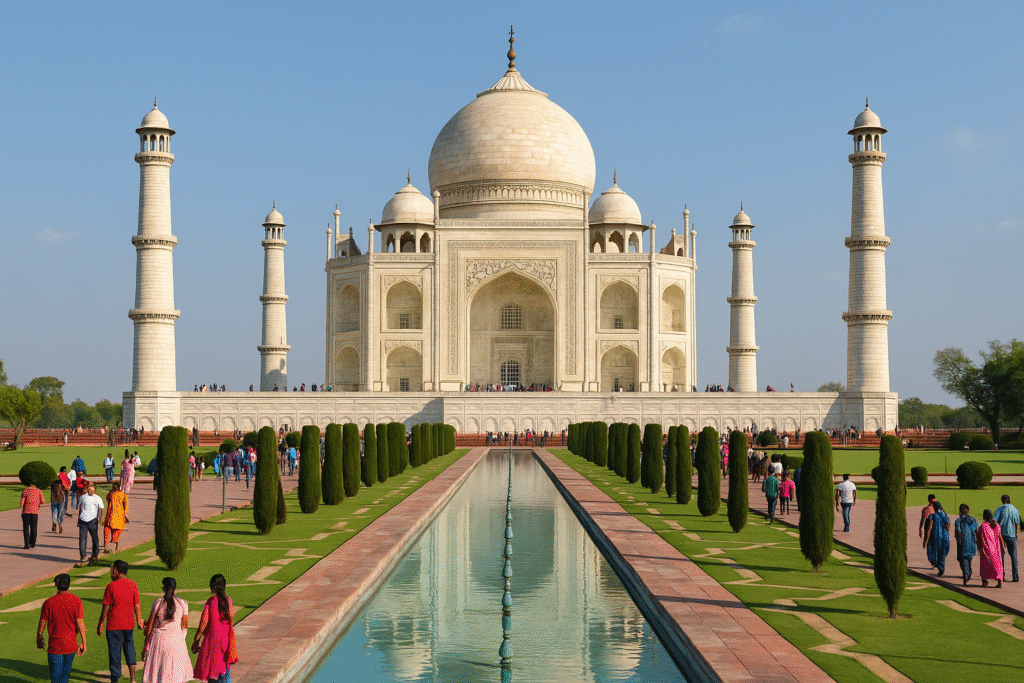
India’s tourism sector is experiencing a powerful resurgence in 2024–25. Visitor numbers have soared across the country, with the Taj Mahal once again emerging as the nation’s most visited monument. This growth reflects India’s expanding global appeal and the rising interest in cultural tourism.
Historic Surge in Visitor Footfall
India welcomed an impressive rise in both domestic and foreign tourists during the year. Over 56 lakh international travelers explored the country, while domestic tourism reached more than 303 crore visits. The surge points to improved connectivity, stronger marketing, and enhanced visitor facilities across major destinations.
The Taj Mahal remained at the top with 6.26 million domestic visitors and 0.65 million foreign tourists in 2024. Its global reputation as a symbol of love continues to draw travelers from every corner of the world.
Iconic Monuments Drive National Tourism
Among the 145 ticketed monuments managed by the Archaeological Survey of India, the Taj Mahal dominated visitor charts. Its marble architecture, symmetrical design, and enchanting gardens continue to fascinate new and returning visitors.
The Qutub Minar in Delhi secured the third spot with strong domestic and global footfall. Meanwhile, the Sun Temple in Konark became the second-most visited site among domestic tourists. Agra Fort ranked second among international visitors, highlighting its historical and architectural significance.
India’s UNESCO Heritage Shines Globally
India’s 44 UNESCO World Heritage Sites remain a major magnet for global travelers. These sites showcase centuries of art, architecture, and craftsmanship. From Mughal monuments to ancient temples and mountain railways, India’s heritage network offers diverse experiences.
International travelers often include several UNESCO sites in their itineraries. This trend strengthens India’s position as one of the world’s most culturally vibrant travel destinations.
Tourism Recovery Gains Strength
After the pandemic, India witnessed a sharp rebound in monument tourism. Growth reached record highs in 2021–22 and 2022–23 following a dramatic decline in 2020–21 when restrictions halted travel.
Tourism expanded by 1.75% in 2024–25, marking steady recovery. While this rate was moderate, it showed that the industry is stabilizing and moving toward long-term growth. The revival of global flights and easing travel norms contributed to the upward trend.
Economic Boost for Key Tourism Hubs
The rise in tourism has strengthened the economies of major travel hubs such as Agra, Odisha, and Delhi. Hotels, restaurants, transport services, and local artisans have benefited from rising footfall.
Cultural tourism continues to be a major contributor to India’s revenue. Increased movement of domestic tourists has boosted regional economies, ensuring widespread economic benefits.
Infrastructure Expansion to Meet Growing Demand
With rising tourism, the need for better infrastructure is increasing. Many states are focusing on improving roads, visitor centers, hygiene facilities, and digital ticketing systems. Enhanced safety measures and crowd management have also improved visitor experiences at major monuments.
Authorities are prioritizing accessible tourism. More ramps, audio guides, and multilingual services are being added to create inclusive travel environments.
Preservation of Monuments Remains a Priority
As tourist numbers grow, conservation efforts have become more crucial. India continues to invest in restoration projects, structural repairs, and environmental management around heritage zones. These measures protect the cultural identity of monuments while providing a seamless experience for tourists.
Experts emphasize that both public and private sector cooperation is essential. Sustainable tourism practices will help India protect its treasures for future generations.
Domestic Tourism Becomes a Strong Pillar
Domestic tourism has played a major role in India’s travel revival. Families, solo travelers, and young explorers are visiting historical cities, trekking zones, beaches, and spiritual hubs in record numbers. The interest in regional culture, local cuisine, and traditional festivals has risen sharply.
Government initiatives promoting local travel have encouraged Indians to explore heritage sites within their own states and beyond.
India’s Cultural Tourism Strategy for the Future
Cultural heritage remains central to India’s long-term tourism vision. The focus is on creating deeper cultural experiences through guided tours, night tourism, light-and-sound shows, and heritage walks. Such experiences help travelers connect with the stories behind monuments.
India aims to position itself as a global leader in culture-based tourism. With diverse traditions, languages, and architectural marvels, the country offers unmatched variety for global travelers.
Growing Global Recognition for Indian Tourism
India’s progress in tourism contributes to global travel trends where visitors seek meaningful cultural experiences. As more travelers choose heritage and experiential tourism over short commercial trips, India stands out as an ideal destination.
The Taj Mahal, Agra Fort, Qutub Minar, and Sun Temple continue to attract millions each year. Their global fame ensures that India remains a key player in world tourism.
A Bright Future for India’s Travel Landscape
Tourism in India is set for further expansion. Continued improvements in connectivity, hospitality, and conservation promise a strong future. As visitor numbers grow, India’s heritage sites will continue to inspire travelers from around the world.
With its blend of history, culture, and architectural brilliance, India’s tourism sector is ready to reach new heights.
For more travel news like this, keep reading Global Travel Wire