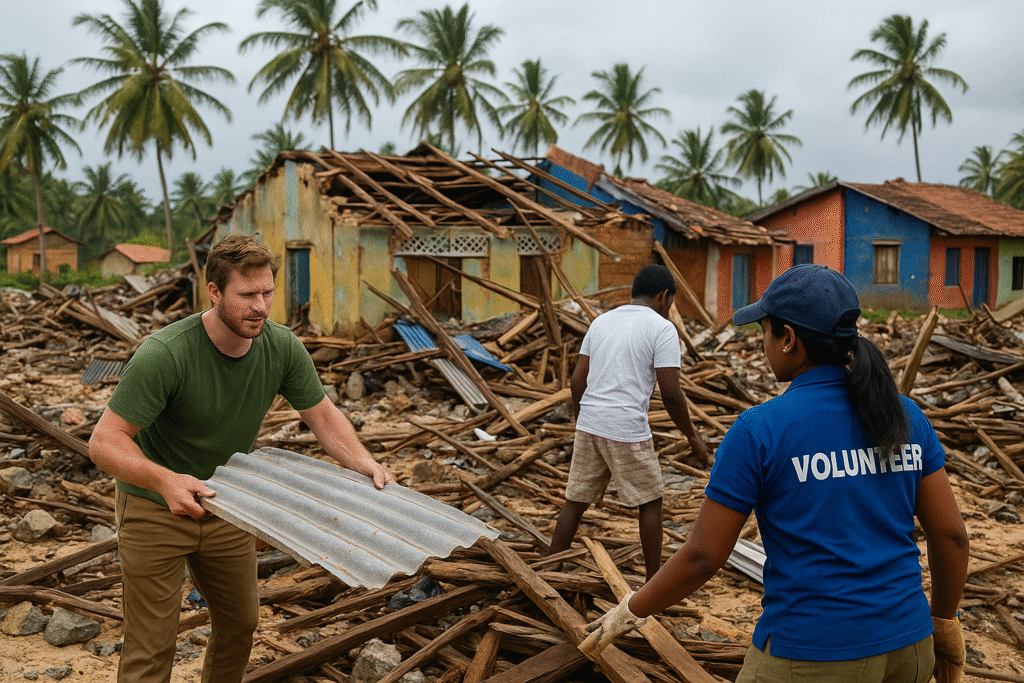
Sri Lanka is facing one of its worst natural disasters in recent history after Cyclone Ditwah tore across the island. The powerful storm caused massive floods, landslides, and widespread damage. More than 460 people have lost their lives, and hundreds remain missing. Over one million residents have been affected. Communities across the country now depend on volunteers, rescue teams, and humanitarian support as the island begins a long recovery.
Tourism, one of Sri Lanka’s most vital industries, has also suffered a heavy setback. Yet the nation’s resilience is already showing. Local communities, businesses, and volunteers are working together to restore essential services and reassure travellers of future safety.
A Cyclone’s Fierce Impact on Communities
Cyclone Ditwah struck with intense winds and continuous rainfall. The hardest-hit areas include the coastal belt, Colombo’s outer suburbs, and several central districts prone to landslides. Homes were swept away. Roads collapsed. Entire villages were cut off as water levels rose overnight.
More than 30,000 homes are reported damaged or destroyed. Emergency shelters now host thousands of displaced residents. Tourism zones, including coastal resorts and eco-tourism villages, have reported infrastructure losses that will take time to rebuild.
Despite the devastation, Sri Lankans have demonstrated remarkable unity. Families, youth groups, fishermen, and community leaders have all stepped forward to help.
Volunteers Lead Immediate Relief Efforts
As floodwaters isolated neighbourhoods, volunteers acted quickly. Many used fishing boats and private vehicles to reach trapped families. Among them was well-known entertainer GK Reginold, who used his personal boat to deliver meals and drinking water. He aimed to reach people who had gone days without supplies.
This spirit is visible across the country. Volunteers have organised food stations, clothing collections, and medical support hubs. In Colombo’s Wijerama area, a community kitchen now feeds hundreds daily. Many volunteers who once marched in the 2022 economic crisis protests have reunited for humanitarian work, showing how deeply rooted civic action has become in Sri Lanka.
Digital Platforms Boost Aid Distribution
Online coordination has played a major role in the relief effort. Social media groups and community networks track urgent needs and direct support to affected neighbourhoods. Volunteers use digital tools to organise donations of food, dry rations, soap, medicine, and bedding.
Local companies and media networks have launched island-wide collection drives. These efforts help supply shelters located in both urban and rural districts. The quick digital response has helped avoid resource gaps and ensured faster distribution of essentials.
Military Response and Global Support
Sri Lanka’s military launched rapid rescue operations. Helicopters airlifted stranded families. Engineering units cleared blocked roads and restored power lines where possible. Military medical teams also deployed to overcrowded shelters to prevent health risks.
The government declared a national emergency, recognising the magnitude of the crisis. International support soon followed. Several countries expressed solidarity and pledged relief supplies. Humanitarian groups have delivered emergency kits, water purifiers, tents, and medical equipment.
While this aid is crucial, the long-term recovery will be challenging. Sri Lanka continues to face economic pressures, making global cooperation essential.
Tourism Industry Faces Setback but Sees Hope
Cyclone Ditwah arrived during a period when Sri Lanka’s tourism industry was gradually recovering. The country had seen increased visitor interest in wildlife parks, coastal resorts, heritage sites, and wellness retreats. The cyclone has caused disruptions, especially in coastal tourism zones and nature-based attractions.
However, tourism officials remain optimistic. Many tourist regions outside the disaster zones remain safe and operational. Authorities are assessing damage to key attractions and preparing updated safety guidelines. Hotels unaffected by the storm have opened their doors to displaced families and aid workers, reinforcing trust in Sri Lanka’s hospitality sector.
Travel planners expect the industry to regain momentum once recovery operations progress and safety conditions stabilise.
A United Nation Focused on Recovery
Community leaders highlight the strength and determination shown by citizens. Volunteers continue to deliver meals, transport medical supplies, and repair damaged houses. Many describe the work as emotionally rewarding despite exhaustion.
For Sri Lanka, this unity has become a symbol of hope. The country has endured economic hardship in recent years. Yet every crisis has revealed the resilience of its people. Cyclone Ditwah is another reminder of that spirit.
Looking Ahead: Rebuilding With Strength and Compassion
Sri Lanka’s focus now shifts toward rebuilding homes, restoring livelihoods, and strengthening disaster preparedness. Authorities plan to reinforce early-warning systems, improve drainage networks, and support vulnerable communities.
Tourism, a key pillar of the economy, will play a major role in the country’s recovery. With its natural beauty, cultural heritage, and warm hospitality, Sri Lanka has a strong foundation for revival. As roads reopen and restoration work continues, the tourism sector will gradually welcome visitors again.
Sri Lanka stands strong, united, and determined. With volunteer power, government action, and global support, the island is set to rise again—resilient and ready to rebuild.
For more travel news like this, keep reading Global Travel Wire