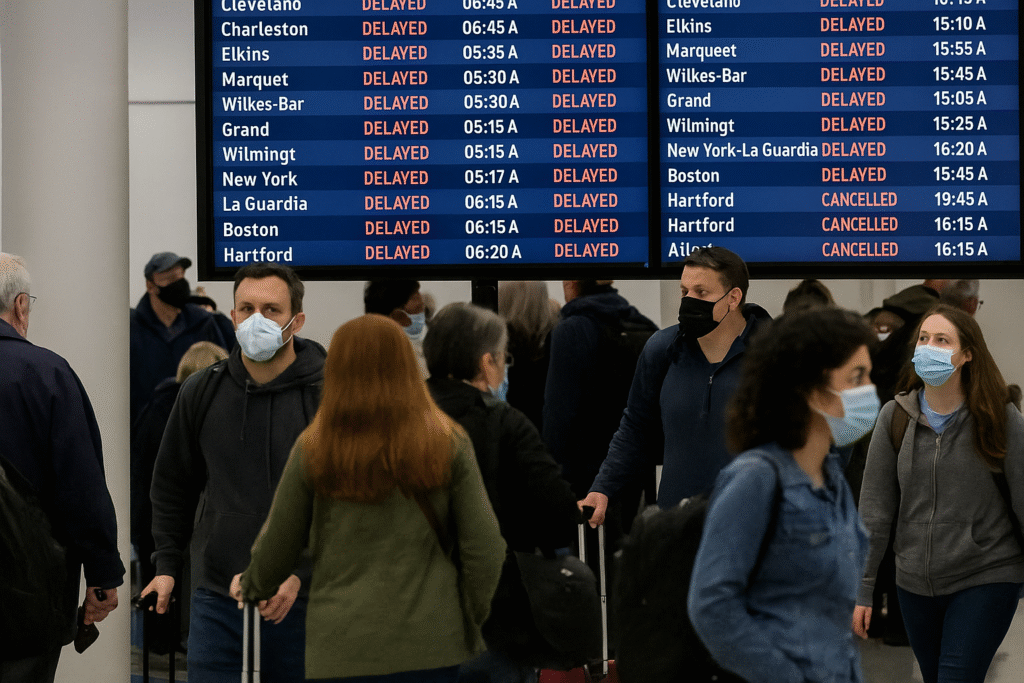
Air travel across the United States has plunged into disarray as thousands of passengers find themselves stranded following large-scale disruptions at several major airports. Within a 24-hour window, Chicago O’Hare International Airport, Washington Reagan National, and Philadelphia International Airport recorded a combined 136 flight delays and 130 cancellations, resulting in mounting frustration, missed connections and abandoned travel plans. Additional turbulence was felt at Los Angeles International (LAX) and Atlanta’s Hartsfield-Jackson International Airport, extending the impact to both coasts.
Airlines including Delta Air Lines, Southwest Airlines, SkyWest, and American Airlines struggled under intense operational pressure, with aircraft out of position, crews timing out and ground operations overwhelmed by the sudden spike in disruptions. As winter weather patterns and internal staffing constraints collided, passengers were met with long lines, crowded terminals, and little clarity about when they would finally reach their destinations.
Chicago O’Hare Takes the Hardest Hit
Chicago O’Hare—one of the busiest airports in the world—experienced 105 cancellations and 53 delays, becoming the epicentre of the national disruption. O’Hare is a major connecting hub for domestic and international travel, meaning even small operational snags can escalate quickly. This time, the cancellations affected flights bound for major destinations such as New York, Miami, Dallas Fort Worth, Denver and Los Angeles, causing a ripple effect across several airline networks.
With aircraft grounded and gates backed up, passengers were forced to contend with long waits for updated departure information. Travellers reported missed business meetings, scrapped vacation itineraries and overnight stays in terminal lounges. For those with connecting flights, especially international passengers connecting through Chicago, the backlog resulted in costly and stressful rebookings.
Reagan National Sees Heavy Disruption Along the East Coast
Washington, D.C.’s Reagan National Airport saw 21 delays and 16 cancellations, largely affecting short-haul flights along the East Coast. Routes to New York, Boston and Atlanta saw repeated schedule changes, causing problems for commuters and government workers who depend on the airport for swift domestic transit.
Reagan National’s limited runway capacity and strict slot controls make it particularly vulnerable to cascading delays. Even a brief air-traffic control slowdown can lead to a half-day backlog, which is precisely what travellers encountered. As crews and aircraft fell out of rotation, airlines struggled to restore normal schedules.
Philadelphia International Battles Gridlock and Operational Delays
Philadelphia International Airport experienced fewer cancellations—just two—but faced 12 significant delays that stalled departures to major hubs such as Los Angeles and Chicago. Although numbers were smaller relative to O’Hare and Reagan, the impact on passengers was severe because the delays mostly affected long-haul routes.
Travelers bound for the West Coast faced uncertainty around their arrival times, and those with international connections at LAX reported missing onward flights. Philadelphia’s recovery was slow due to tight aircraft scheduling and limited available gates during peak travel periods.
West Coast and Southern Hubs Also Feel the Pressure
While disruptions were most visible at East Coast and Midwest airports, Los Angeles International (LAX) logged 34 delays and two cancellations, affecting transcontinental flights to New York, San Francisco and Seattle. Passengers attempting coast-to-coast travel faced last-minute schedule changes that extended journeys by hours.
Meanwhile, Hartsfield-Jackson Atlanta International Airport, a global airline powerhouse, recorded 16 delays and five cancellations. Major domestic routes to Miami, Orlando and New York were impacted. As the world’s busiest airport by passenger numbers, even minor delays in Atlanta can disrupt national air traffic flows.
Underlying Causes: Weather, Staffing and System Strain
The aviation industry continues to face systemic challenges that make disruptions more frequent and more difficult to recover from. The latest chaos was traced back to several overlapping issues:
1. Severe Weather Conditions
Thunderstorms, icy conditions and strong winds across the Midwest and East Coast caused runway slowdowns, aircraft de-icing delays and temporary air-traffic control halts.
2. Technical and Air-Traffic Control Glitches
Reports indicated several minor but disruptive ATC issues, including radar resets and spacing restrictions imposed to maintain safe traffic flow during adverse weather.
3. Staffing Shortages
The aviation workforce—especially pilots, ground crews and air-traffic controllers—remains stretched thin. Staff shortages contributed to bottlenecks at check-in counters, security lanes and boarding gates.
4. Overburdened Holiday Season Traffic
With travel demand surging ahead of the winter holidays, airports were operating at or near maximum capacity, leaving little room for operational hiccups.
Passenger Experience: Long Waits and Mounting Frustration
The human impact of the disruptions has been significant. Terminals filled with passengers sleeping on floors, queueing for customer-service assistance, and searching for alternative travel options. Common frustrations included:
- Overnight delays due to the lack of later flight availability
- Difficulty rebooking because of full flights during holiday peak season
- Financial costs, including last-minute hotels, meal expenses and changed reservations
- Missed events, from job interviews to family gatherings
Travelers noted that airline apps and customer-service lines were overwhelmed, making it challenging to get timely updates.
What Travelers Should Do
Experts advise passengers facing similar disruptions to:
- Monitor flight status continuously
- Arrive early to navigate crowded terminals
- Keep flexible itineraries when possible
- Use airline apps for faster rebooking
- Consider alternative airports or travel dates
A Stressful Start to the Holiday Travel Rush
The 130 cancellations and 136 delays across Chicago O’Hare, Reagan National and Philadelphia serve as yet another reminder of the vulnerabilities in the U.S. aviation system. With winter storms on the horizon and peak holiday travel approaching, both airlines and passengers brace for further turbulence.
For now, the nation’s skies remain congested, and travellers are urged to prepare for more unpredictability as the season progresses.
For more travel news like this, keep reading Global Travel Wire