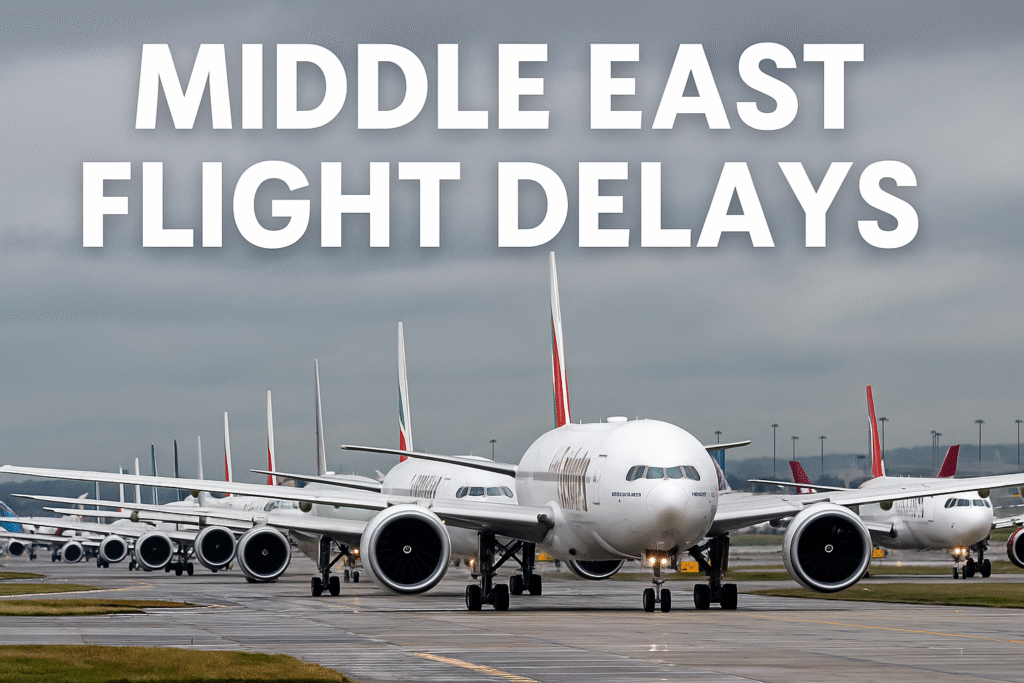
A widespread aviation disruption unfolded across the Middle East as 1,124 flights were delayed and 22 canceled in a single day, impacting passengers traveling through leading international hubs including Dubai, Cairo, Jeddah, and Istanbul. Countries such as Turkey, the UAE, Egypt, and Saudi Arabia were hit especially hard, with airlines like Emirates, Saudia, Oman Air, Qatar Airways, and Pegasus Airlines facing severe operational setbacks.
The disruptions come at a critical time as the region enters one of its busiest travel periods of the year. As a result, thousands of travelers experienced long hours at airport terminals, missed connections, and last‑minute itinerary changes. With the holiday travel season approaching, the effects of the incident are expected to linger, prompting aviation authorities and airlines to reassess emergency plans and operational readiness.
Severe Delays Ripple Across the Region
The scale of the disruption was unprecedented, affecting both international and domestic routes. Airport terminals across the region saw long queues, congested departure halls, and frustrated travelers seeking alternative arrangements.
Dubai International Airport, one of the world’s busiest aviation hubs, recorded nearly 200 delayed flights. Similarly, Istanbul Sabiha Gökçen Airport reported the highest proportion of delays, with almost 60 percent of scheduled flights affected.
Jeddah’s King Abdulaziz International Airport and Cairo International Airport, both critical gateways for religious, business, and leisure travelers, also saw significant delays that created a domino effect across global airline networks.
With so many flights out of sync, the situation quickly extended beyond the Middle East, disrupting connecting flights across Europe, Asia, and parts of Africa.
High Passenger Volumes Exacerbate Operational Pressure
The timing of the disruption could not be worse. Passenger volumes across Middle Eastern airports have surged as travelers gear up for year‑end holidays, winter tourism, and major international events. The increased traffic placed added pressure on airport operations already strained by weather challenges and technical complications.
Passengers reported difficulty securing rebooked flights, with many routes operating near full capacity. Some travelers were forced to wait several hours—if not overnight—for seats on alternative connections or were redirected to nearby airports, stretching airport support services.
Hotels near airports in Dubai, Jeddah, and Istanbul experienced a spike in last‑minute bookings as stranded travelers sought accommodation while awaiting new travel arrangements.
Leading Airlines Confront Operational Hurdles
Several major carriers across the Middle East reported significant disruptions to their schedules:
- Pegasus Airlines experienced more than 400 flight delays, accounting for two‑thirds of its scheduled operations.
- Saudia faced 14 cancellations and over 150 delays, impacting travel across its extensive regional and international network.
- Qatar Airways, despite its strong operational record, saw over 150 delays as it navigated congested air traffic and weather‑related challenges.
- Oman Air, Egypt Air, and Israir also faced multiple delays and a handful of cancellations affecting regional travelers.
The cascading delays not only affected passengers but also disrupted crew scheduling, aircraft rotations, and airport handling services. Airlines activated contingency teams to manage passenger flow, rebooking efforts, and customer support hotlines.
Weather, Technical Issues, and Air Traffic Control Delays Among Key Factors
While no single cause fully explains the widespread disruptions, a combination of adverse weather conditions, technical challenges, and air traffic congestion is believed to be responsible.
Several regions experienced:
- Poor visibility due to fog in the Gulf
- High winds and rain in Istanbul and Cairo
- Airspace congestion due to increased flight volumes
- Technical and logistical challenges within airport operations
Such conditions often trigger safety protocols, requiring flight crews and air traffic controllers to adjust operations, reduce takeoff frequency, or divert flights—resulting in significant delays.
Economic and Tourism Impact Felt Across the Middle East
The flight disruptions are expected to have a noticeable impact on tourism‑centric economies across the Middle East. Countries such as the UAE, Saudi Arabia, Egypt, and Turkey rely heavily on smooth airport operations to support visitor arrivals, business travel, and transit tourism.
Travelers heading to holiday destinations, winter festivals, or religious pilgrimages faced uncertainty, while tourism operators and hotels experienced cancellations or delayed check‑ins. Retail outlets, airport lounges, and ground transportation services also endured the effects of reduced passenger flow.
As the region prepares for increased tourism linked to global events, seasonal travel, and year‑end celebrations, aviation authorities will need to reinforce preparedness measures to avoid recurring disruptions.
What Travelers Should Expect in the Coming Days
Airlines have urged passengers to check flight statuses regularly, arrive at airports earlier than usual, and prepare for last‑minute adjustments to itineraries. While operations are gradually stabilizing, experts caution that the ripple effect of the delays may last several days as airlines reposition aircraft and clear backlogs.
Travelers booked on connecting flights, especially long‑haul routes, are encouraged to monitor updates closely and remain flexible regarding travel plans.
Strengthening Aviation Resilience Moving Forward
This incident highlights the critical need for enhanced contingency planning across the Middle East’s aviation ecosystem. As airports in Dubai, Jeddah, Cairo, and Istanbul continue to grow in volume and capacity, airlines and aviation authorities must work collaboratively to improve communication, weather resilience, and operational efficiency.
For now, the focus remains on restoring schedules, supporting affected passengers, and ensuring a smooth transition into the busy holiday period. With the Middle East positioned as a global hub for travel and tourism, maintaining operational reliability will be essential to sustaining traveler confidence in the months ahead.
For more travel news like this, keep reading Global Travel Wire