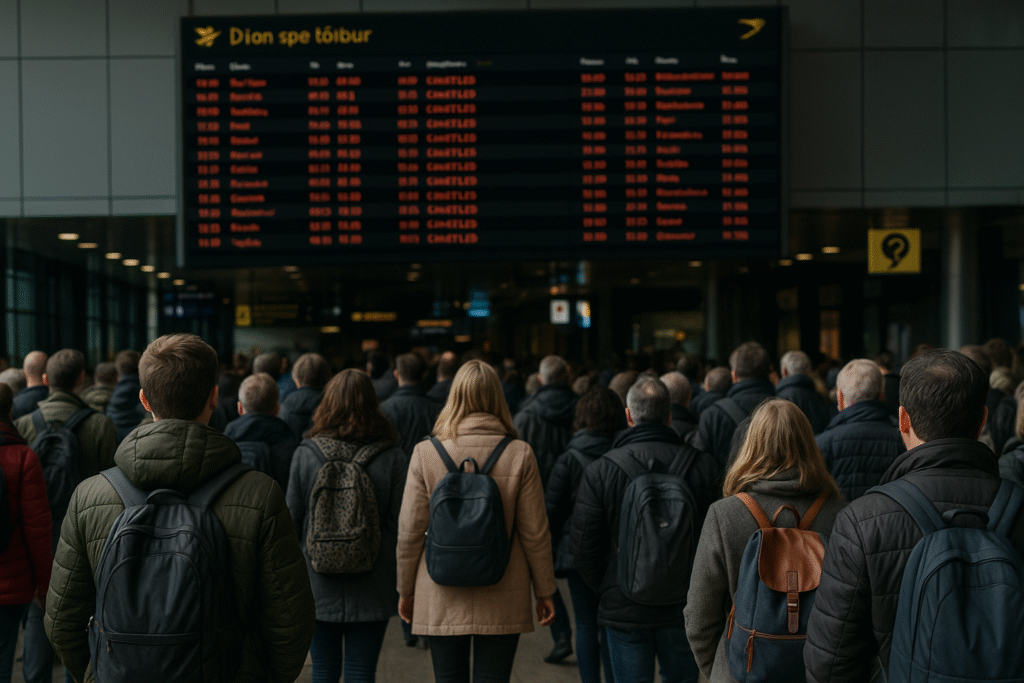
Global travel is entering 2025 with mounting challenges across major destinations. Ireland, France, Germany, Italy, and India are among the countries dealing with sudden outages, staffing shortages, and rapid increases in transport demand. These incidents show an urgent need for stronger, more resilient transport infrastructure worldwide.
Dublin’s Tram System Hit by Power Failure
Dublin faced a fresh wave of disruption on December 10, 2025, when a power fault shut down the Luas tram network. The outage halted morning services and created long delays for thousands of commuters. Technicians worked to restore power, but the stoppage highlighted an ongoing pattern of system stress in Ireland’s transport networks.
In recent years, Dublin has seen a sharp rise in urban mobility demand as the city’s population and tourism numbers climb. While power faults are often resolved within hours, their frequency exposes deeper concerns about system capacity and maintenance. Public transport officials continue to emphasize the need for long-term upgrades to ensure more stability during high-traffic periods.
Europe’s Air Travel System Under Pressure
Many European destinations are facing far broader disruptions than Ireland. In 2025, France and Germany continue to experience significant delays tied to air traffic control staffing shortages. Air traffic capacity has struggled to match post-pandemic demand, and many routes remain sensitive to even small operational issues.
Air Traffic Control Delays in France and Germany
Air traffic control centers in both countries have reported strain from limited staffing and outdated systems. These shortages have produced extensive delays, especially during peak travel seasons. Airlines have responded by publishing revised schedules, but congestion continues across major hubs including Paris, Frankfurt, and Munich.
Germany and France contribute a large share of Europe’s total airspace delays. As pressure mounts, aviation authorities are expanding recruitment programs, accelerating digital upgrades, and revising shift patterns to manage airspace more efficiently.
Drone Sightings Disrupt Munich Airport
Munich Airport faced two major shutdowns in October 2025 after drone sightings near the runways. Both incidents forced temporary suspension of airport operations and caused cascading delays. With drone incidents increasing across Europe, airports are investing in advanced detection systems and response protocols. The events in Munich demonstrate how new security threats can halt operations within minutes.
Italy and Belgium Struggle With Travel Strikes
Several European countries are also dealing with large-scale industrial action. Italy saw widespread airport worker walkouts in 2025, resulting in hundreds of cancelled flights. The strikes were tied to disputes over wages, shift schedules, and long-term staffing plans.
Belgium faced similar disruptions as ground staff and air crews organized nationwide protests. Brussels Airport experienced reduced capacity during peak hours, and rail services across the country were affected. While negotiations continue, travelers have been urged to plan flexible itineraries when transiting through strike-prone regions.
India’s Rail System Faces Power Blocks and Long Delays
India’s vast railway network is undergoing extensive maintenance and electrification upgrades. To carry out these projects, scheduled “power blocks”—temporary shutdowns of electrical lines—have become common across major routes.
Cities such as Mumbai, Pune, and Hyderabad have seen frequent delays as teams work to modernize tracks, signaling systems, and overhead lines. Although essential for long-term improvements, the disruptions affect millions of daily passengers, many of whom rely on trains as their primary mode of transport.
To smooth operations, Indian Railways is expanding night-time work schedules, increasing public advisories, and testing new timetabling tools to predict the impact of power blocks more accurately.
Other Key Sources of Global Travel Disruptions
Transport interruptions in 2025 have stemmed from three major sources that appear across multiple regions:
1. Technical and Infrastructure Failures
Outages, power faults, and equipment breakdowns remain a frequent cause of airport, rail, and metro delays. The incidents in Dublin and Munich underline how even a single failure can affect thousands of travelers.
2. Industrial Action
Labor disputes have disrupted European travel for years, but 2025 has seen a rise in coordinated strikes across aviation and rail sectors. Worker shortages and rising operating costs are driving many of these disputes.
3. Scheduled Upgrades
Maintenance projects play a major role in long-term network health, yet they often create short-term disturbances. Cities such as Paris and London continue to implement multi-year modernization plans that require weekend closures and revised timetables.
Growing Impact on International Travelers
Travelers are feeling the weight of these disruptions more than ever. Flight delays in France and Germany often ripple across Europe, affecting connections in Spain, the UK, Italy, and Scandinavia. Metro shutdowns in Dublin and Paris create morning bottlenecks. India’s rail delays slow business travel and holiday plans nationwide.
Many travelers now build extra time into itineraries to absorb unexpected delays. Airlines and rail operators are improving real-time communication tools, but sudden shutdowns still leave passengers scrambling for alternatives.
A Turning Point for Global Transport Systems
Cities around the world are accelerating investment in modern, more resilient infrastructure. These plans include digital air traffic systems, automated signaling tools, energy-efficient tram lines, and stronger drone security protocols. However, the scale of upgrades needed is large, and disruptions are expected to continue through 2025.
The rising frequency of incidents shows that transport networks must evolve rapidly to match higher demand and emerging threats. With coordinated planning and investment, cities can strengthen their systems and restore smoother travel experiences for millions of passengers.
For more travel news like this, keep reading Global Travel Wire