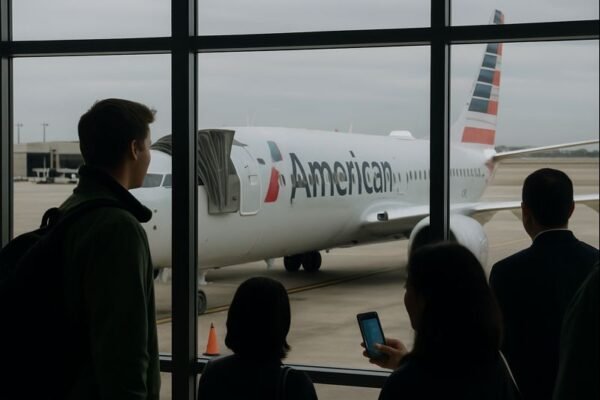
American Airlines has rolled out a major passenger-focused upgrade across the United States. The airline now provides clear, real-time alerts to travelers running late for connecting flights. This system tells passengers exactly how long a flight will wait, when operationally possible. The move aims to reduce stress during short layovers and improve trust in domestic air travel.
The enhancement targets busy hubs where tight schedules are common. Airports such as Dallas–Fort Worth, Charlotte, and Phoenix see heavy traffic every day. With this update, travelers can move faster and with more confidence through large terminals.
Clear Communication Reduces Missed Connections
Short connections often cause anxiety for travelers. A minor delay on the first leg can disrupt an entire journey. American Airlines now addresses this issue with precise flight-holding notifications sent directly to passengers.
Instead of guessing or rushing blindly, travelers know whether their connecting flight will wait. This clarity helps them make better decisions while navigating security lines, crowded corridors, and gate changes.
How the Flight-Holding System Works
The system relies on real-time operational data and predictive analysis. It evaluates whether holding a departing aircraft will cause minimal impact on the broader network. If conditions allow, the system approves a brief delay to protect the connection.
Passengers then receive direct alerts confirming that their flight is waiting for them. This approach replaces uncertainty with transparency and improves the overall journey flow.
Designed for High-Traffic US Airports
American Airlines operates some of the shortest minimum connection times in the United States. At hubs like Charlotte and Phoenix, connections can be as short as 25 minutes. These tight schedules help travelers reach destinations faster but leave little room for disruption.
The new system supports these short connections by adding flexibility. It balances efficiency with passenger needs, especially when gates are far apart or terminals are crowded.
Boarding Rules and Added Flexibility
Domestic boarding usually begins about 40 minutes before departure. Passengers must reach the gate at least 15 minutes prior to takeoff. Missing this cutoff often leads to automatic seat reassignment.
With the new flight-holding alerts, that outcome is no longer guaranteed. If the system approves a hold, passengers still have a chance to board. This change adds a safety net during tight transfers.
Centralized Decisions Improve Consistency
In the past, gate agents decided whether to hold flights. They often relied on visual confirmation of passengers nearby. This method caused frustration when travelers were close but out of sight.
The updated model shifts decisions to centralized operational teams. These teams have full network visibility and access to predictive tools. They assess the wider impact before approving a hold. This change ensures fair and consistent decisions across the system.
Focus on Last Flights and Passenger Welfare
The system gives priority to situations where a missed connection would cause major disruption. This includes last flights of the day, when alternatives are limited. Holding a flight for a few minutes can prevent overnight delays and reduce hotel and rebooking needs.
Operational checks include crew duty limits, aircraft schedules, passenger volumes, and available alternatives. These safeguards ensure that one delay does not trigger larger network issues.
Aligning With Broader Aviation Trends
Airlines across the United States increasingly rely on predictive technology to improve reliability. Connection protection systems have proven effective in reducing missed flights and customer complaints.
American Airlines’ expansion reflects this trend. By using data-driven decisions, the airline supports smoother travel across key tourism and business corridors.
Stronger Passenger Trust and Experience
One of the most valuable features is personalized communication. Passengers receive confirmation that a flight is waiting specifically for them. This message reduces panic and builds confidence during stressful moments.
For leisure travelers exploring US destinations and business passengers on tight schedules, this reassurance matters. It creates a sense of support rather than uncertainty.
A Positive Step for US Domestic Aviation
American Airlines’ enhanced flight-holding alerts mark a shift toward customer-first operations. The system blends punctuality with empathy, using technology to protect passengers when possible.
While not every situation allows a delay, the initiative reduces missed connections and improves journey continuity. As domestic travel demand continues to grow, such innovations strengthen the overall US tourism and aviation landscape.
For more travel news like this, keep reading Global Travel Wire