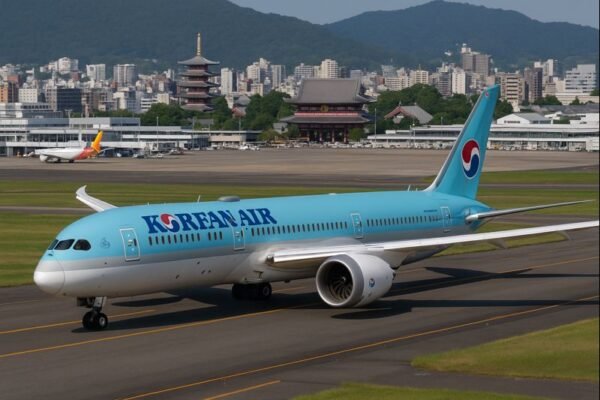
Asia’s tourism sector staged a powerful comeback in 2025, and Korean Air stood at the center of this recovery. The South Korean flag carrier carried more than 16 million passengers across its network, reflecting renewed confidence in regional and international travel. Leisure trips rebounded strongly, while business travel continued its steady return. Together, these trends reshaped air travel across Asia and reinforced Seoul’s role as a major aviation hub.
Improved connectivity, relaxed travel rules, and growing consumer confidence helped airlines regain momentum. Korean Air benefited directly from these changes. Its performance highlighted how travel demand has shifted toward short-haul routes while long-haul markets regained strength.
Passenger Numbers Signal Strong Regional Demand
Between January and early November 2025, Korean Air transported around 16.49 million travelers. Aircraft across the network flew more than 280 million kilometers during this period. This scale of movement showed how firmly travel activity has returned across Asia.
Short-haul routes played a major role in this recovery. Weekend getaways, frequent city breaks, and cross-border business trips drove consistent demand. At the same time, long-haul travelers from North America and China added depth to international traffic. These patterns confirmed that Asian aviation has entered a stable growth phase.
Japan Leads as the Most Popular Destination
Japan remained the top choice for Korean Air passengers for the second year in a row. Tokyo continued to dominate bookings, followed by Osaka and Fukuoka. Short flight times, strong cultural appeal, and excellent airport connectivity kept Japan at the top of travel lists.
Thailand also performed well, with Bangkok ranking among the most traveled leisure routes. These destinations benefited from flexible travel planning and repeat visitation. The trend highlighted a broader shift toward affordable, nearby destinations that allow frequent travel without long planning cycles.
Visa-Free Travel Accelerates Growth to China
China emerged as one of the fastest-growing markets for Korean Air in 2025. The expansion followed the introduction of a visa-free entry policy for South Korean travelers. Under this program, visitors can stay in China for up to 15 days without a visa.
This change had an immediate impact. Passenger traffic to Shanghai rose sharply, with well over one hundred thousand additional travelers compared to the previous year. Beijing also saw strong growth. Both leisure and business travelers took advantage of easier entry rules.
The policy strengthened travel ties between South Korea and China. It also encouraged airlines to rebuild capacity on previously slower routes. Expectations for continued growth into 2026 remain high.
Changing Traveler Profiles Shape Demand
Passenger data from 2025 revealed clear demographic trends. Travelers in their 30s and 40s formed the largest group, accounting for about 40 percent of all passengers. This segment balanced work-related travel with leisure trips.
Travelers aged 50 and 60 made up around 30 percent. Many traveled with family or joined organized tours, showing growing confidence among older age groups. Their return added stability to demand outside peak holiday seasons.
International passengers represented roughly 35 percent of total travelers. Visitors from the United States and China each accounted for nearly a quarter of this segment. Their presence reflected a strong recovery in inbound tourism to South Korea.
Fleet Upgrades Improve the Travel Experience
Korean Air continued to invest in its onboard product throughout 2025. The airline introduced Boeing 787-10 Dreamliner services on key routes. These aircraft improved fuel efficiency and passenger comfort.
Cabin upgrades also gained attention. Updated Prestige Business Class seats enhanced privacy and ergonomics. These improvements supported demand from premium travelers and frequent flyers.
Passenger behavior reflected strong loyalty. One traveler completed more than 200 flights in a single year. Thousands of unaccompanied minors used dedicated assistance services, while tens of thousands of pets traveled on international flights. These figures highlighted the airline’s focus on diverse traveler needs.
In-Flight Preferences Reflect Cultural Appeal
Entertainment and dining choices offered insights into passenger preferences. Korean and global films performed strongly on in-flight systems. New blockbuster releases ranked among the most watched titles.
Dining trends showed continued interest in Korean cuisine. In premium cabins, traditional dishes ranked as top meal selections. This focus on local flavors helped strengthen the airline’s brand identity.
Korean Air Prepares for a New Aviation Era
As Korean Air moves toward full integration with Asiana Airlines by 2027, its 2025 performance provided a strong foundation. Passenger growth, stable demand, and route diversification positioned the airline as a dominant force in Asian aviation.
Tourism across Asia is expected to remain resilient in 2026. Supportive government policies, improved air connectivity, and rising consumer confidence continue to drive demand. Korean Air’s 2025 results clearly show how airlines can lead tourism recovery through strategic planning and customer-focused investment.
For more travel news like this, keep reading Global Travel Wire