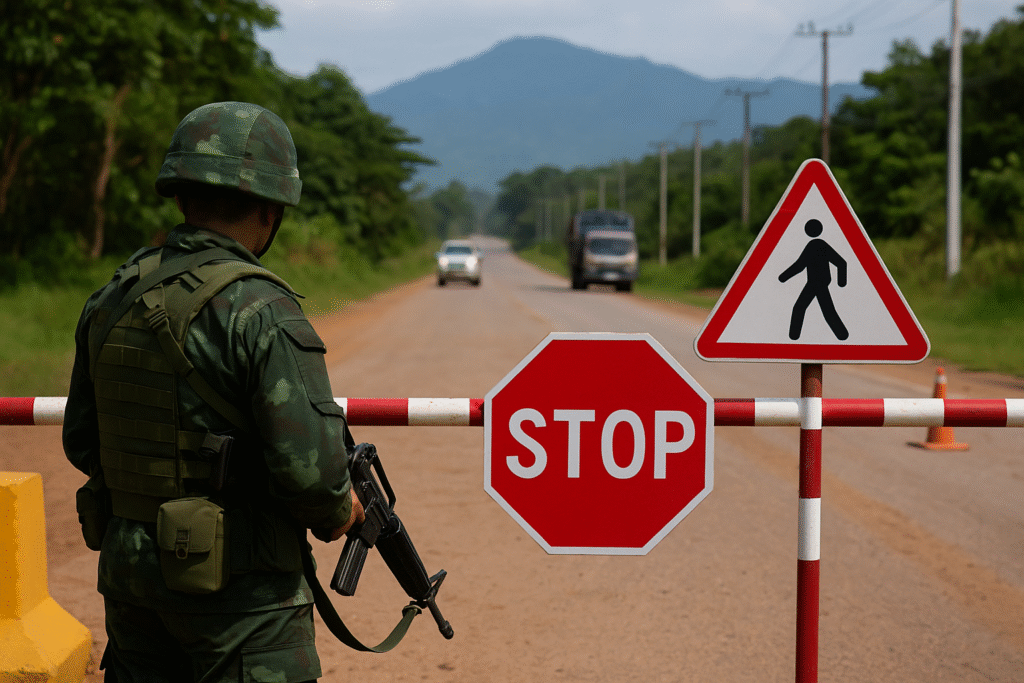
Thailand has joined Cambodia, Myanmar, Malaysia, and Laos under heightened security scrutiny as border conflicts intensify across Southeast Asia. Armed clashes, insurgency activity, and the presence of landmines have raised serious safety concerns for travelers. Governments across the world have responded with strict travel warnings for several border regions.
These developments mark a significant shift for regional tourism. Areas once popular for cross-border travel now face unpredictable closures and elevated risk levels. Authorities urge travelers to review plans carefully and avoid sensitive zones.
Rising Border Tensions Across the Region
The current security crisis stems from long-running internal conflicts and unresolved border disputes. Myanmar’s civil conflict continues to spill over into neighboring countries. Armed groups operate near border towns, leading to frequent clashes and security operations.
Thailand now faces increased pressure along its borders with Myanmar and Cambodia. Security forces remain on high alert to counter armed criminal networks, smuggling routes, and insurgent movements. Southern Thailand, near the Malaysian border, continues to experience separatist violence.
Cambodia and Laos also face instability linked to unexploded ordnance and porous borders. These risks affect both local communities and international visitors.
Why Governments Are Issuing Travel Warnings
Travel advisories focus on clear and present dangers. These include armed encounters, landmines, and explosive remnants of past conflicts. Many rural and border areas lack proper warning signs or cleared pathways, increasing the danger for civilians and tourists alike.
Insurgent attacks, kidnappings, and armed robberies have also contributed to the alerts. In some regions, emergency response services remain limited. Communication disruptions further complicate safety planning.
As a result, several governments now advise against all but essential travel to affected border zones.
High-Risk Border Areas Identified
Thailand–Cambodia Border
This area remains sensitive due to unresolved territorial disputes. Military patrols and restricted zones are common. Landmines continue to pose a hidden threat in remote locations.
Thailand–Myanmar Border
Clashes between Myanmar’s military and ethnic armed groups occur frequently near the border. Refugee movements and temporary closures disrupt normal travel and trade.
Southern Thailand–Malaysia Border
Thailand’s southern provinces experience ongoing insurgent violence. Bombings and armed attacks target public places, creating sustained security concerns.
Impact on Tourism and Cross-Border Travel
Tourism operations near borders face growing uncertainty. Land crossings may close without notice. Transport schedules often change due to security checks or military activity.
Travelers relying on road routes face the highest risk. Bus services, local ferries, and informal crossings remain vulnerable to sudden shutdowns. Even when open, security screening causes long delays.
Air travel within Thailand and neighboring countries remains the safest option. Major airports and tourist hubs continue to operate normally, away from conflict zones.
Key Border Crossings Under Strain
Mae Sot–Myawaddy Route
This crossing remains one of the most volatile. Armed fighting near Myawaddy leads to frequent closures. Authorities strongly discourage foreign travelers from using this route.
Ranong–Kawthoung Crossing
Limited access remains available, mainly for short visits. Travel beyond coastal areas is strongly discouraged due to weak security conditions inland.
Northern Crossings Near Chiang Rai
Routes linking northern Thailand to eastern Myanmar face unpredictable restrictions. Criminal networks and armed groups operate in surrounding areas.
How Travelers Should Adjust Their Plans
Travelers should avoid all non-essential travel to border regions. Staying informed remains critical, as conditions change rapidly. Flexible itineraries offer better protection against sudden disruptions.
Using flights instead of land routes reduces exposure to risk. Travelers already in affected areas should maintain contact with local authorities and follow safety instructions closely.
Tour operators and hotels within Thailand’s major cities continue to function safely. Popular destinations such as Bangkok, Phuket, Chiang Mai, and Pattaya remain unaffected by border conflicts.
What This Means for Southeast Asia Tourism
The wider Southeast Asia tourism sector faces short-term challenges. Border tourism, overland routes, and regional circuits may see reduced demand. However, core tourism infrastructure remains intact in most urban and resort areas.
Governments continue to balance security needs with economic stability. Increased patrols, checkpoints, and surveillance aim to contain risks without disrupting mainstream travel.
Tourism authorities encourage visitors to focus on well-established destinations and avoid remote border zones.
Conclusion: Stay Alert and Travel Smart
Thailand’s inclusion in the regional security alert reflects a broader Southeast Asia security crisis. Border conflicts, insurgency activity, and landmine risks have reshaped travel dynamics across the region.
Travelers should remain cautious, flexible, and well-informed. Avoiding high-risk areas and choosing safer transport options can reduce exposure to danger. While much of Southeast Asia remains welcoming and open, vigilance is now essential for safe and responsible travel.
For more travel news like this, keep reading Global Travel Wire