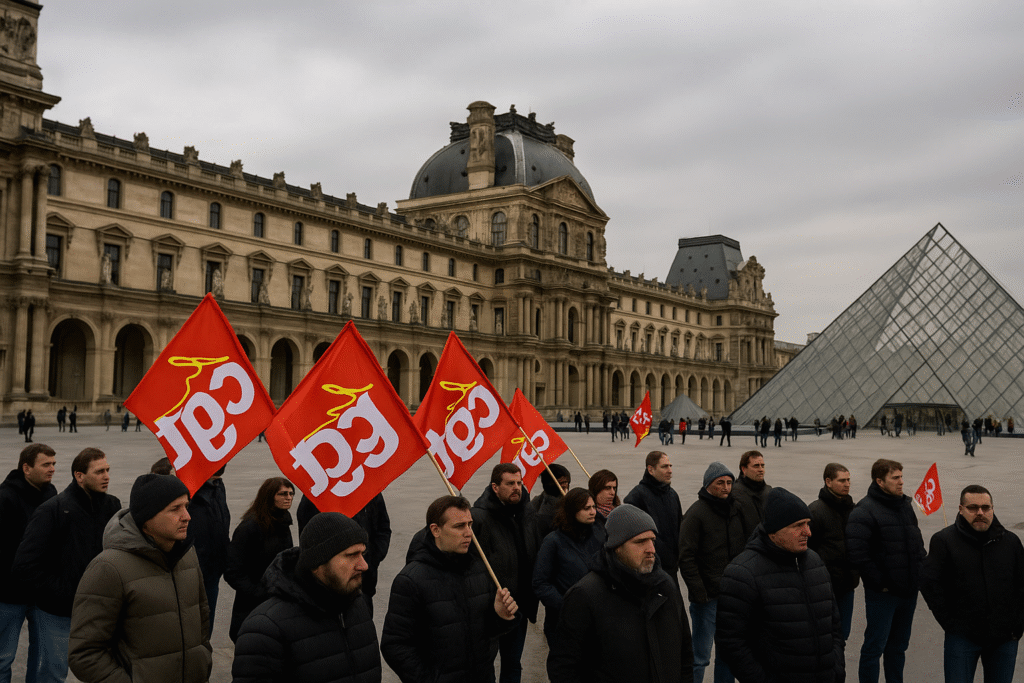
The Louvre Museum in Paris, the world’s most visited cultural attraction, is facing the risk of operational disruption as workers prepare for potential strike action. Staff groups are protesting against severe staff shortages, deteriorating infrastructure, and growing security risks. The situation comes at a critical moment, as Paris enters a high-demand tourism period with record visitor numbers.
The strike threat has raised concerns for travelers, tour operators, and the wider tourism sector. Possible outcomes include reduced opening hours, partial gallery closures, or a full shutdown if negotiations fail.
Staff Warn of Overcrowding and Unsafe Conditions
Museum workers say years of underinvestment have left the Louvre struggling to cope with its popularity. Visitor numbers reached nearly 9 million in 2024, with international tourists making up more than two-thirds of total attendance. Despite this growth, staffing levels have continued to decline.
Union representatives report that over 200 positions have been lost during the past 15 years. Remaining staff now handle larger crowds, longer shifts, and increased responsibilities. Employees argue that the pressure affects visitor safety, artwork protection, and overall service quality.
Frontline workers, including gallery attendants and security staff, say overcrowding has become routine. They warn that emergency evacuations or crowd control incidents would be difficult to manage under current conditions.
Aging Infrastructure Raises Fresh Alarm
Concerns extend beyond staffing. Several recent incidents have highlighted the fragile state of the historic building. Late last year, a burst pipe flooded part of the antiquities library, damaging hundreds of ancient books. Workers say the pipe had shown signs of wear for years.
Another incident forced the temporary closure of a gallery housing Greek antiquities after weaknesses were found in supporting beams. Staff argue that these problems reflect broader structural fatigue across the vast palace complex.
Unions say routine maintenance has been delayed for too long. They fear that further failures could put visitors, employees, and priceless collections at risk.
Security Concerns Intensify After High-Profile Theft
Security has become another flashpoint in the dispute. In October, thieves accessed the Apollo Gallery through a service elevator and stole jewels from the French crown collection. Although suspects were later arrested, the stolen items remain missing.
Staff members say the incident exposed serious gaps in surveillance, access control, and overnight security staffing. They argue that increased visitor numbers and reduced personnel create opportunities for both theft and vandalism.
The theft has also raised public questions about the protection of national heritage sites during periods of high tourist traffic.
Ticket Price Increase Adds to Worker Anger
Plans to raise ticket prices for non-European visitors have added fuel to the unrest. From mid-January, entry fees for visitors from outside the European Economic Area are set to rise sharply. Staff unions oppose the move, saying it targets international tourists while failing to address internal problems.
Workers argue that higher ticket prices could damage the Louvre’s global image and strain relations with overseas visitors. They also fear increased visitor expectations without matching improvements in staffing or facilities.
Government Defends Revenue Plan for Restoration
The French government has defended the price increase, stating that additional revenue is needed to fund urgent restoration and modernization work. Officials say the Louvre’s scale and age require long-term investment to remain safe and accessible.
The Ministry of Culture has launched an internal review of the museum’s condition and operations. A senior public-sector leader has been tasked with assessing staffing levels, infrastructure needs, and security systems. Recommendations are expected within the next year and could shape future reforms.
Tourism Industry Watches Closely
The timing of the dispute worries tourism professionals. The Louvre is a cornerstone of Paris tourism, drawing millions of visitors who also support hotels, restaurants, and transport services. Any closure or reduced access could ripple across the local economy.
Travel planners are advising visitors to stay flexible. Strike action in France can evolve quickly, and prolonged protests may lead to sudden schedule changes. Visitors may need to adjust itineraries or explore alternative cultural attractions during any disruption.
What Happens Next for the Louvre
Negotiations between museum management, unions, and government officials remain ongoing. Workers are seeking commitments on new hires, faster maintenance schedules, and stronger security investment. Without progress, unions warn that strike action could extend beyond a single day.
For now, the Louvre remains open, but uncertainty hangs over one of the world’s most iconic museums. The outcome of this dispute may shape not only the visitor experience in Paris but also how major cultural institutions manage growing tourism pressure in the years ahead.
As peak season approaches, all eyes are on whether compromise can be reached to protect staff welfare, visitor safety, and the future of a global cultural treasure.
For more travel news like this, keep reading Global Travel Wire