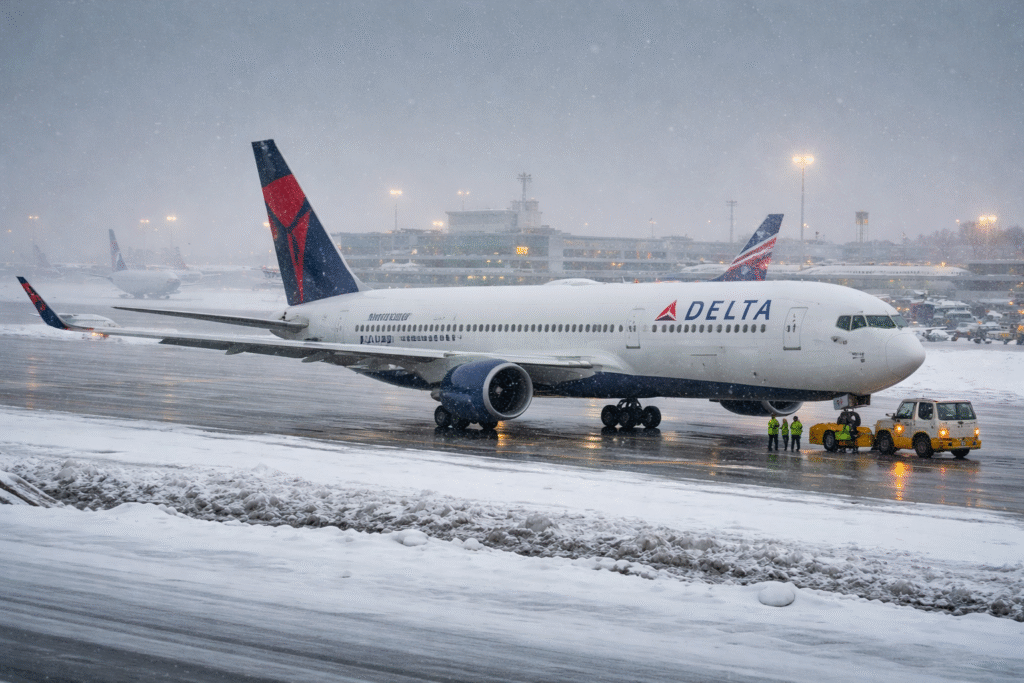
A transcontinental arrival from San Francisco to New York turned into an unexpected endurance test on the ground. A Delta Air Lines Boeing 767 operating flight DL405 landed on schedule at John F. Kennedy International Airport but remained on the taxiway for almost three hours before passengers could deplane. The delay became a fresh reminder of how winter weather and staffing shortages can slow down airport operations across the United States.
On-Time Landing, Long Wait to Reach the Gate
The widebody aircraft completed its cross-country journey without inflight delays. After landing, however, the aircraft had no available gate due to congestion across the airfield. Taxiway traffic built up as multiple inbound flights waited for space at the terminal.
The Delta 767 sat for 2 hours and 58 minutes before gate access became available. While such delays are uncommon, peak-season pressures often strain major hubs like JFK. The difference between touchdown and actual arrival at the gate can reshape a traveler’s entire experience, especially during winter.
Winter Weather Slows Airport Ground Operations
New York’s winter conditions were a significant factor behind the extended delay. Cold temperatures and icy surfaces require extra caution from ramp crews. Workers must operate slowly to prevent slips, equipment damage, and safety hazards. Snow removal and de-icing activities can also restrict ground movement.
Winter weather affects more than the runway. Taxiways, jet bridges, and service areas must remain safe for staff, which limits how fast ground teams can handle arriving aircraft. Even a flight that lands on time may wait long periods before gate personnel can receive it.
At major airports, these seasonal bottlenecks can ripple across the schedule and push incoming flights into holding patterns on the ground.
Staffing Strain Adds to the Congestion
Airport staffing shortages added pressure to already stretched operations. Winter weather often reduces workforce availability due to safety protocols and slower task completion times. Gate agents and ramp teams must rotate through longer shifts, and reassignments become harder during high traffic peaks.
West Coast arrivals, such as the SFO–JFK route, often land during busy afternoon periods. Limited staffing slows gate turnover, leaving aircraft in queue even when they arrive on time. The situation at JFK illustrated how fragile scheduling becomes when both weather and workforce conditions tighten at the same time.
Passengers Endure Nearly Three Hours Onboard
For passengers, the extended wait felt longer than the flight itself. After seven to eight hours in the air, travelers expected a quick exit. Instead, they remained in their seats with no ability to deplane due to federal safety regulations.
Fatigue, tight connections, and limited onboard movement increased frustration. Passengers in premium cabins and economy alike were affected as concerns grew about onward travel plans and delays across the airport.
Airlines face growing scrutiny over gate delays, especially when communication is unclear. Passengers often judge their experience more by the final minutes of a journey than the hours spent cruising at altitude.
How Gate Delays Disrupt Airline Scheduling
The impact extended beyond the cabin. A Boeing 767 is a crucial aircraft in Delta’s long-haul network, and delays on the ground can disrupt subsequent flights. Crew duty limits may be reached, forcing reassignments or cancellations. Aircraft scheduled for evening departures may miss their takeoff window, affecting routes across the United States and abroad.
At busy hubs like JFK, one delayed arrival can influence several flights later in the day. Airlines depend on tight turnarounds to keep operations running, especially during winter peaks. A nearly three-hour gate wait can therefore trigger cascading disruptions.
JFK’s Role in Tourism and Why These Delays Matter
New York JFK is one of the most important entry points into the United States. Millions of visitors pass through each year, making the airport a major gateway for American tourism. When winter conditions slow operations, the effects reach far beyond a single flight.
Tourists arriving for holidays, business trips, or international connections rely on smooth transitions from the runway to the terminal. Delays at this scale influence traveler perception, affect local transportation networks, and challenge the airport’s reputation for reliability.
As winter storms become more frequent, airports across the country continue updating their operations to manage unpredictable weather while maintaining safe working conditions.
Lessons From the DL405 Delay
The long delay experienced by Delta flight DL405 offers several insights into winter travel:
- Landing on time does not guarantee quick deplaning. Gate accessibility is equally important.
- Ground teams face real safety risks in winter weather. Slower operations protect workers and equipment.
- Staffing shortages magnify delays. Even minor disruptions can escalate when personnel are stretched thin.
- Travelers benefit from clearer communication. Understanding the reasons for delays helps reduce frustration.
Conclusion
The nearly three-hour delay at New York JFK highlighted the complex nature of winter operations at major U.S. airports. Delta’s Boeing 767 completed its flight on time, but seasonal weather, staffing constraints, and heavy traffic combined to slow the final steps of the journey. As winter continues, travelers should expect similar challenges across major hubs. The episode underscores an essential truth of modern air travel: the journey does not end at touchdown.
For more travel news like this, keep reading Global Travel Wire