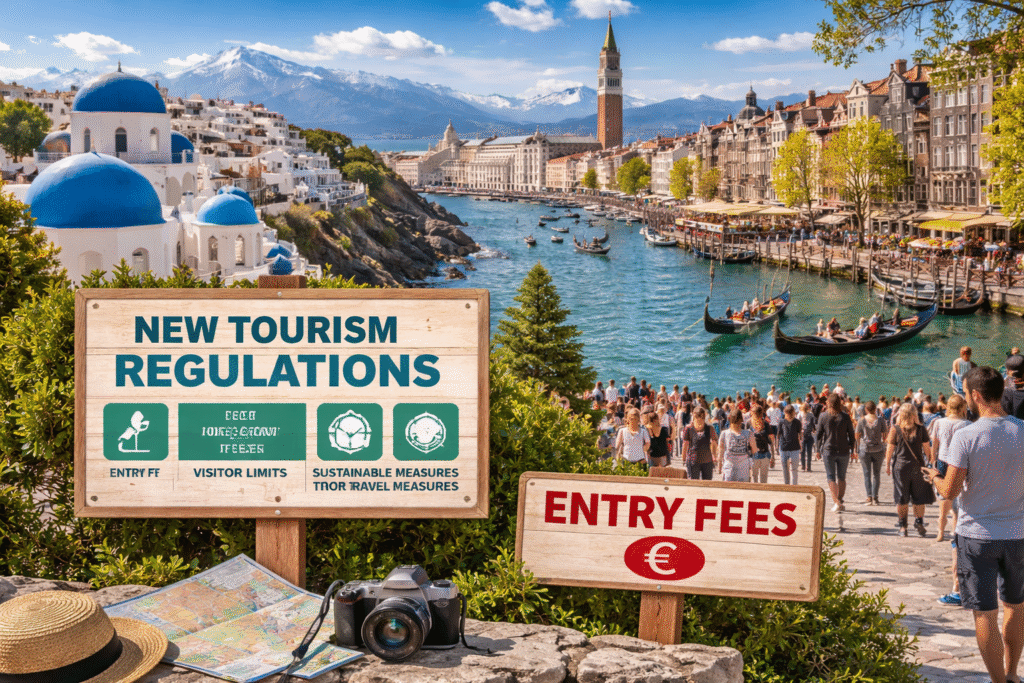
Europe’s most visited destinations face record-breaking visitor numbers in 2025. In response, countries including Iceland, Greece, Italy, Spain, and the Netherlands have launched new measures to curb overtourism. These moves aim to protect local communities, preserve cultural heritage, and ease pressure on fragile landscapes. The shift signals a major change in how Europe manages tourism, prioritizing balance and sustainability over rapid growth.
Why Europe Is Acting Now
Overtourism has grown into a continent-wide crisis. Housing shortages, crowded historic centers, and damaged natural sites have become common. Popular destinations like Venice, Barcelona, Amsterdam, Santorini, and Reykjavik struggle with the sheer volume of visitors arriving each year.
Residents have raised concerns about rising rents, overcrowded streets, and degraded ecosystems. Governments now see urgent action as the only way to protect quality of life and cultural integrity. As a result, Europe is redefining what responsible tourism looks like in the modern era.
Iceland: Conservation Fees and Protected Landscapes
Iceland continues to attract millions of travelers drawn to its waterfalls, volcanic landscapes, and geothermal wonders. But this growth has placed significant pressure on natural sites. Trails erode quickly, and delicate vegetation struggles to recover.
In 2025, Iceland reinstated a national tourism tax to support land preservation. The funds will repair trails, strengthen safety infrastructure, and monitor visitor impact. Some popular routes, such as geothermal hiking zones, now close seasonally to allow the land to recover. These measures aim to balance visitor enjoyment with long-term environmental protection.
Iceland’s renewed focus on sustainable tourism reflects the country’s goal of preserving its wilderness for future generations while maintaining a thriving travel sector.
Greece: Visitor Caps and Cruise Controls on Islands
Greece’s islands have become global icons, but their popularity comes at a cost. Santorini and Mykonos often receive far more visitors than their small infrastructures can support.
In 2025, Greece introduced new limits on cruise arrivals and daily visitor numbers. A levy applies to cruise passengers during peak summer months, encouraging slower, more mindful travel. Santorini now operates under an 8,000-visitor daily cap to prevent overwhelming its narrow streets, ports, and local services.
The government also promotes year-round travel with off-season incentives. This approach spreads tourism benefits more evenly while reducing pressure during the summer surge.
Netherlands: Responsible Tourism Campaigns and Cruise Restrictions
Amsterdam remains one of Europe’s most visited cities, but its historic center faces chronic overcrowding. In response, the Netherlands has expanded its “Stay Away” campaign, which discourages disruptive party tourism. The campaign targets groups known to cause disturbances, urging them to reconsider visiting.
Amsterdam also limits river and sea cruises, reducing congestion along its waterways and preventing crowd buildup near major attractions. Authorities continue to introduce rules that preserve resident wellbeing while maintaining a high-quality visitor experience.
Spain: Rental Reforms and Tourist Fee Expansion
Spain has seen some of Europe’s largest anti-tourism demonstrations in recent years. Barcelona, in particular, struggles with housing shortages and packed historic areas.
To address this, Barcelona plans to phase out existing short-term rental licenses by 2028. The city also prohibits new rentals in its central districts. These actions aim to return housing supply to locals and preserve neighborhood identity.
Elsewhere, regions such as the Canary Islands push for stricter visitor management. Spain continues to refine tourist taxes and zoning rules to balance economic benefits with social and environmental wellbeing.
Italy: Heritage Protection and Entry Fees for Fragile Cities
Italy’s cultural treasures attract millions each year, but cities like Florence, Rome, and Venice face intense pressure. In Florence, new rules ban additional short-term rentals in the historic center. The goal is to protect local housing and maintain the city’s cultural landscape.
Venice continues to expand its entry fee system for day-trippers. Higher fees apply on peak days to discourage quick visits that crowd the city without contributing to the local economy. Revenue supports conservation and public services, helping safeguard Venice’s delicate architecture and canals.
A Shift Toward Quality Tourism Across Europe
Europe’s new tourism policies reflect a shared vision: quality over quantity. Countries now aim to attract respectful, responsible travelers who support local communities rather than overwhelm them. Visitor caps, conservation fees, and behavioral fines are becoming standard tools.
This trend shows no sign of slowing. With climate challenges, rising populations, and shifting traveler expectations, sustainable tourism is now a necessity rather than a choice.
How Travelers Can Support the Shift
Travelers play a vital role in ensuring tourism remains sustainable. Here are simple ways to help:
- Travel off-peak to reduce crowding and enjoy a more relaxed experience.
- Choose licensed accommodations to support local housing stability.
- Respect local rules and customs, especially in historic or sacred sites.
- Support small, local businesses to keep economic benefits within the community.
Responsible travel benefits everyone and helps protect the destinations we love.
The Road Ahead
Iceland, Greece, Italy, Spain, and the Netherlands are leading a major shift in global tourism management. Their new fees, caps, and regulations signal a new era focused on sustainability. As more destinations adopt similar policies, travelers will experience a more mindful and balanced way of exploring the world.
Europe’s message is clear: tourism must evolve. With cooperation between governments, communities, and visitors, the future of travel can remain vibrant, enriching, and sustainable.
For more travel news like this, keep reading Global Travel Wire