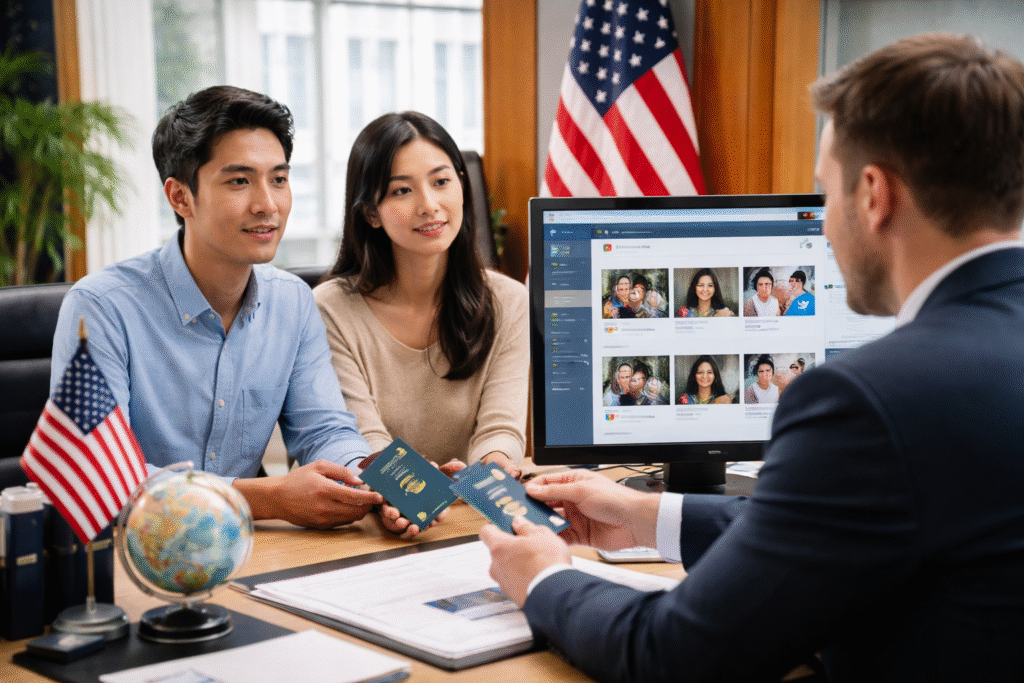
Thailand now joins Japan, India, Malaysia, China, Vietnam, Indonesia, and other Asian countries in fresh U.S. visa scrutiny. Starting December 15, 2025, applicants face stricter digital identity checks. This affects mainly H-1B and H-4 visa seekers. The U.S. government says this move strengthens security checks.
Applicants from these countries must now make social media profiles public. U.S. consular officers will review posts, photos, and activity. This digital review marks a major shift in how visa applications are processed.
What’s New in the U.S. Visa Process?
The U.S. Department of State has widened online presence checks. Now, social media audits apply to most H-1B and H-4 visa applicants. Before, only select cases faced this review. Now it’s standard for many applicants.
All publicly available social media information will be examined. This includes popular platforms like Facebook, Instagram, LinkedIn, Twitter, and others. The review covers content from the past five years. Even old or inactive accounts matter.
Applicants must provide their usernames across platforms used in this period. Privacy settings must be public so consular officers can view all content.
Why the Digital Identity Review?
The U.S. government says these checks help protect national security. The review lets officers verify identities and assess risks early in the visa process.
The intent is clear: catch security concerns before visas are granted. The U.S. stresses that the review does not target freedom of speech. It aims to prevent fraud or risks related to national safety.
Which Countries Are Affected?
This digital identity policy impacts many Asian nations with large numbers of U.S. visa applicants. The new rules now cover:
- Thailand
- India
- China
- Japan
- Malaysia
- Vietnam
- Indonesia
- Philippines
- South Korea
- Taiwan
- Pakistan
- Nepal
These countries supply many skilled professionals, especially for the H-1B visa. Fields such as tech, engineering, health, and research see heavy visa demand. The new review will now be part of their screening.
What the Review Looks At
The digital presence audit focuses on several areas:
Content Scrutiny:
All posts, photos, and comments are checked for issues.
Affiliation Checks:
Connections with organizations or groups will be reviewed for security risk.
Behavior Patterns:
Consular officers may consider past comments, statements, and interactions.
All these help officials make a deeper assessment of each applicant.
Impact on Applicants
1. Longer Processing Times
With added checks, wait times could increase significantly. Every profile requires careful review.
2. Extra Security Checks
If something in a profile raises concerns, extra screening may follow. This can delay final decisions.
3. Possible Denials
In rare cases, questionable online content could lead to visa denial.
Preparing for the New Rules
Applicants must act early to avoid delays or issues. Here’s how to prepare:
Set Profiles to Public:
All social media profiles need public settings.
Clean Up Content:
Remove or archive posts that may raise questions. This includes anything controversial or unclear.
List All Usernames:
Provide all platform names used in the last five years.
Plan Ahead:
With longer processing possible, apply for visas earlier than usual.
How Employers Can Help
Companies sponsoring H-1B workers should guide employees. They can help review online profiles. They should also expect possible delays in deployment of foreign hires.
Looking Ahead: Global Changes in Visa Screening
The U.S. digital identity audit could influence other countries. Digital presence checks may become global visa norms. Applicants may need to adapt social media habits long term.
For now, staying informed is key. Travelers and professionals should watch for further updates. Planning and preparation can reduce stress and delays.
Final Takeaway
Effective December 15, 2025, the U.S. has expanded digital identity audits for visa applicants. Thailand and many other Asian countries now face detailed social media reviews. These changes affect H-1B and H-4 visa seekers most. Applicants must make profiles public, review online content, and prepare for possible delays.
Being proactive helps you stay ahead of these new U.S. visa requirements. Make sure your digital presence matches your travel and career plans. With careful steps, you can minimize the impact of this major change.
For more travel news like this, keep reading Global Travel Wire